Bled and heating evenly
A radiator with the air out of it fills with hot water from the bottom up, and you'll feel heat along the whole length of it. The boiler isn't working any harder than it needs to just to get that room warm.

You've got a boiler and radiators, and before the oil burner starts running flat out, you want to know the radiators will actually heat the way they should. Trapped air is the usual reason a radiator stays cold at the top or knocks, and bleeding it is something you can check yourself before calling anyone.
Every radiator has a small valve near the top, usually square or with a slot for a key. With the system running and the radiators hot, open each valve a quarter turn. Air hisses out first. Once it stops and water comes out steady, close the valve. Air gets trapped because water expands and contracts as the boiler cycles, and it collects at the highest point in each radiator rather than the pipes. A radiator that's cold at the top or makes a knocking sound as the boiler runs is the sign. Doing this on every radiator before the oil burner is running hard all winter means the system isn't working to heat water that's sitting there as air instead.

A radiator with the air out of it fills with hot water from the bottom up, and you'll feel heat along the whole length of it. The boiler isn't working any harder than it needs to just to get that room warm.

A radiator with air stuck at the top stays cold up high even while the bottom is hot. The boiler keeps firing to make up for it, and with oil and electric rates what they are in Vermont, that's a cost you're paying for nothing.


The same square or four-sided key fits almost every radiator in the house. Once you've bled one, you know how to do the rest before the oil burner has to work for a cold room.
That split is air sitting in the radiator. Letting it out before the valve runs water again takes a minute or two, and it's the check that tells you whether a radiator needs bleeding at all.

If a radiator in the back bedroom never gets properly hot, you'll likely turn up the thermostat to compensate, and the boiler answers by running longer to make up for a room that was never going to warm up that way. With oil prices what they are in Vermont, that's a cost you're paying every week of the winter for a problem that takes a few minutes to fix at each radiator. Leave it long enough and you may notice the boiler short-cycling or working harder than the house actually needs, which wears on it over a winter of real use.
If you'd rather have someone look at the whole system instead of just the radiators, that means tracking down a contractor who actually works on boilers, not just furnaces, getting them out to a Vermont house before the cold sets in, and going through the same explanation of what's cold and what isn't more than once if you're comparing a few companies. Booking through here sends the job to one local contractor who already knows boilers and radiators, so you explain it once and the rest of that legwork doesn't fall on you.

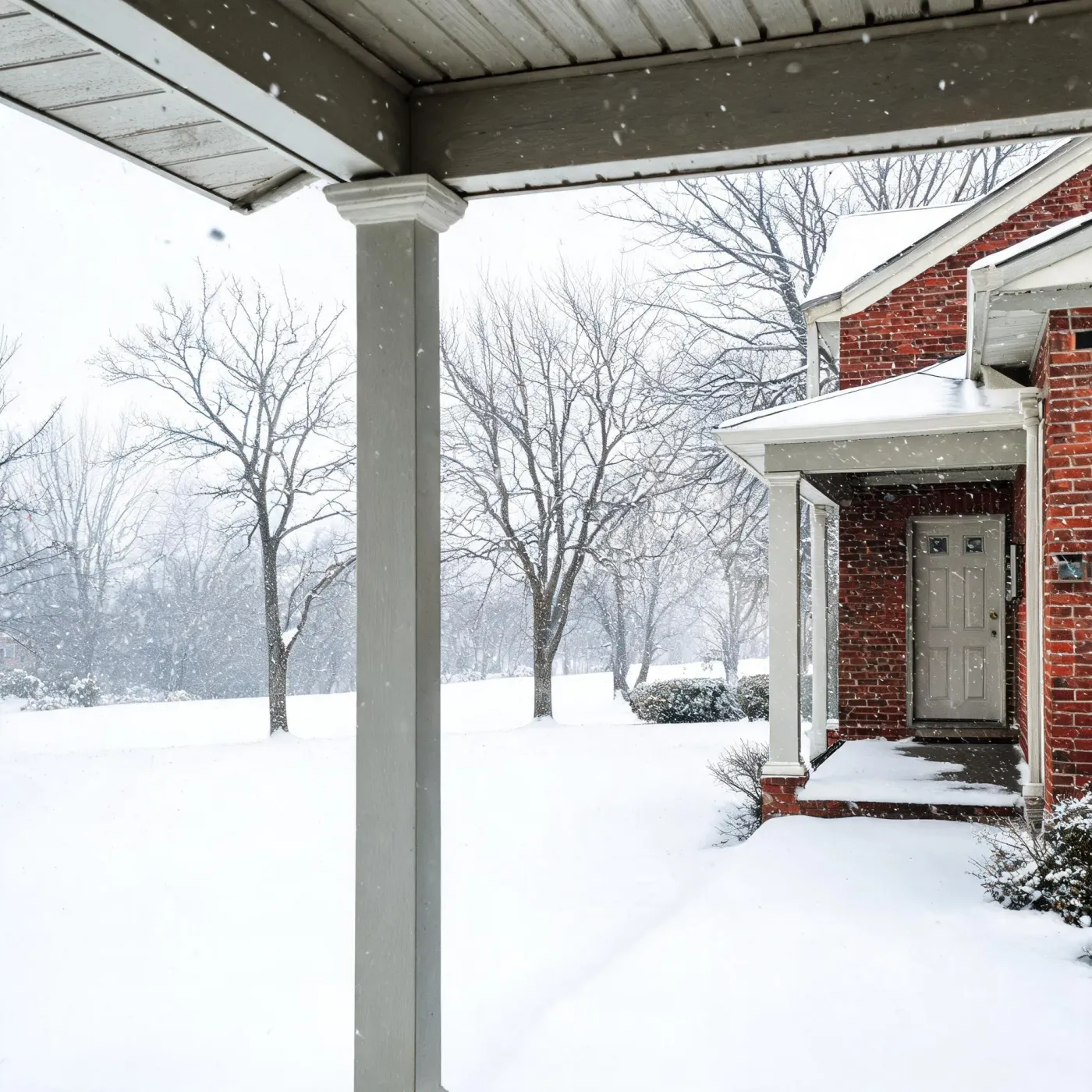
Winter nights average 12°F across Vermont, according to NOAA climate data. At that temperature your boiler isn't cycling on and off anymore, it's running long stretches just to hold the house at temperature. Any radiator with air trapped in it is dead weight during those stretches, a few feet of iron the boiler is heating water for that never reaches the room. You'll notice it as a chill near that one radiator while the oil burner keeps running. Bleed the radiators before nights settle into the teens and the boiler spends that whole run moving heat where it can actually do something, instead of pushing hot water into a pocket of trapped air that goes nowhere.
NOAA nClimDiv 1991-2020 county normals weighted by homes
Your request goes to one pro, not a list of companies.
You only hire the pro if you want to.
Starting nearest the boiler and working outward matters more than people think. Air collects at the highest point of the system, but it travels through the same pipes that feed every radiator downstream, so bleeding out of order can push a pocket of air into a radiator you already cleared. Working closest to farthest, and bottom floor to top if your house has more than one level, means each radiator you finish stays finished.
The valve itself is simple. Inside is a small pin that the key turns to open a narrow passage. Air escapes first because it's lighter and sits at the top of the radiator, above the water. The hiss you hear is that air leaving under the system's pressure. Once the air is out, water takes its place and starts to run, which is why you want the cup ready and the key turned only a quarter at a time. Open it too far and you'll get a steady stream before you meant to, and closing the valve again while water is flowing can be harder to judge than closing it on air.
Pressure drops a little every time you let air out, because you're removing volume the water used to fill. Most oil-fired boilers in Vermont are built to run between 12 and 15 psi, and if the gauge reads low after you've gone through the house, the boiler has a feed valve that brings it back up.
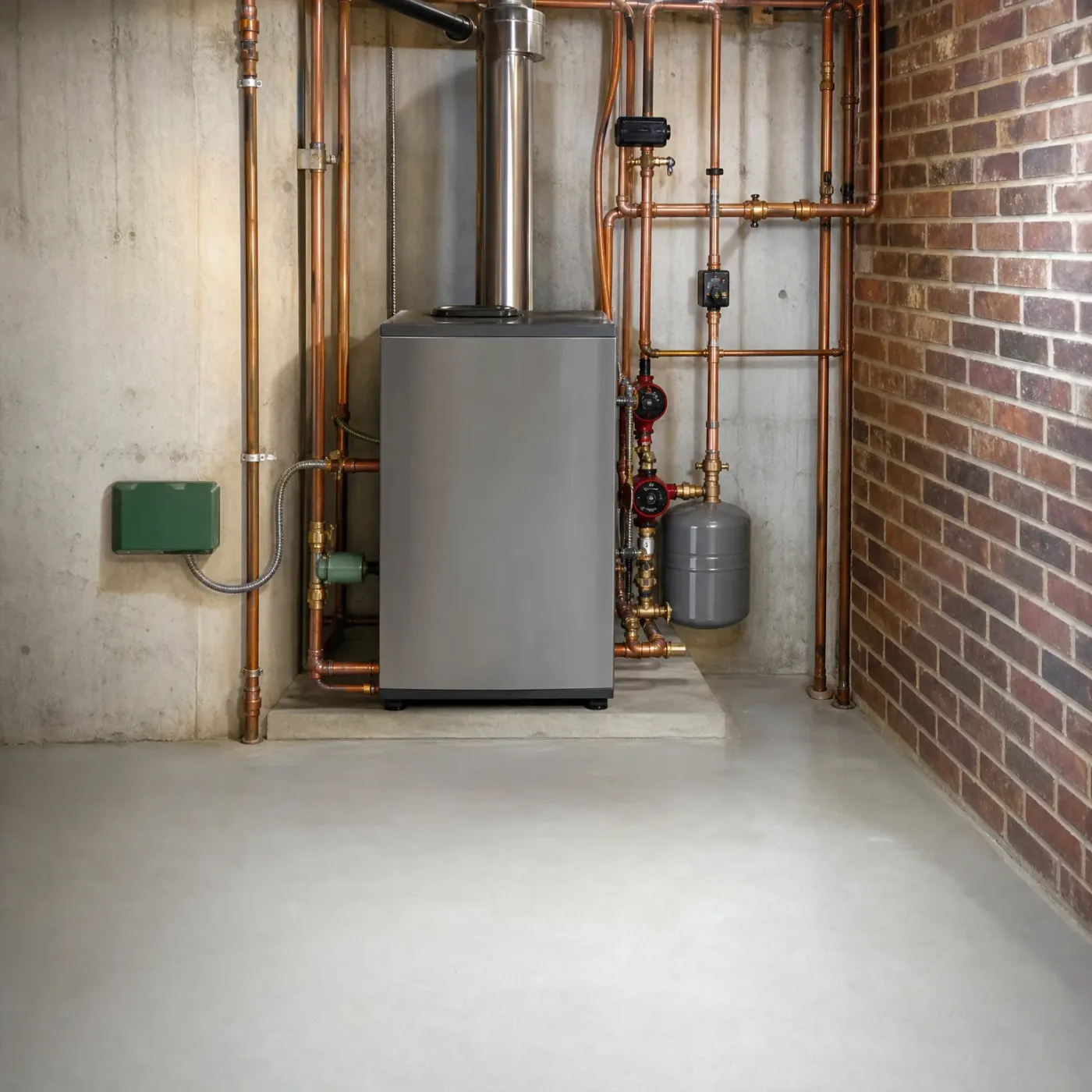
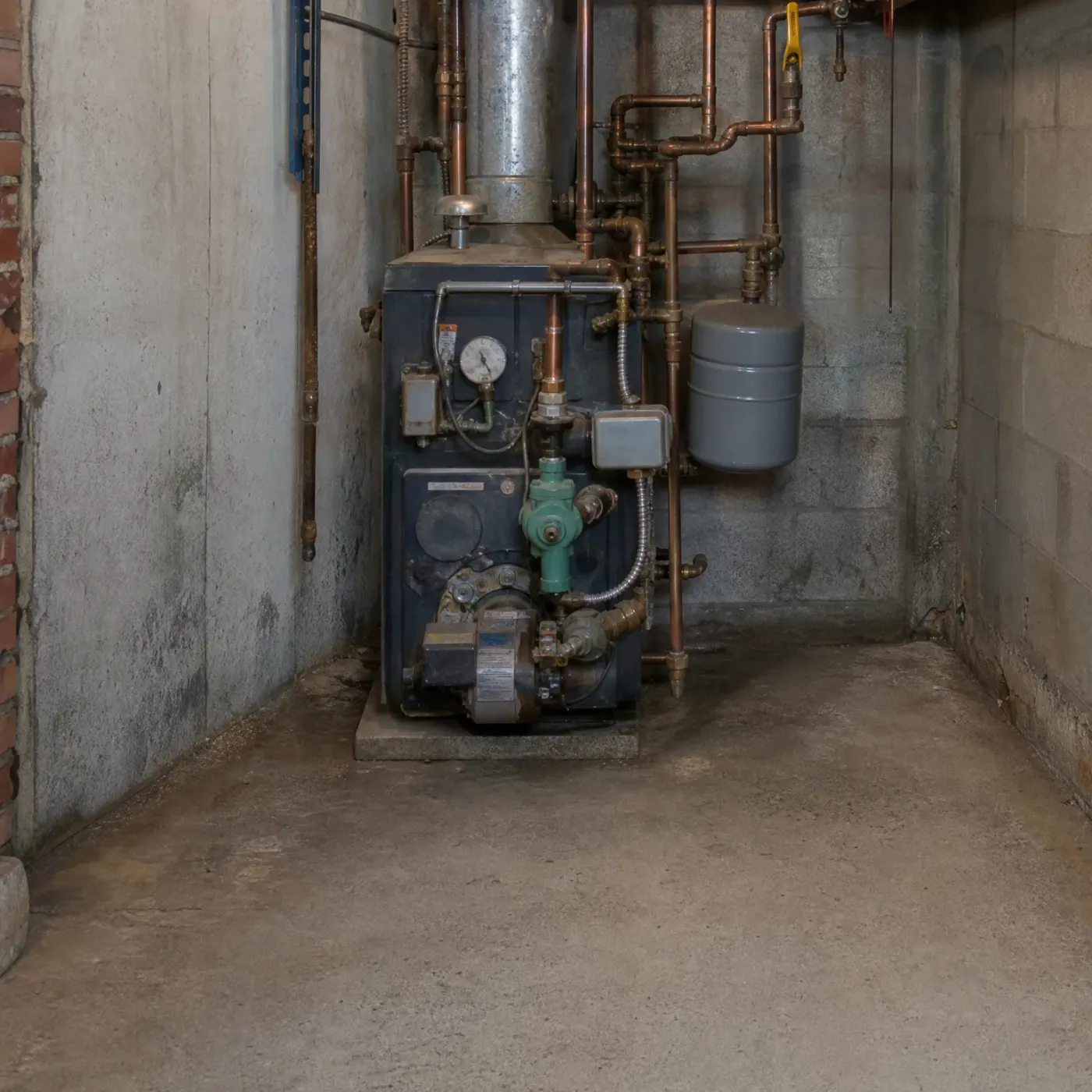
Open the valve slow and you'll hear it before you see it, a thin hiss that means air is leaving the radiator. That sound stopping and water starting is the actual sign you're done, not a count of seconds. Early water can look cloudy or carry a few small bubbles, because air rides along in it until the line clears itself out. Watch the boiler's gauge while you work your way through the house. Every radiator you bleed lets a little pressure out of the whole system, and in most Vermont basements that gauge sits right at the burner where you can glance at it between radiators. When you shut the valve, snug it and give it a touch more, no more than that. Cast iron radiators are old in a lot of these houses, and the threads around that valve don't take much force before they strip or crack. Once the last radiator is done, go back to the boiler and read the gauge one more time. Bleeding the whole house in one go can leave the system low, and a burner that fires on low pressure is a separate problem from the one you started with.




You can do this with a radiator key and twenty minutes, room by room. It's worth doing before a cold snap, and most people can manage it without trouble. What you can't do yourself is tell whether the boiler's pressure is holding, whether the circulator pump is starting to go, or whether a valve somewhere is weeping slowly behind a wall. Bleeding the radiators fixes the air. It doesn't tell you anything about the rest of the system, and in an old Vermont basement, the rest of the system is usually where the real trouble starts once the burner's running long stretches every night.
A local contractor who services boilers all winter can bleed every radiator in the house and check the pressure, the pump, and the fittings in the same visit, instead of you finding out about a stuck circulator in February when the house won't hold heat. You'd otherwise be calling around to find someone who works on oil boilers specifically, explaining the same thing to a few different companies, and weighing quotes against each other. One contractor, local to Vermont, handles it in a single visit and already knows what tends to fail on a boiler that's been running hard since October.


Air rises to the top of the radiator, water settles below it.
Opening the valve lets trapped air escape as a hiss.
Water follows the air and signals the radiator is full.
Closing the valve seals the radiator so it heats evenly again.
At 12°F overnight, your boiler is running long stretches with no real break between cycles. A radiator still holding air can't carry its full share of that heat, so the rooms near it stay cold while the oil keeps burning to make up the difference.
NOAA nClimDiv 1991-2020 county normals weighted by homes
Bleeding the radiators yourself takes care of the air. It doesn't tell you why the pressure keeps dropping, or why one loop upstairs never gets as hot as the rest, and those are boiler problems, not radiator ones. A Vermont heating contractor who services oil boilers all winter has likely seen that exact pattern before, in houses with the same kind of system as yours, and knows what to check first instead of guessing. Getting matched sends your request to one contractor, not a handful, so you're not stuck explaining the same radiator and the same boiler to three different companies before anyone sets a date. You've done the part you can do with a key and twenty minutes. The boiler itself, the pressure, the burner, the circulator, is worth having someone look at before the cold really settles in and running it hard is the only option you've got.





The pro who reaches out is licensed in Vermont.
Asking costs nothing, and the choice to hire stays yours.