

Vermont's Boilers

Repair or replace an old boiler in Vermont

Send the form and the search for an installer is over.

Hand it off

Should I repair my old boiler or replace it in Vermont?

A boiler that's breaking down more than once a season puts you in a tough spot once fall turns toward winter here. You want to know whether it's worth paying for another repair or whether the smarter move is replacing it before you're stuck mid-January with no heat and an oil tank you're already watching closely because of what power and fuel cost in Vermont.

Replace it if it's failed more than once this year or it's past 15 years old

A boiler that needs a repair every season is telling you the heat exchanger or controls are wearing out, not just one bad part. Past 15 years, the cost of patching it starts to outrun what a new unit would cost to run. That matters more here because most Vermont homes heat with oil, and an old boiler running below its rated efficiency burns through fuel fast over a winter that runs long. A newer boiler recovers some of that cost back in fuel use alone. If the repair is small and this is the first failure, fixing it still makes sense. If you're calling about the same unit again, replacement is the one that holds up through next winter.

  1. A contractor checks the heat exchanger for cracks or soot buildup.

  2. They test the aquastat to see if it reads temperature correctly.

  3. The circulator pump gets checked for the flow it still moves.

  4. They look at the flue and venting for safe draft.

What's your boiler telling you right now?

You might hear it kick on and off more than it used to, short cycles that never quite warm the house. Rooms that used to heat evenly now have cold spots, or the radiators take longer to get hot. You may notice a burnt or oily smell near the unit, or soot around the burner door. If it runs on oil, you might be filling the tank more often for the same amount of heat. Some owners hear a knocking or kettling sound from the tank itself. Left alone, a cracked heat exchanger or failing aquastat can mean a boiler that stops working on the coldest night of the year, not a convenient one.

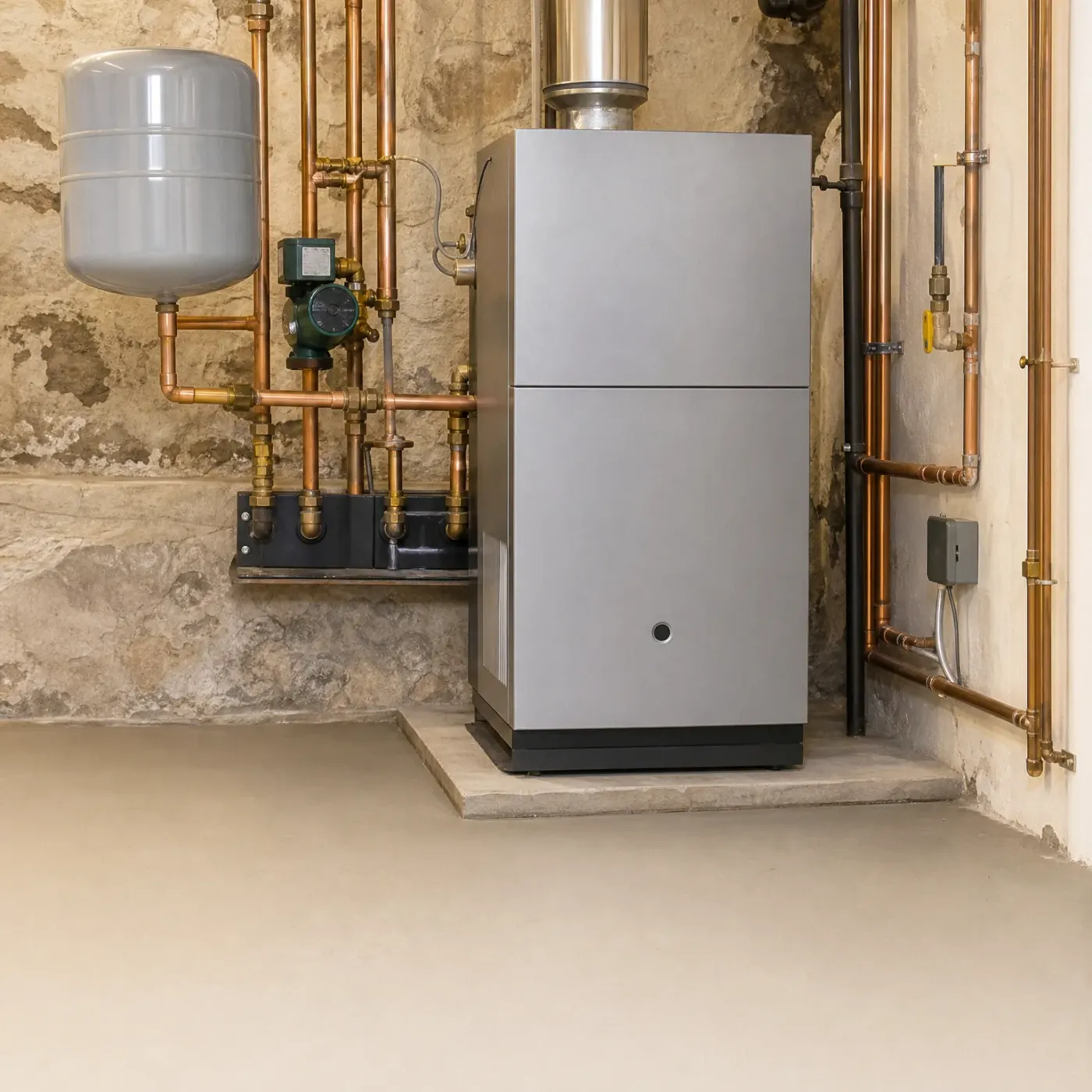
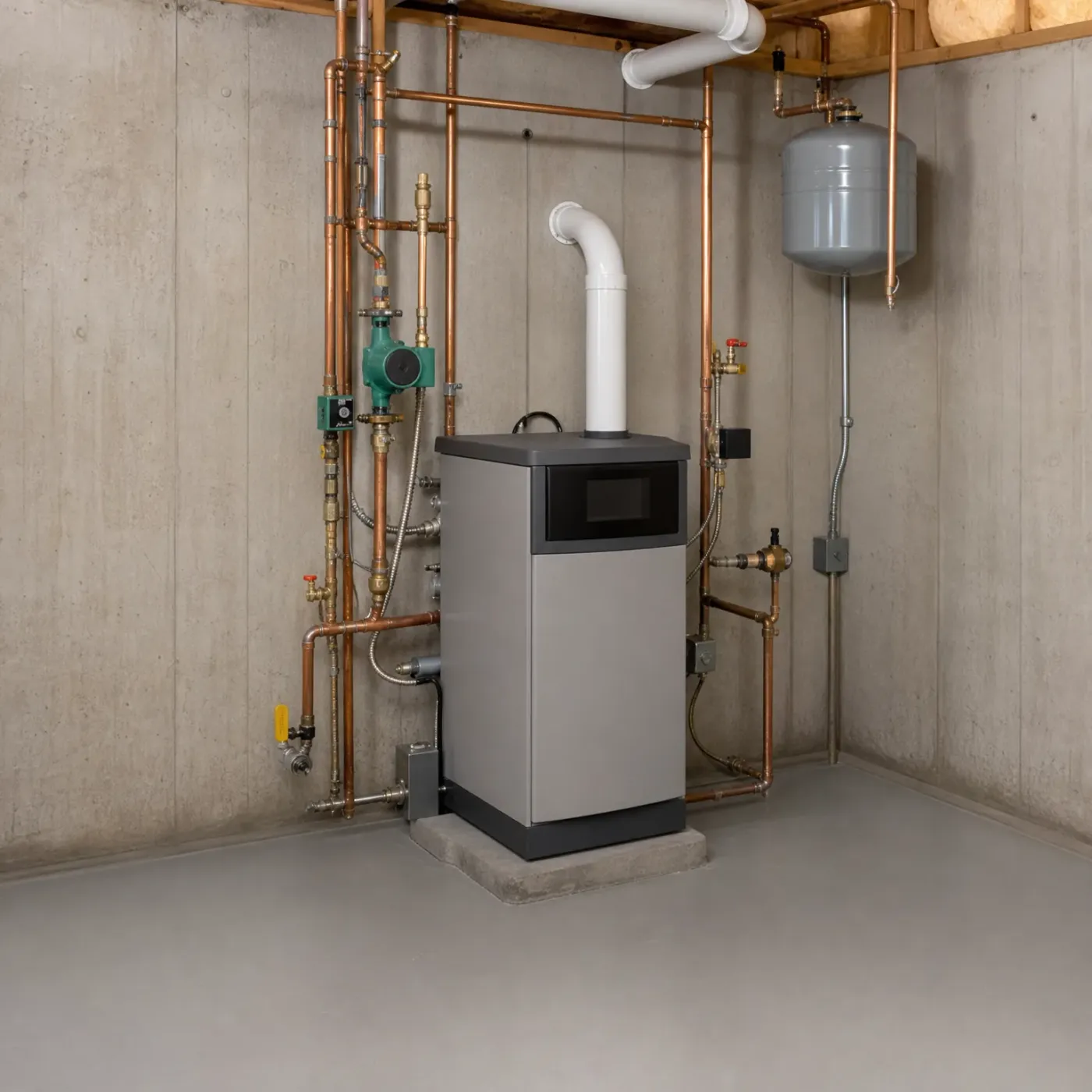
A gray floor-standing boiler on a concrete pad in a basement corner, with copper piping, a circulator pump, a white PVC flue, and a gray expansion tank mounted on the wall.

Running right

A boiler like this heats evenly and holds pressure without you touching it. The circulator moves water through the pipes on its own schedule, and the expansion tank keeps that steady. You're not listening for it, because it isn't making a case for your attention.
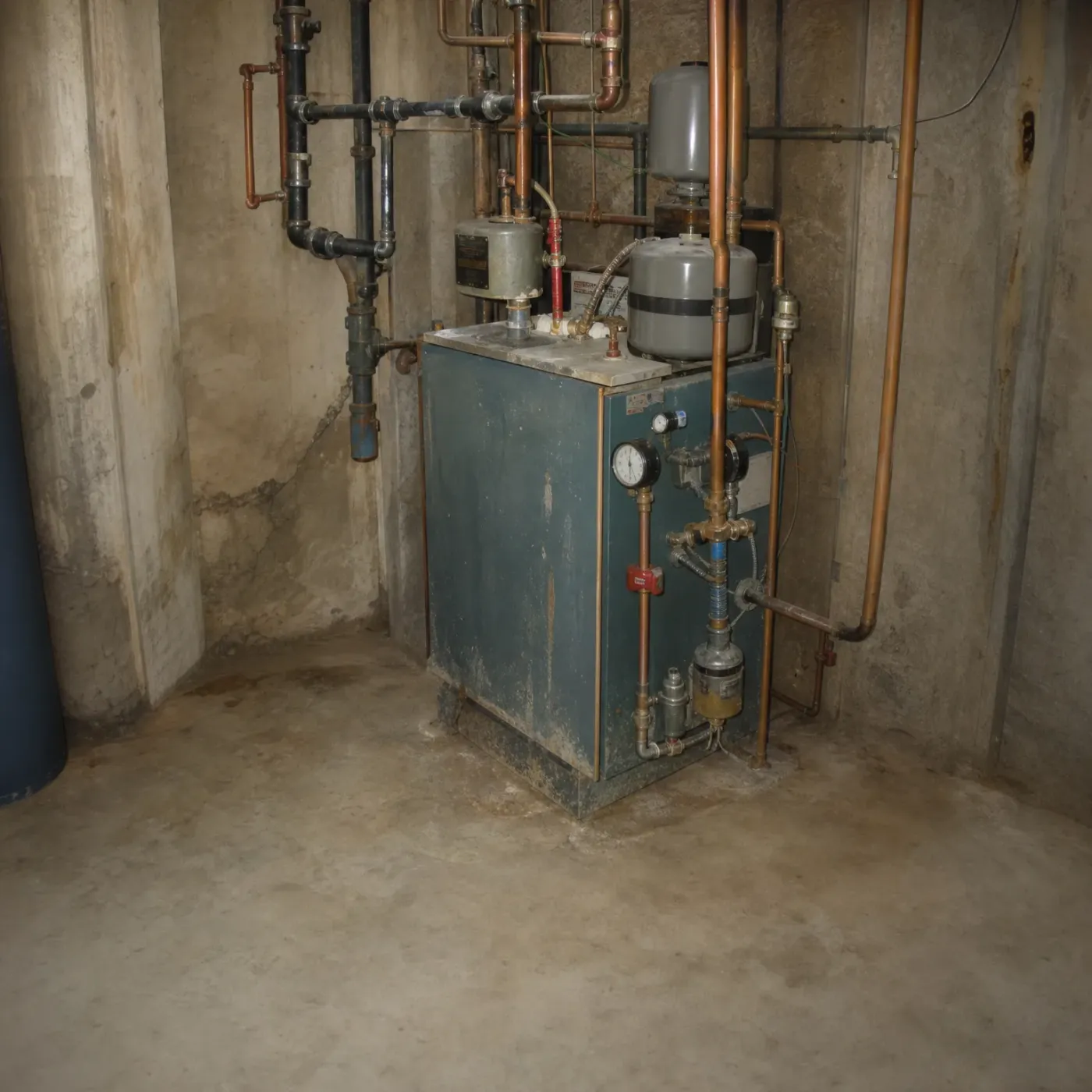

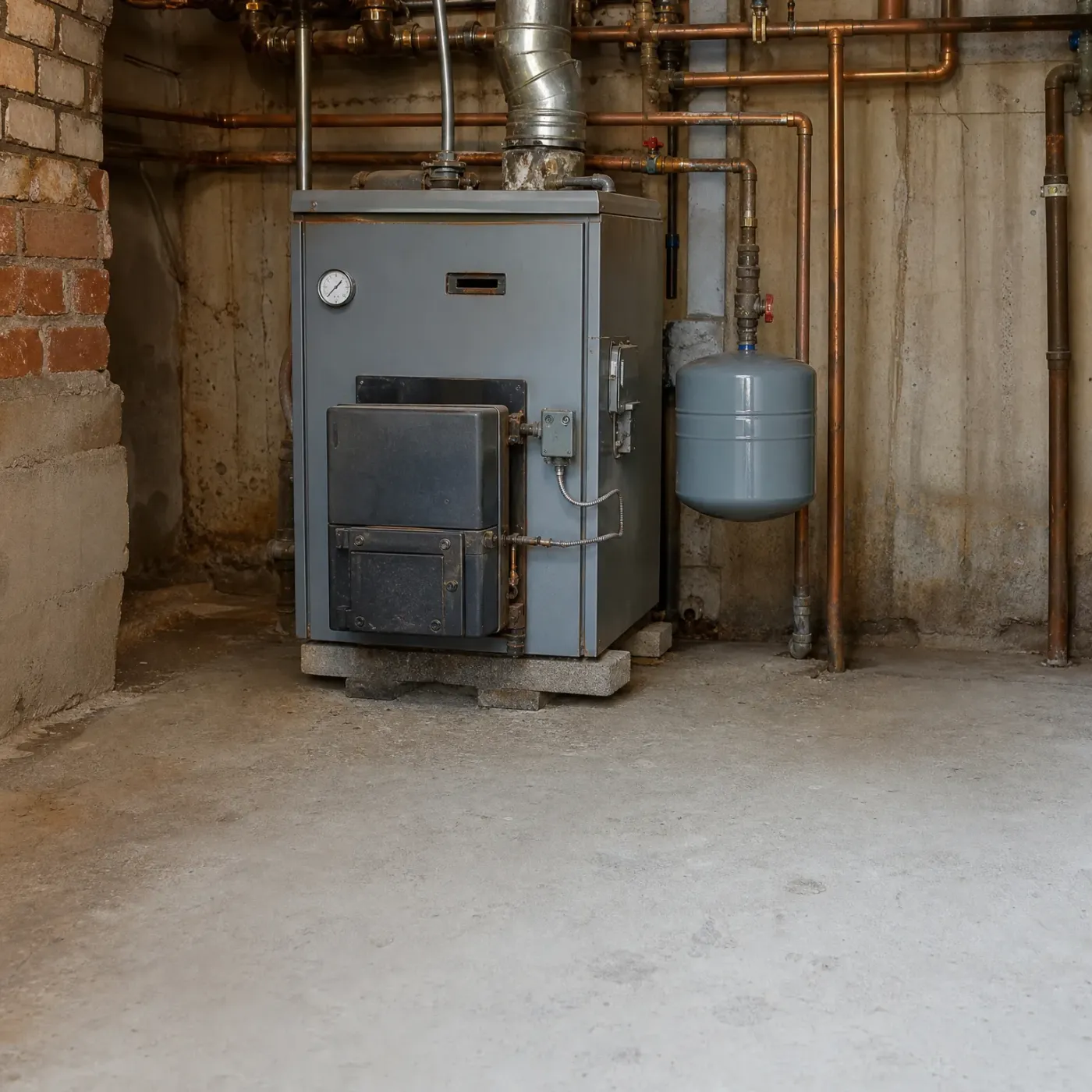
A green metal boiler with pressure gauge stands in a concrete basement corner, surrounded by copper and black iron pipes and two tank-shaped vessels.

On its way out

Cast iron like this has done its job for a long time, and it shows on the gauge and the valves as much as in the rooms it heats. Once a boiler needs this much reading to know what it's doing, you're the one keeping it running, not the other way around.

A man in a gray sweater reclines in a brown leather armchair with his eyes closed, beside a wooden side table holding a mug, a folded newspaper and a potted plant, with a bookshelf and sunlit window behind him.
A man with greying hair and a dark sweater leans back on an armchair with his eyes closed and a slight smile, in a living room with a bookshelf, plant, folded newspaper and mug on a wooden table.
A man in a gray fleece jacket sits reclined in a leather chair with his eyes closed, in a room with bookshelves, a table lamp, a window, and a desk holding a folded newspaper and a dark mug.
A bearded man in a gray fleece pullover sits with eyes closed in a brown leather armchair in a living room, with a floor lamp, bookshelf, potted plants, a side table holding newspapers and a dark mug, and a bright window behind him.

What Actually Fails Inside an Oil Boiler

  • An oil boiler that short cycles is often an aquastat or a clogged nozzle, not a dying heat exchanger.
  • Soot inside the combustion chamber cuts efficiency fast, so a boiler that was fine last winter can struggle this one without the metal itself failing.
  • A cracked heat exchanger can't be welded or patched, and that's the one failure that ends the repair conversation.
  • Oil boilers need the nozzle and filter changed on a regular schedule, and skipping that shows up as soot, not a part breaking.
  • A circulator pump can run for years and then just stop moving water overnight, with no warning sound first.
  • Low water pressure usually traces back to a feed valve or an expansion tank, not the boiler itself losing water.

Most of what goes wrong in an old oil boiler isn't the boiler itself. The nozzle sprays oil into the combustion chamber in a fine pattern, and once that pattern breaks down from wear, the burn gets dirty. That dirty burn leaves soot on the heat exchanger surfaces, and soot insulates. It blocks the heat from moving into your water, so the boiler runs longer to do the same job, and your oil bill climbs even though nothing has technically broken. A nozzle and filter change on a regular schedule keeps that soot from building up in the first place. Short cycling, where the boiler fires and shuts off again and again without warming the house, usually traces back to the aquastat misreading temperature or a nozzle that's clogged enough to disrupt the burn, not to a boiler on its way out. The circulator pump is a different story. It can run fine for years, then seize up overnight with no rattling or warning beforehand. Low pressure in the system often comes down to the feed valve or the expansion tank rather than a leak in the boiler. The one thing that ends the conversation is a cracked heat exchanger. There's no welding or patching that, because the crack lets combustion gases mix with water or lets water leak into the firebox, and either one makes the boiler unsafe to run.

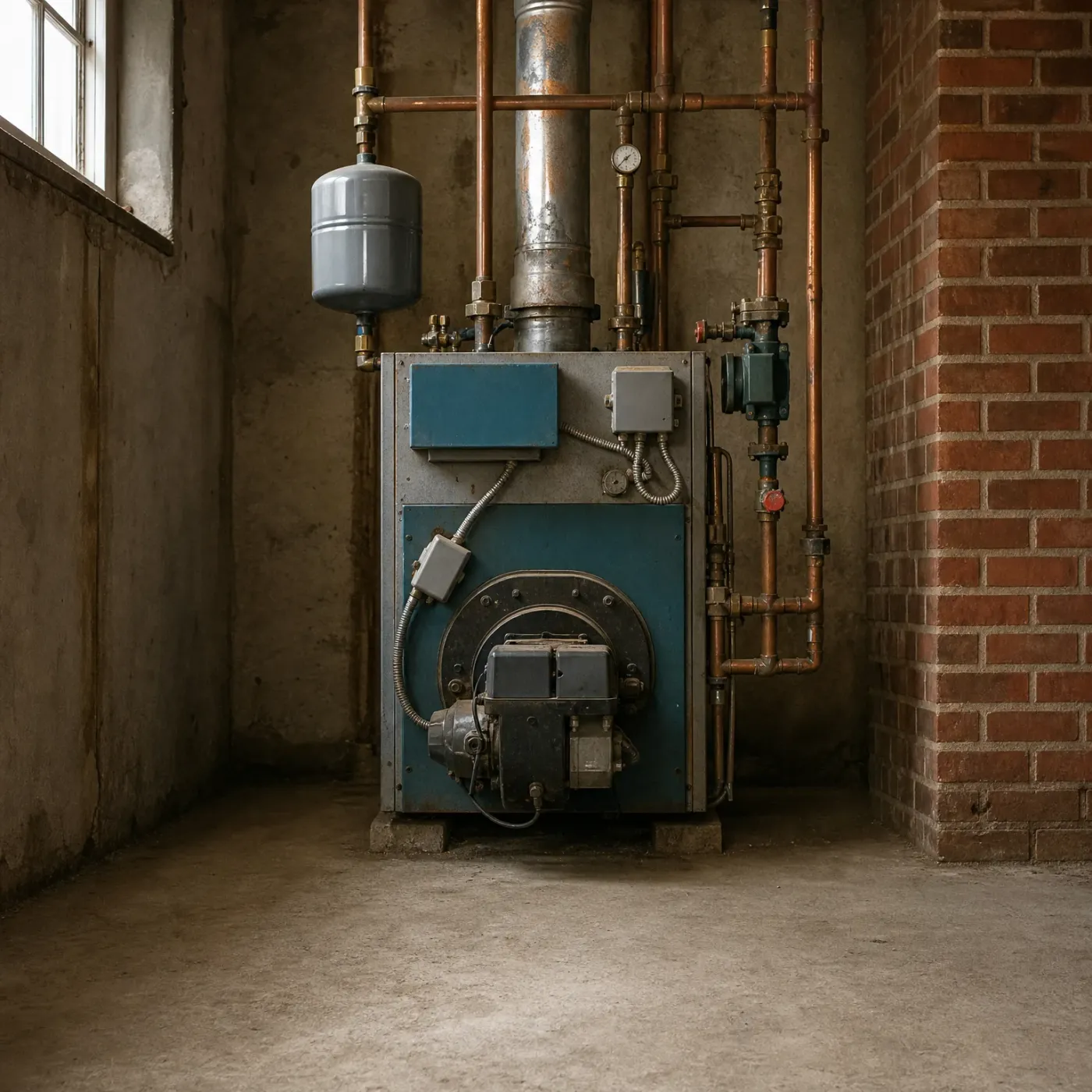
A blue cast-iron boiler with a burner unit, gauges and copper piping stands in a concrete-floored basement room beside a red brick pillar and a window.
Before you get your boiler installation
A gray boiler unit with a flue pipe stands on a concrete pad in a basement, surrounded by copper piping, a circulator pump, an expansion tank mounted on a stone wall, and an electrical outlet.
After you get your boiler installation

Done looking for a boiler pro

A boiler that keeps failing doesn't get better with another patch job, and in Vermont, where most homes run on oil and the power to run a replacement system isn't cheap either, you want someone who installs these year after year making that call with you. Send the request and it goes to one contractor, local to Vermont, who works on oil boilers all winter and knows which ones are worth saving and which ones aren't. You won't be fielding calls from five companies trying to win the job. Once you send it, the search is no longer yours to carry. You've already read the signs. The aquastat, the soot, the short cycling. What's left isn't more guessing. It's getting someone out there who installs these for a living before the cold really sets in.

The case for one more repair

A broken igniter, a failed circulator, or a clogged nozzle doesn't mean the boiler itself is done. Oil boilers are built heavy, and the cast iron heat exchanger inside often outlasts two or three of the smaller parts around it. If this is the first breakdown this season and the heat exchanger tested sound, paying for the part makes sense. You get the rest of winter out of it without the cost of a new install, and you've bought time to plan the replacement for a point when the boiler fails on its own schedule instead of yours.

The case for replacing it now

Every repair on an aging boiler is a bet that the next failure won't be the heat exchanger itself, and once that cracks, there's no patching it. A boiler that's already needed more than one repair this season is telling you it's heading that way. Oil prices and the cost of power here both make an inefficient boiler expensive to keep running, and a unit losing efficiency to soot or age costs you every month it stays in, not just the day it fails. Replacing it on your own timeline, before a cold snap forces the issue, is the safer bet.

Winter nights average 12°F statewide

Twelve below freezing is the average night, not the worst one, so your boiler isn't running on the edge of what it was built for, it's running at the middle of it. An old heat exchanger that's already struggling has little room left for the nights that go lower than that.

NOAA nClimDiv 1991-2020 county normals weighted by homes

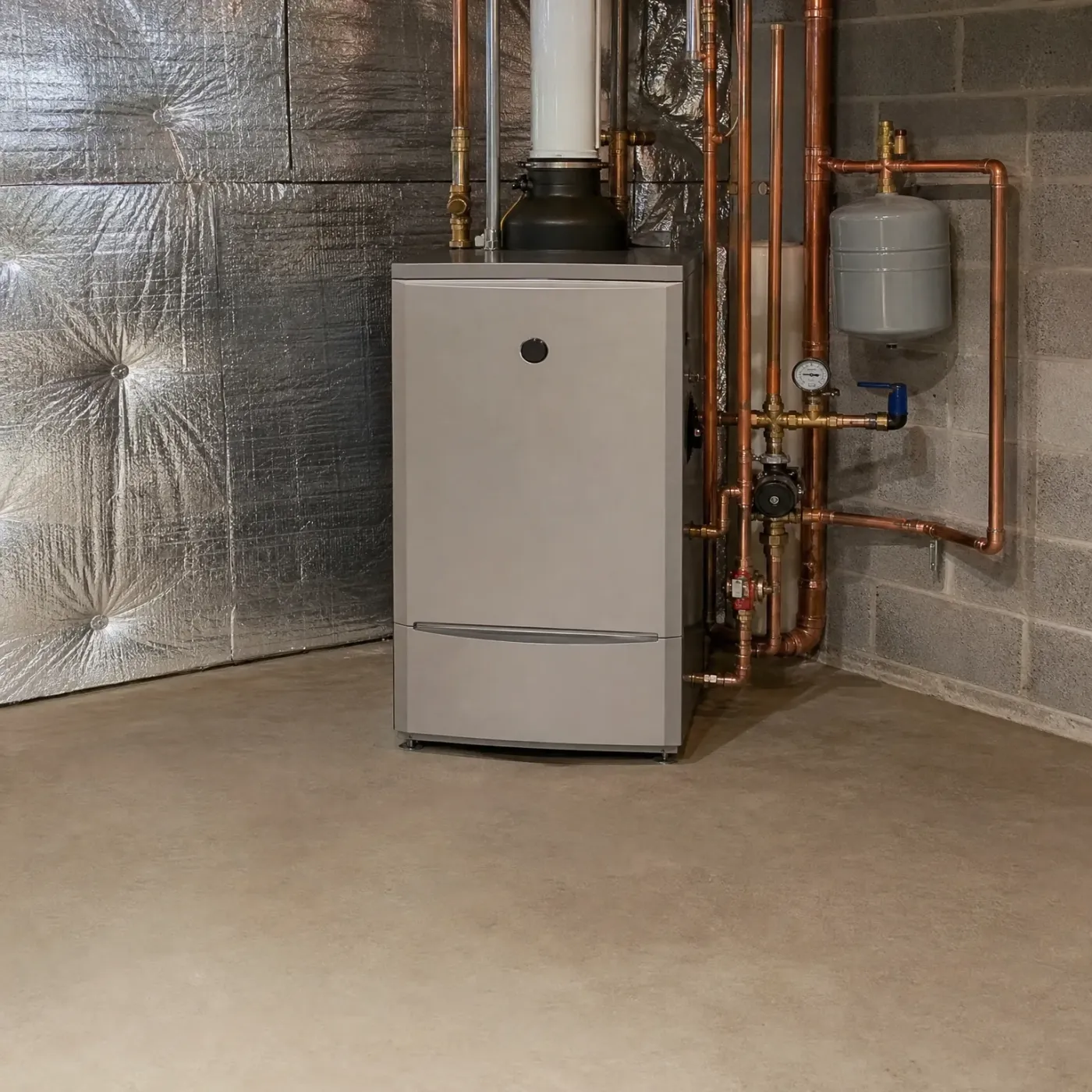
A gray residential boiler in a basement corner with copper piping, a circulator pump, pressure gauge, blue-handled valve and gray expansion tank against a concrete block wall, next to a foil-insulated wall.

Running right

Copper piping, brass fittings, and a circulator pump move heat through the house without any noise you notice. The pressure gauge sits steady, the expansion tank does its job quietly, and the shutoff valve stays untouched because nothing's forcing you to reach for it.

A gray boiler on a concrete block base in a basement, with copper piping, a metal flue, and a gray expansion tank mounted beside it against a concrete wall.

Running into trouble

That gray steel boiler is older, and the flue duct overhead has to clear exhaust from a unit working harder than it used to. The valves nearby get opened more often now, usually because something needs draining, bled, or checked again before the cold sets in.

An older man with gray hair and a beard leans back on a beige sofa with his eyes closed, in a sunlit room with potted plants, a wicker chair and large windows behind him.
A woman in a cream knit sweater sits in an armchair with her eyes closed and a slight smile, beside an open window showing orange autumn foliage, with a mug, books and a lit candle on a small side table.

One More Repair or a New Boiler

Repair

  • A single failed part on a boiler that's otherwise sound is a reasonable repair, especially if it's the first breakdown this winter.
  • Oil boilers hold up for decades, so a cracked igniter or a stuck aquastat doesn't mean the cast iron underneath is failing too.
  • If the contractor finds soot and a clogged nozzle rather than damage to the heat exchanger, cleaning and a part swap can carry you through to spring.
  • A repair keeps you on the system you already know, with pipes and radiators sized for how your house actually heats.
  • Repair makes sense when the breakdown is new, not the third one this season.

Replace

  • A boiler that's failed more than once this season is telling you the parts around a tired heat exchanger are going one by one.
  • Replacing it now means you're not choosing a system in the middle of a cold snap, when whatever's in stock is what you get.
  • A new boiler installed before the coldest nights hit means you're not waiting on a part for a system that's already borrowed time.
  • With oil heating most homes here and electricity costing what it does, a boiler that runs efficiently matters more than one that just runs.
  • Once the heat exchanger itself is cracked or sooted through, no part you swap in fixes that, and the next breakdown is a matter of when.
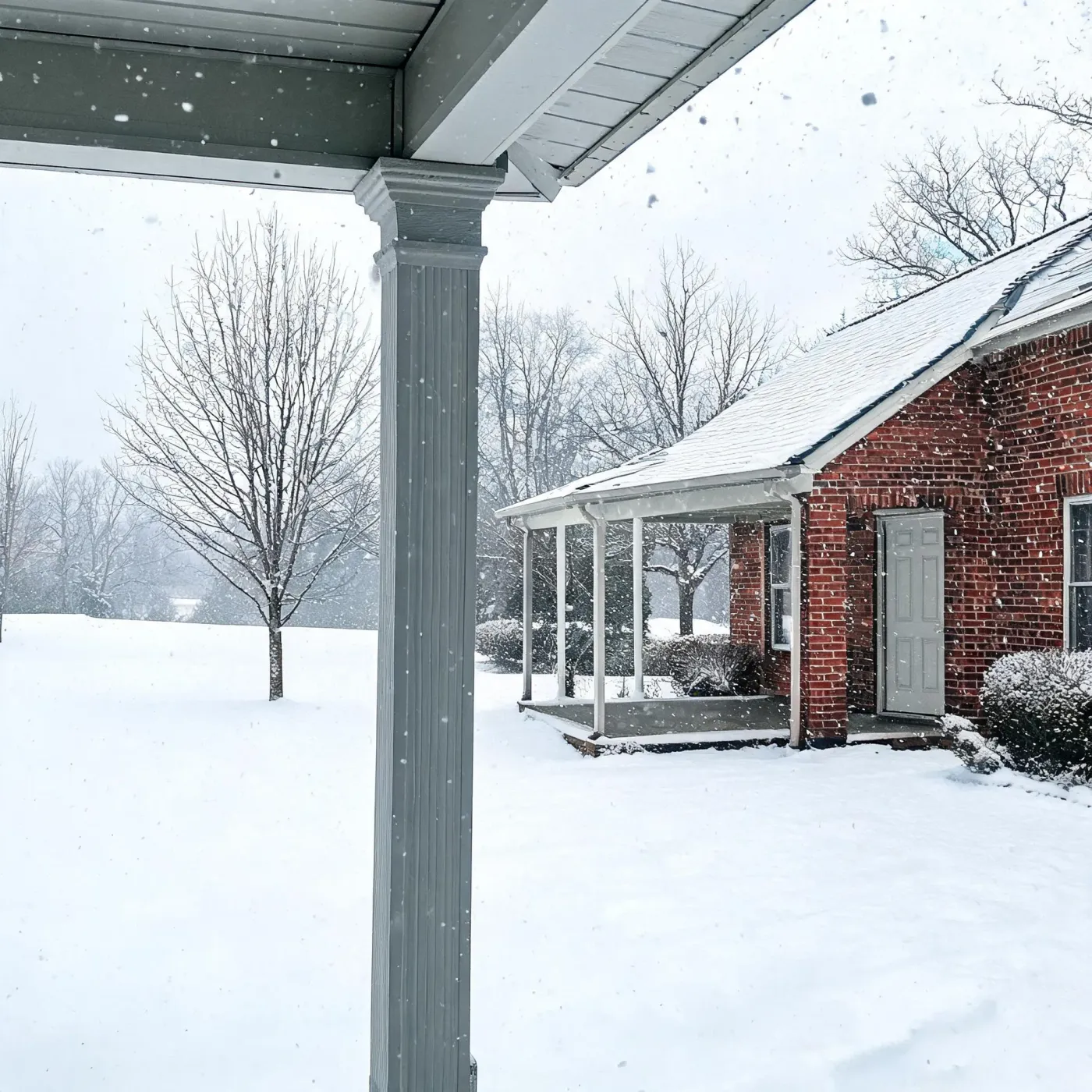
View from under a covered porch with a gray square column toward a red brick house with a white-columned porch and gray door, with falling snow covering the yard, roof, and bare trees.

Vermont winter nights average 12°F across the state, according to NOAA climate data. That's the cold your boiler sits in for months, not just on the worst night of January. A unit that's already losing pressure or short cycling doesn't get a break to recover before the next cold stretch hits. At that temperature, a boiler runs close to full output for long stretches just to hold a house at a normal indoor temperature. If the heat exchanger or circulator is already working harder than it should, you'll feel it as rooms that take longer to warm or radiators that never quite get hot.

NOAA nClimDiv 1991-2020 county normals weighted by homes

A boiler that keeps breaking down isn't going to fix itself before the cold sets in, and another patch now just means another call in a few weeks. If the repairs are stacking up, replacing it is the straight answer, and if it's one part on an otherwise sound system, fixing it is. Either way, the work is better in the hands of someone who installs and services these oil boilers all over Vermont every winter, who knows what tends to go first in a cast iron heat exchanger and what a cold night here actually asks of a circulator pump and an aquastat. You'll be matched with one licensed local contractor, not a handful of companies competing for your callback, so the person who shows up already knows the kind of system sitting in your basement and what it takes to get it through to spring. Send the request, and finding that person stops being something you have to do yourself.

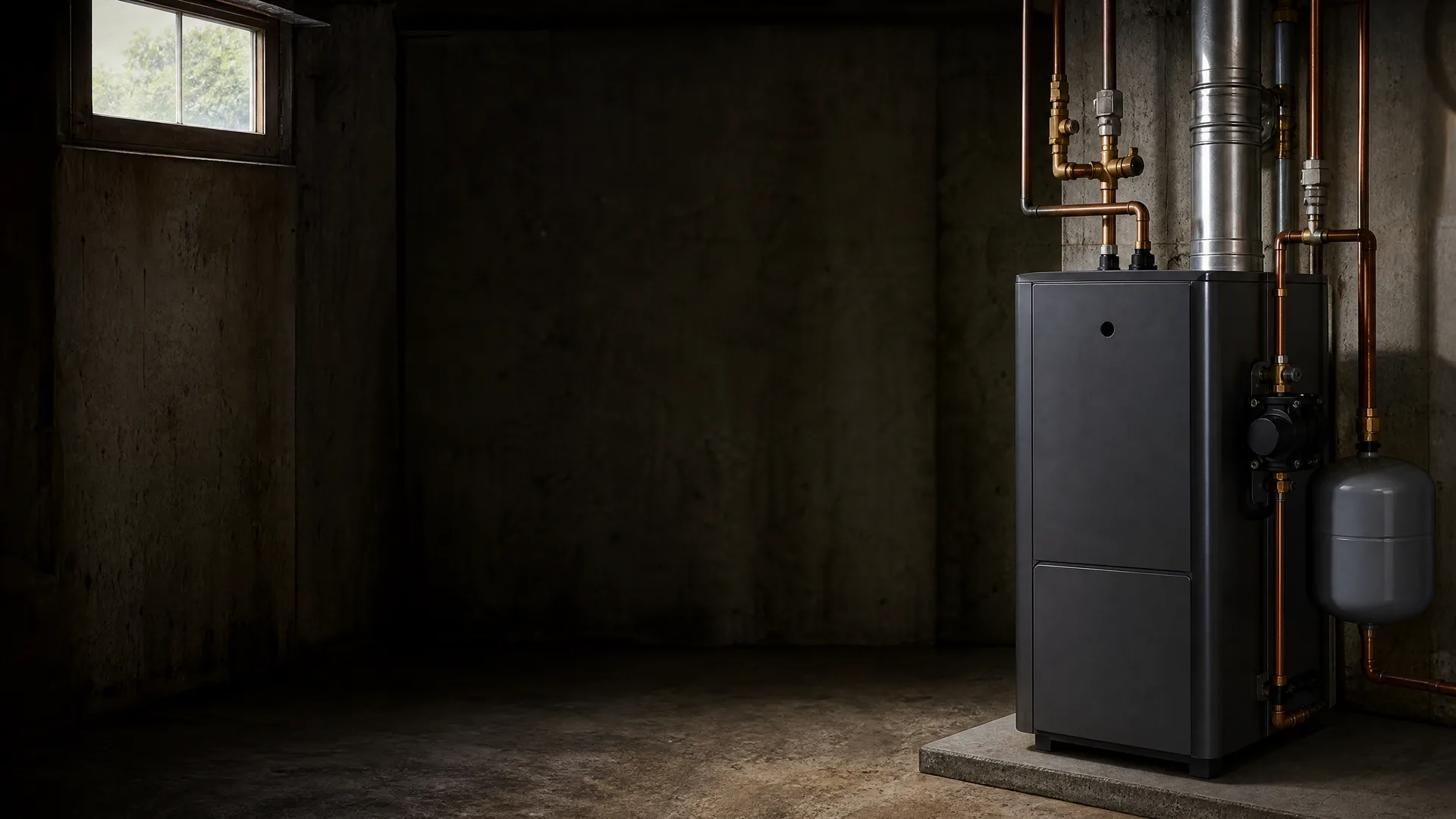
A dark grey boiler unit on a concrete pad in a dim basement, with copper pipes, a metal flue, and a grey expansion tank on the wall, and a small window with daylight on the left.

It's off your list after this

The pro who reaches out is licensed in Vermont.

Step 1 of 3: Equipment