 Start one form
Signs your boiler won't last a Vermont winter
Describe what your boiler is doing once, in one form.
A Vermont winter asks a lot of a boiler. January doesn't give you room for a breakdown, and a unit that's struggling in November usually isn't making it to March. If yours is short cycling, taking longer to bring the house up to temperature, or you've had the pilot or igniter go out more than once this year, that's worth a look before the hard cold sets in.
Most homes around here heat with oil, and an oil boiler that's starting to fail shows it in specific ways: soot around the burner, a smell when it kicks on, water pooling near the base, or a burner that won't fire on the first try anymore. None of that fixes itself, and power here costs enough that a boiler running inefficiently is already costing you something every week it keeps running that way.
Finding someone to look at it is its own chore. You end up searching, calling a few places, explaining the same thing on the phone three or four times, then waiting on quotes to compare before you even know who's showing up. This page skips that part. You tell it what the boiler is doing, and it connects you with one licensed contractor local to Vermont, someone who works on boilers all winter and has a good idea what's failing before they knock on your door.
That's one call, not five. No stack of quotes to sort through, no retelling the story to a different voice every time. Just the contractor who's going to do the work, matched to what you've described.
Below, you'll find the specific signs that mean your boiler is at risk this winter, and what each one usually points to. Read through them, see what matches what you're seeing, and use the button when you're ready to get someone out to look at it.
A boiler that won't make it through a Vermont winter usually tells you before it quits outright. Watch for short cycling, where it fires on and off in quick bursts instead of running a steady stretch. Watch for rooms that take longer to warm up than they did last January, or radiators that stay lukewarm near the top while the bottom gets hot. Listen for banging or kettling sounds from the tank, which usually means sediment has built up around the heat exchanger. Oil heat runs most homes here, and most of those breakdowns happen in the cold snaps of January and February, when the boiler is working hardest and least able to recover on its own. If you've had more than one repair already this season, that's not bad luck. That's a boiler telling you it's running out of room to fail safely before the deep cold sets in.
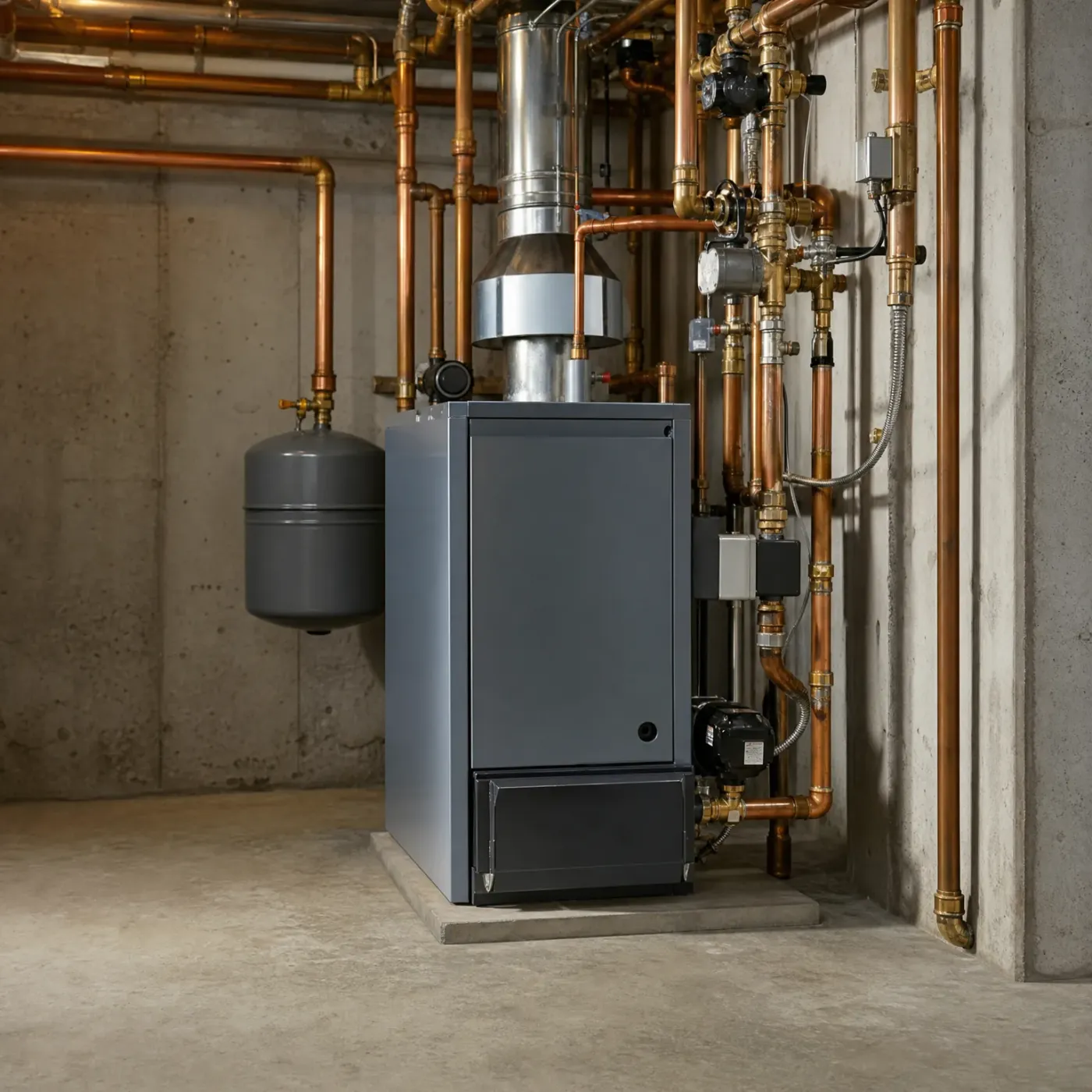
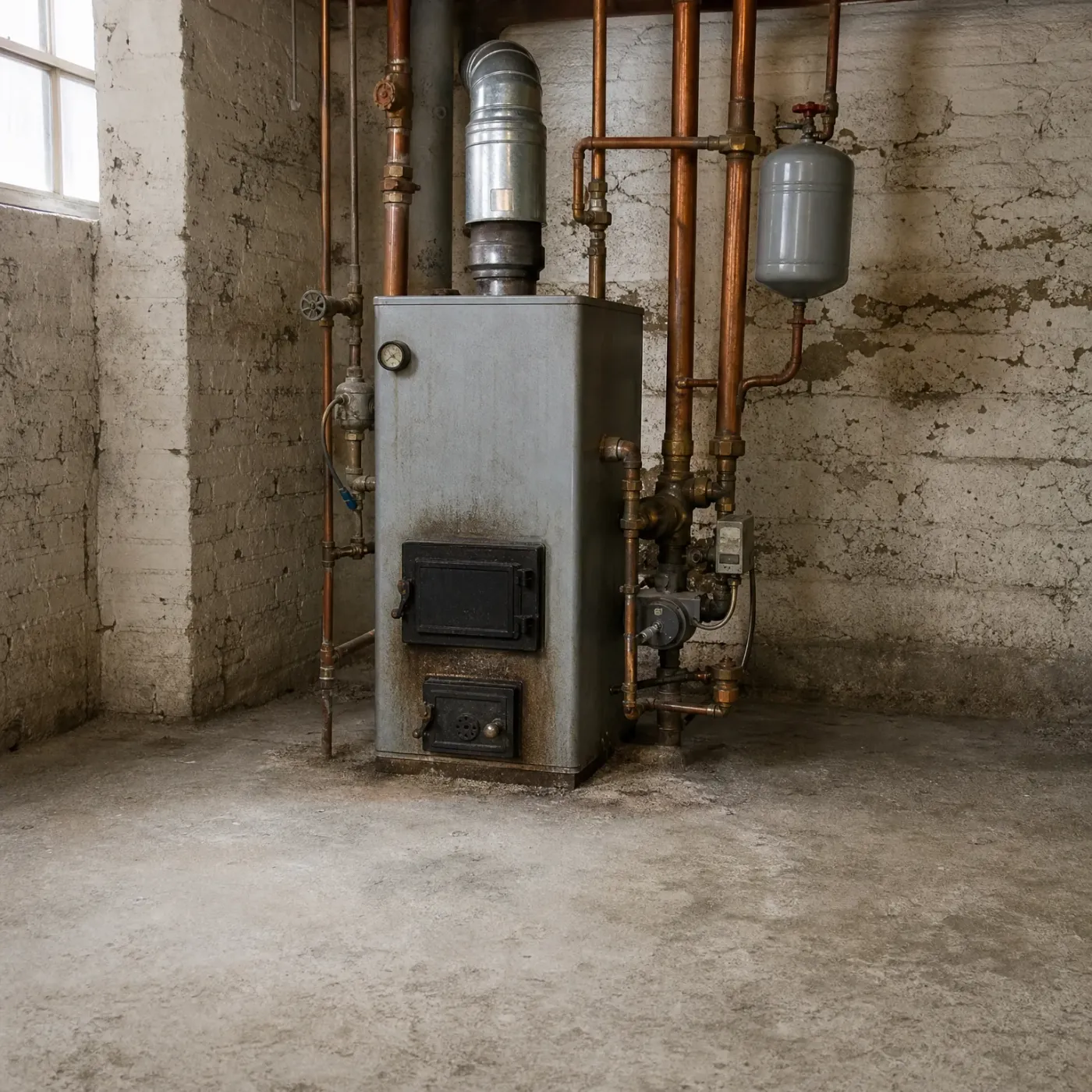
Most of what shortens a boiler's life happens out of sight. The cast iron sections hold pressure evenly when they're sound, but a hairline crack lets water seep out slowly, long before you see it on the floor. If you hear a rumble or knock from the heat exchanger, that's kettling, mineral buildup making water boil against hot metal instead of flowing past it. A pilot or igniter that needs relighting again and again this fall isn't bad luck, it's usually a thermocouple or flame sensor on its way out. The aquastat matters too. When it can't hold the water temperature steady, the burner ends up cycling harder than it should on the coldest nights, which is exactly when you don't want it struggling. Soot or discoloration around the draft hood means combustion gases aren't venting properly. And if the circulator pump is humming but the house stays cold, the burner may be running fine while a seized bearing keeps the water from ever reaching your radiators.
What's Actually Failing Inside
- A cast iron boiler relies on its sections holding pressure evenly, and a hairline crack there lets water seep out slowly before it ever floods the floor.
- Kettling, that rumbling or knocking sound from the heat exchanger, means mineral buildup is making the water boil locally against hot metal.
- A pilot or igniter that needs repeated relighting through the fall points to a failing thermocouple or flame sensor, not just bad luck.
- An aquastat that can't hold the water temperature steady forces the burner to cycle harder than it should on the coldest nights.
- Soot or discoloration around the draft hood means combustion gases aren't venting the way they're supposed to.
- A circulator pump that hums but doesn't move water usually has a seized bearing, and the house stays cold even though the burner's running fine.




Skip the calls to every shop

Your request goes to one pro, not a list of companies.
Asking costs nothing, and the choice to hire stays yours.
What This Looks Like In Your House
- A boiler struggling to keep up means longer burner runs, and with oil heat here, that shows up fast on your fuel bill.
- Cold rooms upstairs while the thermostat reads warm usually means the boiler can't push heat as far as it used to.
- A pressure relief valve that keeps dripping is wasting water and losing the pressure your radiators need to heat evenly.
- If the boiler room smells of oil or exhaust, that's unburned fuel or a venting problem, not something to wait out.
- A unit that needed two repairs last winter is telling you something about the one coming, not just bad luck.
- Rust stains on the floor under the boiler mean a leak has been going on longer than you've noticed it.
Most of these signs show up as a change in your own routine, not a gauge you have to learn to read. You notice the burner running longer than it used to, and since most homes here heat with oil, that difference lands on your fuel bill before you've figured out why. You notice a bedroom upstairs that never quite gets warm no matter where you set the thermostat, which usually means the boiler can't push heat as far through the house as it once did. You notice the pan under the pressure relief valve has water in it again, and that's pressure your radiators needed draining away instead of heating the house. A smell in the boiler room, oil or something like exhaust, is fuel that isn't burning clean or air that isn't venting where it should, and neither waits well. If you already called someone out twice last winter for the same unit, that's not two separate strokes of bad luck, that's the boiler telling you what's coming this winter too. And rust on the floor underneath, even a little, means water has been finding its way out for longer than you've known about it. None of these on their own means the boiler is finished. Together, or even two at a time, they mean it's worth having someone look at it before the cold really sets in, rather than finding out what it can't do in the middle of a January night.
Winter nights average 12°F statewide
At 12°F, a boiler that's lost efficiency has nowhere to hide. It has to run longer to make up the difference, and a unit with a cracked section or a weak pump feels that strain first on the coldest nights, right when you need it most.
NOAA nClimDiv 1991-2020 county normals weighted by homes
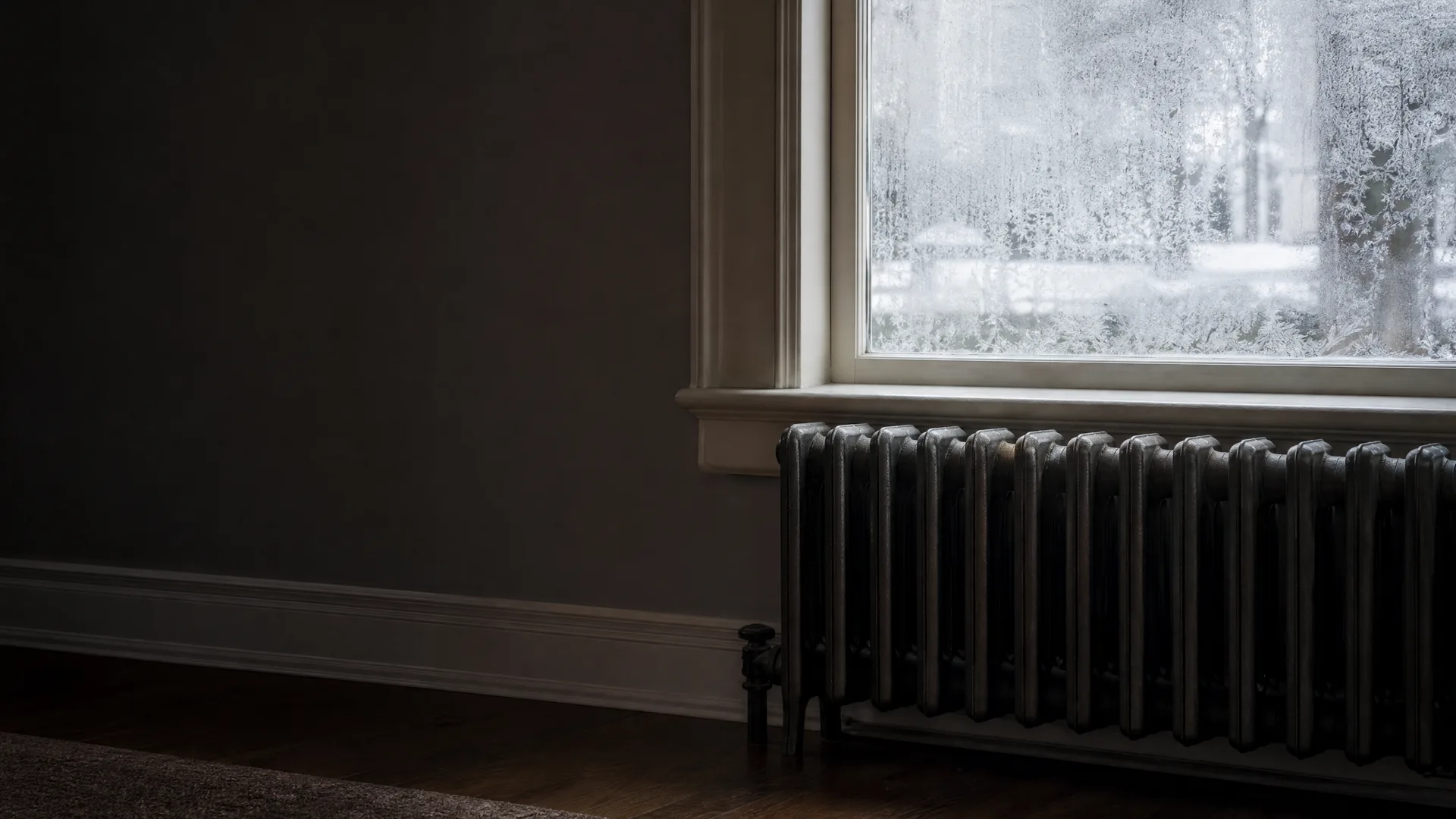
It's just past six and still dark. The thermostat says the furnace room's fine, but the living room is not. You're standing by the radiator under the window in your socks, and the glass has ice on the inside of it, a thin white feather pattern across the bottom pane. The cast iron under your hand is barely warm, not hot the way it should be after the boiler's been running since five. Outside the window the thermometer on the porch post reads well below zero. You crouch down and put your palm flat on the radiator's lowest ridge, waiting to feel it climb, and it doesn't.
Why does my boiler make a banging noise when it kicks on?
That banging usually starts small, a knock or two when the burner fires, and gets louder over a few weeks. It's easy to put off calling about a noise when the boiler still heats the house fine otherwise. But that sound has a cause, and in a cast iron boiler heading into a Vermont winter, it's worth knowing what it means before the noise gets worse or the section underneath it cracks.
It's kettling, and it means mineral buildup is coating the heat exchanger
The banging is called kettling. Mineral scale builds up on the heat exchanger over time, and water trapped under that layer flashes to steam pockets before it can mix back in, which is what makes the knocking sound when the burner kicks on. It's the same thing that happens in an old kettle, just inside your boiler instead. Left alone, that scale keeps the heat exchanger from transferring heat the way it should, so the boiler runs longer to do the same job. It also puts more stress on the metal underneath, and that's where cracks start. A boiler doing this in November is one more likely to let you down by January.
Winter nights statewide average 12°F, according to NOAA. A boiler at the end of its life doesn't hold heat the way it used to, so on nights that cold it has to run almost constantly to keep the house at temperature. You'll notice the burner cycling on again just minutes after it shuts off, or the house losing warmth faster than the thermostat suggests it should. An oil-fired boiler working that hard burns through fuel fast, and on a run of nights near 12°F, a weak unit is the one most likely to fail right when the house needs it most.
NOAA nClimDiv 1991-2020 county normals weighted by homes



If you've noticed more than one of these, don't wait for the next cold snap
A boiler that's short cycling, kettling, leaking at the fittings, or losing pressure overnight is telling you it's in trouble before it leaves you without heat. None of these get better with a mild stretch of weather. They get worse on the next cold night, and in Vermont that night usually isn't far off.
Finding out whether yours needs a repair or a replacement means getting someone qualified to look at it, not guessing from a list. You don't need to call around and describe the noise to three different companies to get there. This connects you with one licensed contractor local to Vermont, someone who works on boilers like yours every winter and knows which of these signs mean a part needs replacing and which mean the whole unit is done.

Skip calling around