What a boiler tune-up covers before a Vermont winter

Send the form, and lining up the boiler tune-up stops being yours to chase.

Let a pro reach out

A boiler tune-up before winter covers the parts that decide whether the system runs safely and holds its efficiency through a Vermont heating season. A technician cleans or tests the burner and nozzle, checks the flue and combustion for a proper draft, bleeds air from the system, checks water pressure, and inspects the aquastat and relief valve. On an oil-fired boiler, most of this matters because oil leaves soot and residue on the burner and heat exchanger that a gas system doesn't build up the same way, and that buildup is what drags efficiency down over a winter of steady firing. Catching a worn nozzle or a fouled burner now means the boiler isn't struggling to make heat in January, which matters here since so many homes run on oil and electricity costs more in Vermont than in most of the country. A clean, tested boiler going into winter is also one far less likely to fail on the coldest night of the year.

A man in a blue sweatshirt reclines with closed eyes in a brown leather armchair in a living room with a bookshelf, houseplant, sofa, window, and a side table holding newspapers and a dark mug.
A bearded man in a gray pullover reclines with closed eyes on a brown leather sofa in a sunlit room with a window, framed picture, potted plant, and a wooden cabinet holding papers and a dark mug.
A man in a gray sweater leans back with closed eyes in a brown leather armchair beside a wooden side table holding a dark mug and a folded newspaper, with bookshelves and a window seat behind him.
A man in a green sweater reclines in an armchair with his eyes closed and a slight smile, beside a window with plants, a small table holding a mug and folded newspaper, and bookshelves behind him.

Is your boiler ready for the cold, or just hoping to make it?

Maybe the burner kicks on with a bang instead of a quiet whoosh. Maybe there's a faint oil smell near the unit, or soot around the door that wasn't there last spring. A radiator that used to heat edge to edge now runs cold at one end, or the whole system takes longer to bring the house up to temperature than it used to. None of that feels urgent in October. By January, a boiler running on a dirty nozzle or a weak draft is burning more oil to do the same job, and oil here isn't cheap. A system that struggles quietly all season is also the one most likely to quit outright on the night you need it most.

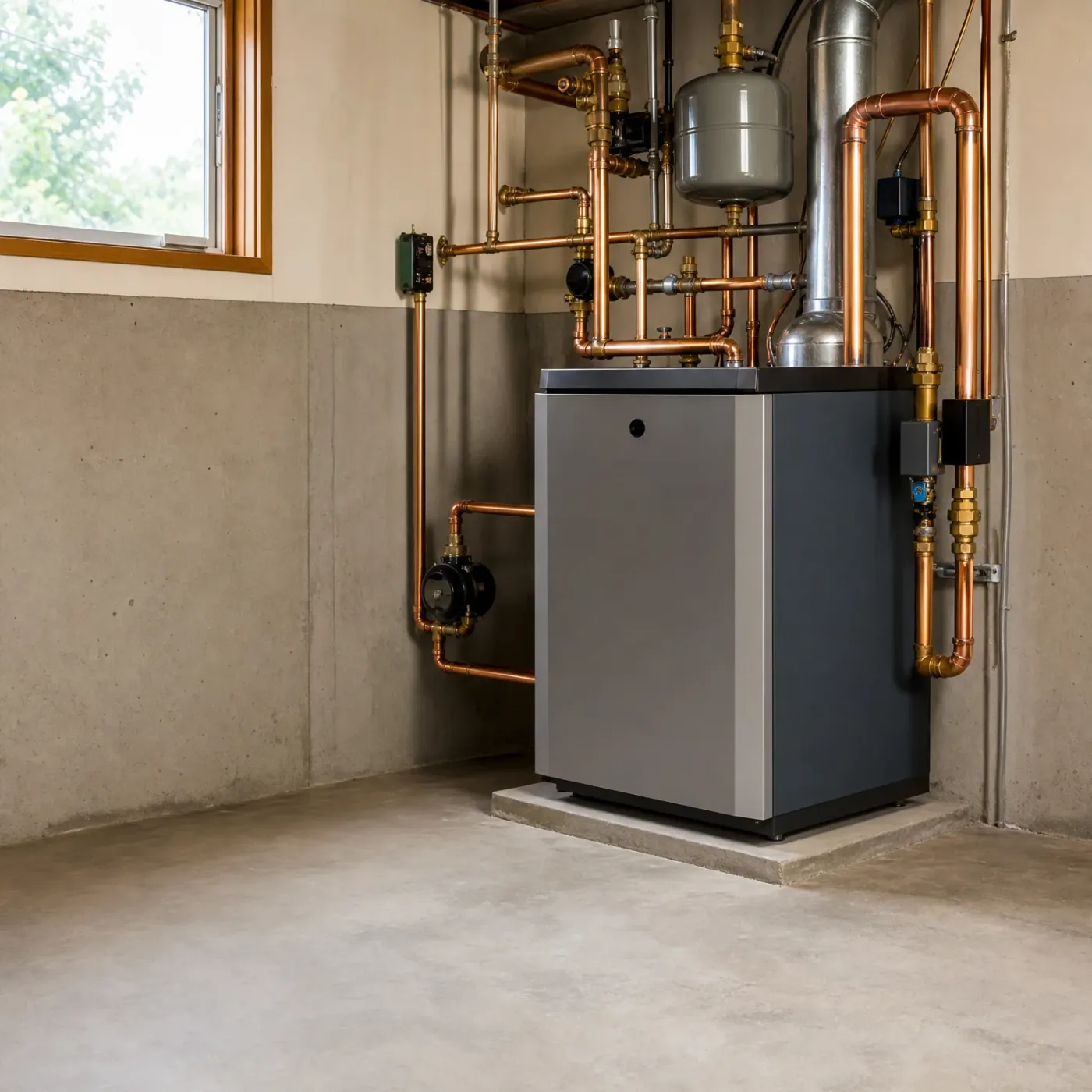
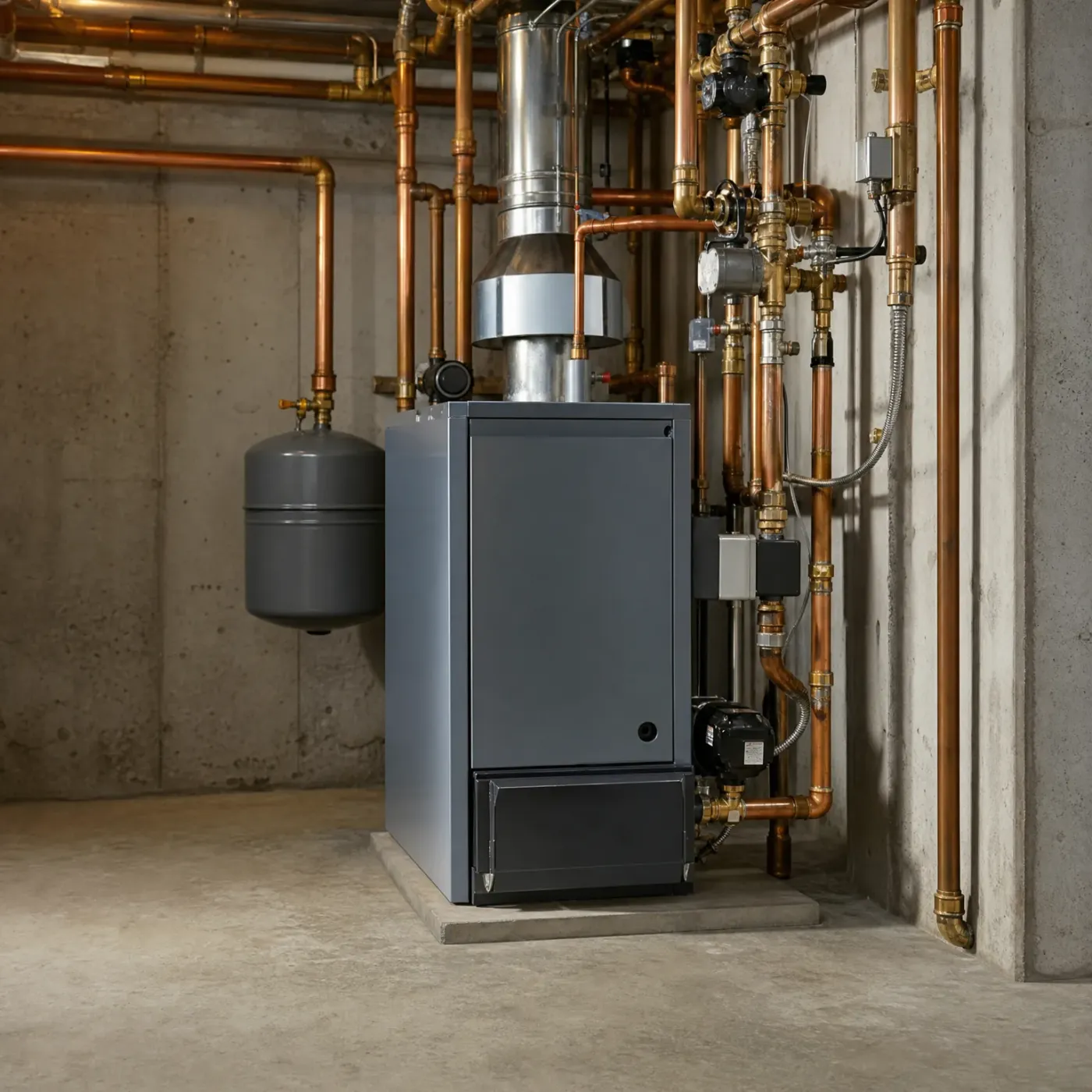
A gray floor-standing boiler on a concrete pad in a basement corner, connected to copper piping, brass valves, a circulator pump, an expansion tank, and a metal flue, with a window at upper left.

Serviced before the cold sets in

A boiler that's had its burner cleaned and its nozzle checked fires clean and holds its draft. The pipes stay tight, the pump runs quiet, and the expansion tank keeps pressure where it should be. It can run through January without asking for attention.

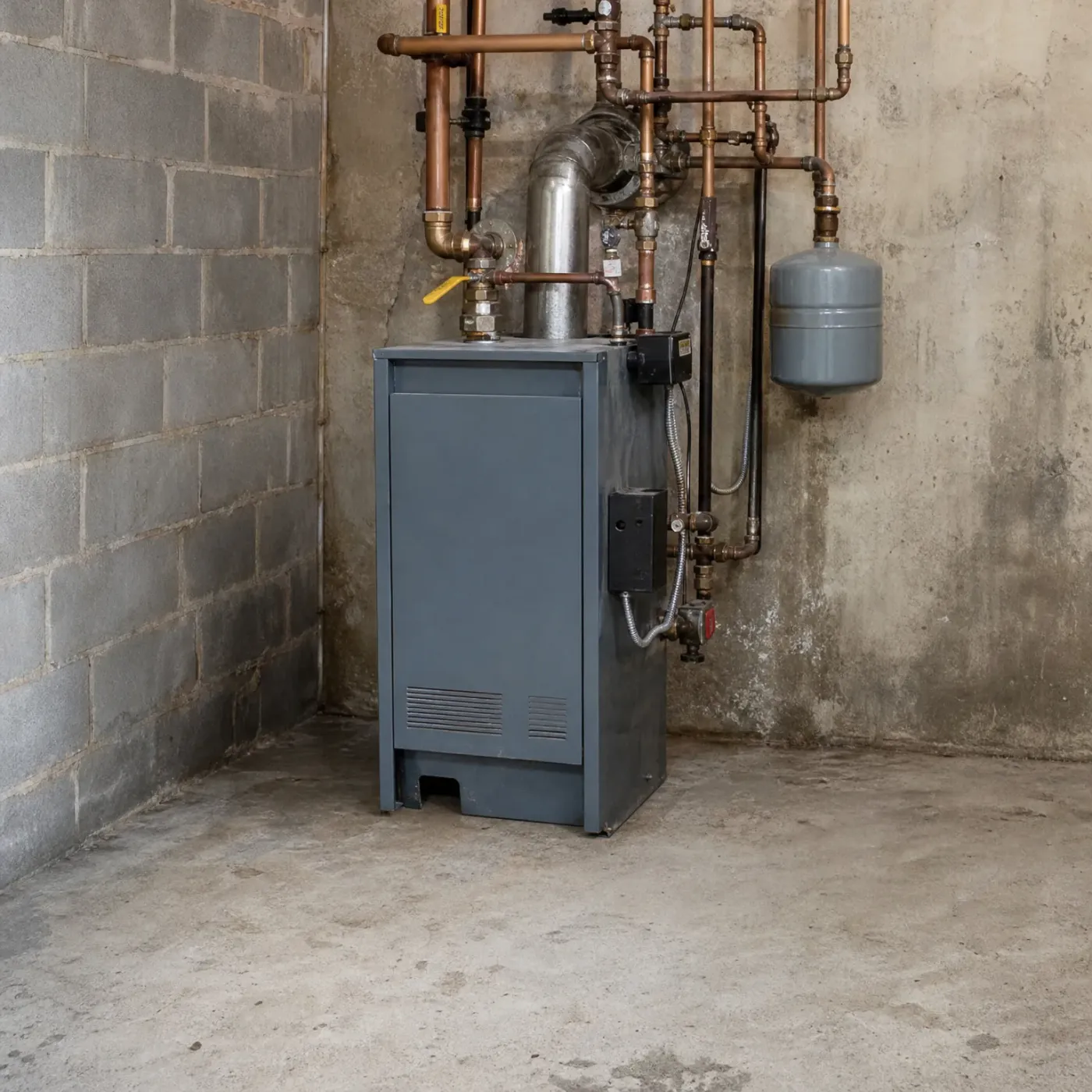
A gray floor-standing boiler in a basement corner with copper and black piping above it, a flue vent, and a gray expansion tank mounted on the concrete wall beside a concrete block wall.

Left to run as is

Soot builds up around the door. The flue draft gets lazy and the burner struggles to light clean. Nothing looks wrong yet, but oil use climbs and the risk of a shutdown rises right when you need the heat most.

Tune-Up Now or Fix It in January

Tune-up now

  • A technician cleans the burner and checks the nozzle while the boiler is still off for the season, before the first cold snap puts it to work.
  • Soot around the door or a delayed, banging ignition gets caught and corrected before it has a chance to foul the heat exchanger further.
  • The relief valve, pump, and expansion tank get checked while there's no urgency, so a weak one is replaced on a normal schedule.
  • Oil use on a boiler that fires clean and holds its draft stays closer to what the system was built to run on.
  • Scheduling ahead means picking a day that works for you, not waiting on whoever can fit in an emergency call.

Waiting for a breakdown

  • A boiler that quits in January means no heat in a Vermont house until someone can get out to look at it.
  • Diagnosing a cold boiler takes longer when nobody's seen it since last spring and there's no baseline to compare against.
  • A part that failed from months of soot buildup or a bad draft often costs more to replace than it would have to clean or adjust.
  • Emergency calls during a cold stretch land behind everyone else who waited too, so the wait itself gets longer.
  • A pump or valve that fails outright, instead of being caught worn, can mean water damage on top of the heat loss.
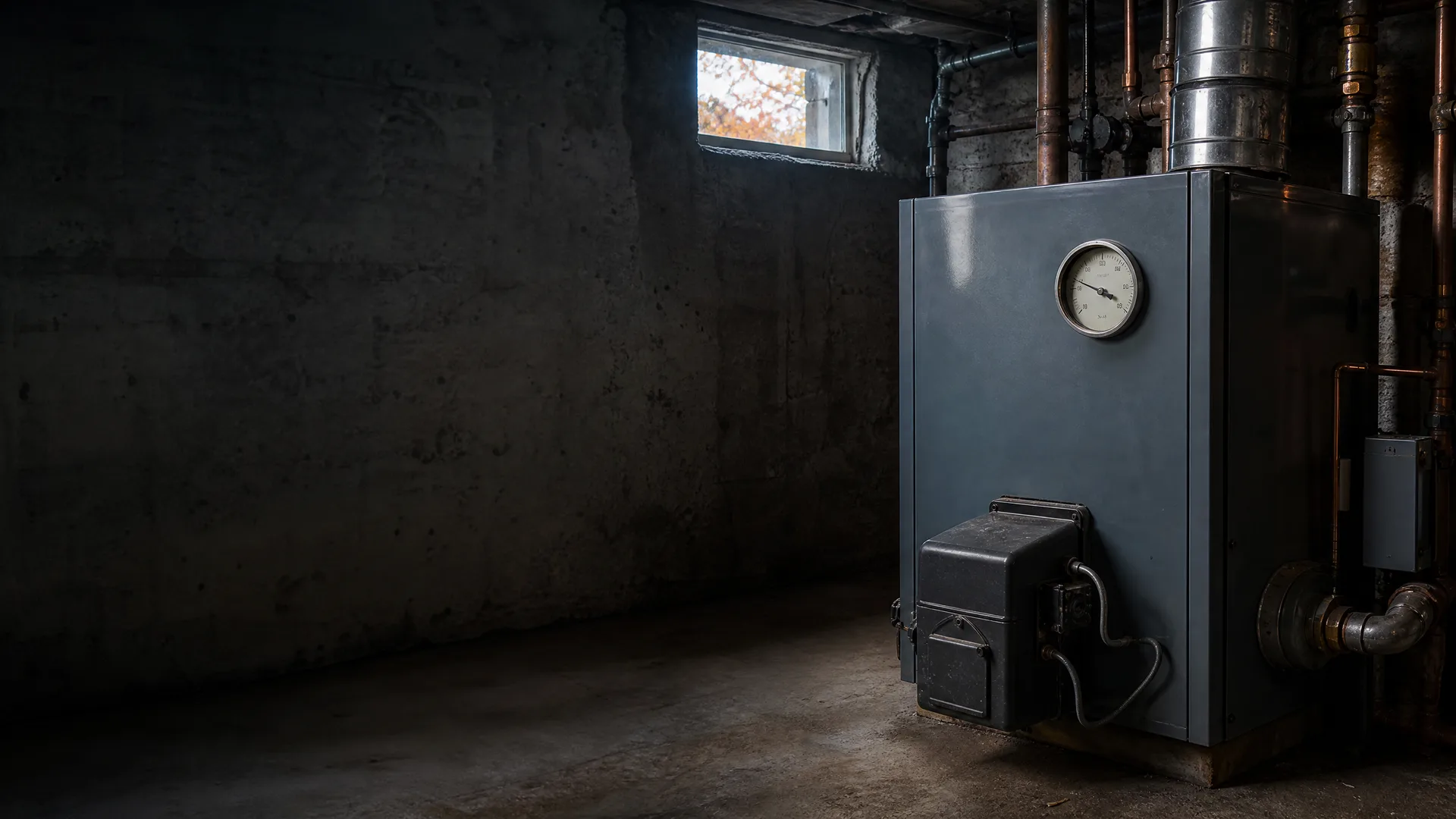
A gray boiler with a round pressure gauge and copper and metal pipes stands in a dim concrete basement lit by a small window.

You go down to check the thermostat setting before the first real cold snap, the one the forecast has been warning about all week. The basement is cool, the kind of October cool that means the oil tank is about to start earning its keep. The boiler sits quiet against the wall. You crouch down to look at the pressure gauge out of habit, more than anything, and the needle is sitting low, well under where it was last year at this time. Outside the small basement window the maples are mostly bare now. You straighten up, make a mental note, and head back upstairs without touching anything.


Let someone else find the pro

You already know what oil costs in Vermont, and a boiler that's lost its edge burns more of it to hold the same temperature in your living room. A tune-up before the cold sets in is how you keep that bill from climbing on its own. Right now the alternative to booking one is calling a handful of oil companies, sitting on hold, explaining the same thing about soot or a banging burner three or four times, then weighing quotes you have no good way to compare. That work doesn't make your boiler run any better. It just delays the appointment you were going to need anyway. Send the form and that part is done. One contractor takes it from here, and the only thing left on your end is being home when they show up. Everything between now and the first hard freeze stops being something you have to manage.

A dirty nozzle sprays oil in the wrong pattern, so the burner struggles to light clean and the flame burns uneven instead of steady.

That uneven flame leaves soot on the heat exchanger, and soot works like a blanket. A sixteenth of an inch of it can knock a boiler's efficiency down enough to show up on your oil bill by January.

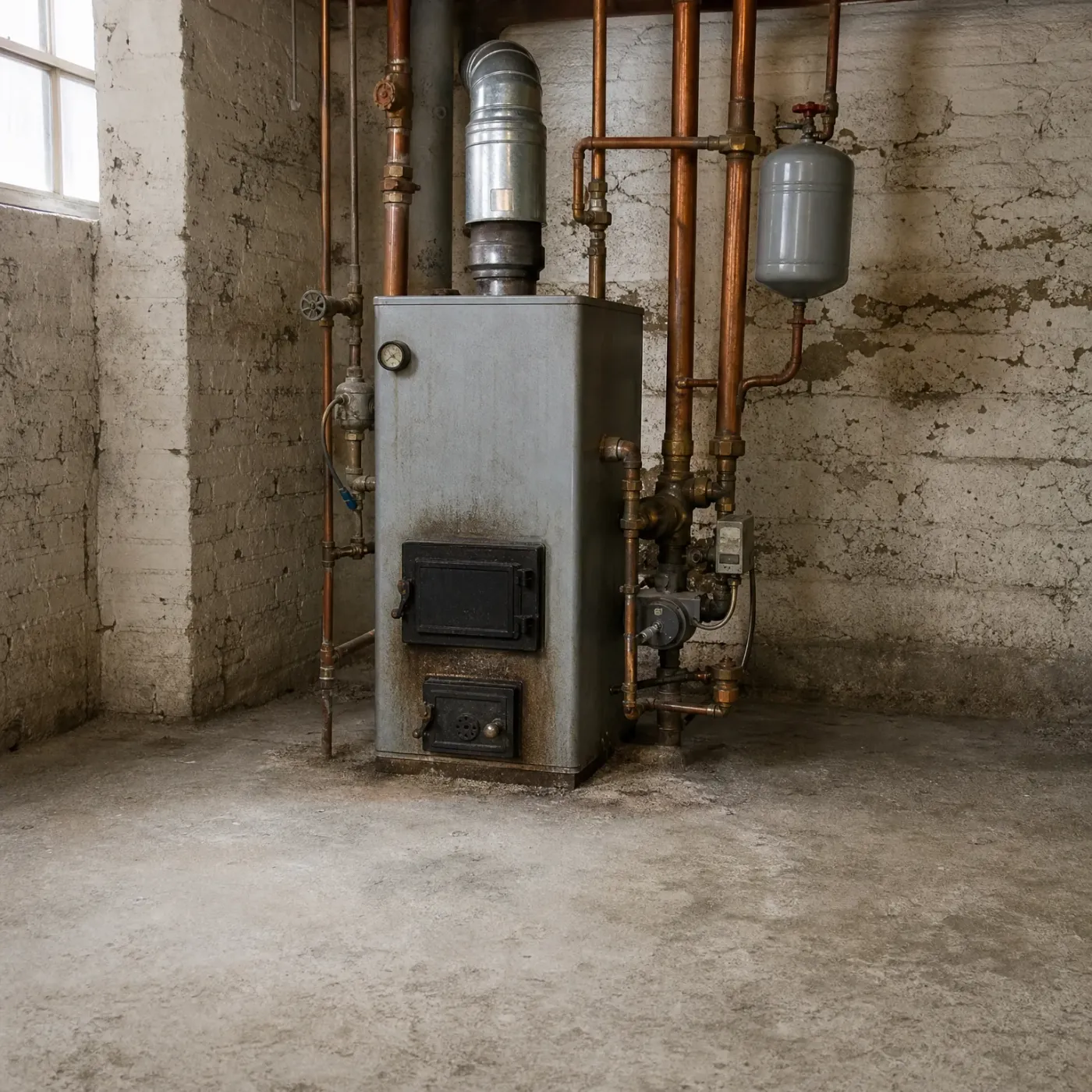
An old gray boiler with copper piping, a flue duct, pressure gauge and an expansion tank stands in the corner of a basement with painted masonry walls and a bare concrete floor.
Before you get your boiler maintenance
A gray boiler on a concrete pad in a basement, connected to copper piping, valves, circulator pumps, a metal flue, and a wall-mounted expansion tank.
After you get your boiler maintenance

Doing it yourself

You can bleed a radiator or check that the oil tank gauge isn't near empty, and both are worth doing. But you can't check the combustion chamber for soot buildup, test the flue draft, or verify the nozzle is spraying the right pattern without the gauges a technician carries. A boiler that looks fine from the outside can still be losing efficiency inside the burner assembly, and the only way to know is to open it up and test it. If you guess wrong about what's causing a rough start or a lingering oil smell, you could run the system all winter on a problem that gets worse with every cold snap.

Having someone else find out

Instead of researching what a combustion test even measures, or trying to tell a quiet pump knock from a dangerous one, you send the form and someone qualified takes it from there. No calling three companies and repeating the same description of the smell near the unit each time. No sitting with a furnace manual trying to figure out if a banging ignition is normal. You hand off the part that eats your evening, the search and the comparing, and what's left is a technician showing up with the tools to actually answer the question your boiler has been asking since the cool nights started.

Winter nights average 12°F statewide

A 12°F night is a long burner cycle, over and over, from December through February. Your boiler earns its keep on nights like that, and a dirty nozzle or weak draft shows up fastest when it's working hardest.

NOAA nClimDiv 1991-2020 county normals weighted by homes

  1. Technician shuts off power and the oil supply before opening anything.

  2. Burner assembly comes out so the nozzle and electrodes get inspected.

  3. Nozzle gets replaced if it's worn or spraying an uneven pattern.

  4. Combustion chamber and heat exchanger get cleared of soot.

A closed silver laptop and a ceramic mug of dark coffee sit on a wooden table in front of two chair backs, with a kitchen counter, tiled backsplash, wooden cutting boards, a vase of greenery and a potted plant by a window behind.

What a tune-up settles before the cold sets in

A boiler tune-up before winter checks the parts that decide whether it fires clean, holds its draft, and gets through a Vermont heating season without costing you more oil than it should. That's the whole answer. The rest is deciding when to get it done.

Finding someone to do it is the part you can hand off. Instead of calling around to a few oil companies, waiting on callbacks, and explaining the same thing about your boiler to each one, you send one form and the search is off your plate. No more comparing quotes against each other or wondering if the next guy would've caught something the last one missed. You still have to live through a Vermont winter. You don't have to spend an evening of it on the phone.

A living room corner with a light beige sofa holding a textured taupe cushion, a large ceramic vase of olive branches by a window, a framed neutral artwork on the wall, and a dark bowl with stacked books in the foreground.
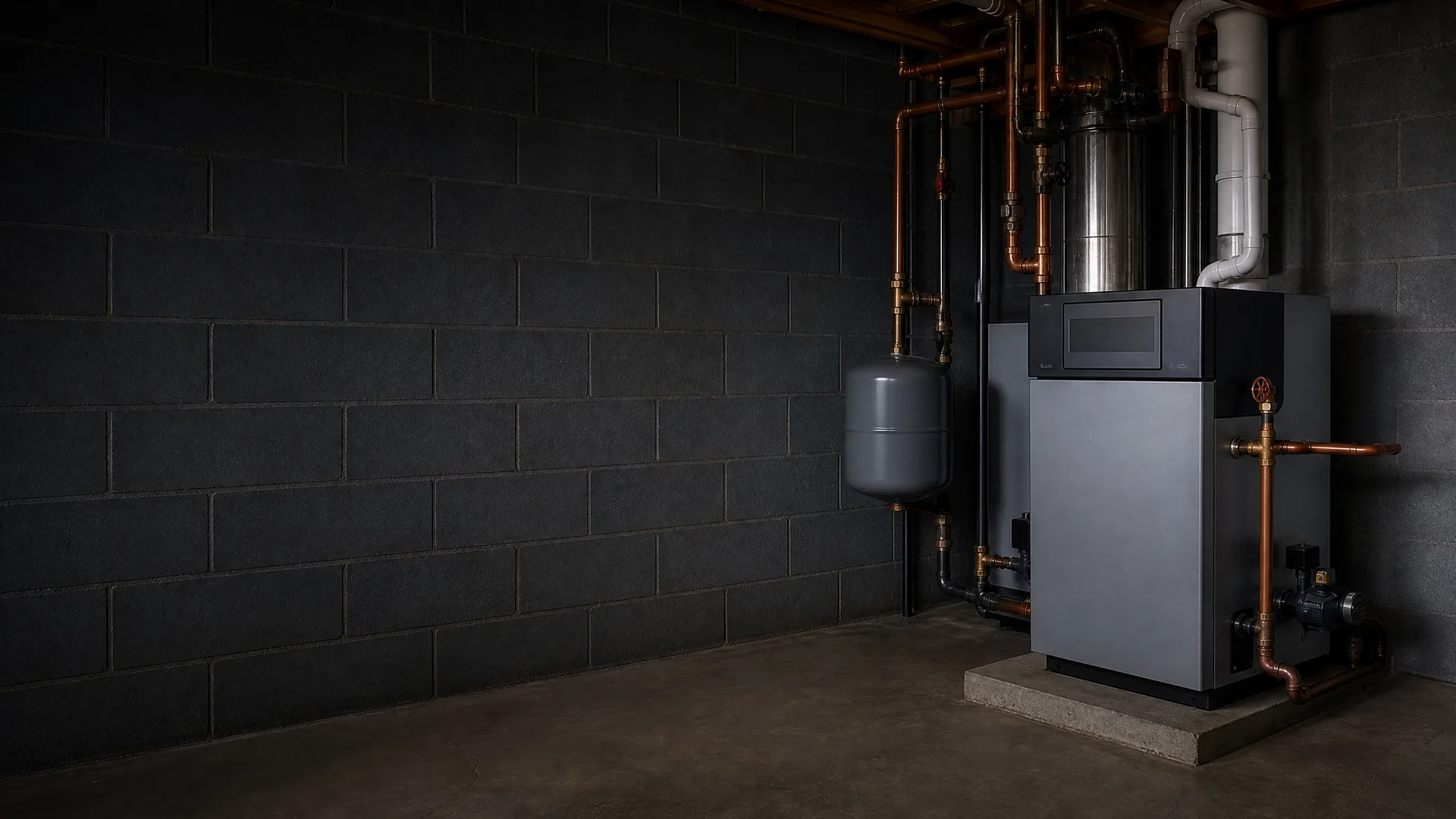
A gray boiler unit with a control panel sits on a concrete pad in a basement room with dark concrete block walls, connected to copper and metal piping, a gray expansion tank, and an insulated flue.

One request and it's handed off

Skip searching for a boiler pro and answer a few questions instead.

Step 1 of 3: Equipment