Describe your boiler job, and a local pro who handles it gets in touch.
That rumbling, popping sound from your boiler isn't it settling in for another Vermont winter. It's kettling, and it means mineral scale has built up on the heat exchanger. Water trapped behind that scale flashes to steam, and the noise you hear is the sound of it collapsing. Left alone, that spot on the exchanger keeps overheating, and that's how cracks start.
Oil-fired boilers around here see heavy use from October through the coldest part of winter, and that scale builds up faster the more the burner cycles. A boiler that's been kettling for a few weeks has usually had the problem longer than it's been making noise.
This isn't something to wait on. With electric rates in Vermont among the highest in the country, a boiler fighting through scale is burning oil and running longer to make the same heat. The fix depends on how much buildup there is and what shape the exchanger is in, and that's something a tech needs to look at in person, not guess at over the phone.
Finding the right person for that isn't always simple either. Boilers aren't as common a call as furnaces in most of the country, but they're standard equipment in Vermont homes, and a local contractor who works on them every winter knows what kettling usually means in a boiler your age, and what to check first.
When you request a match through this page, it goes to one contractor, not a handful. Someone licensed and local, who services boilers like yours as a regular part of the job, not an occasional one. They'll reach out to you directly about what you're seeing and hearing, and go from there.
That knocking and popping is scale buildup on the heat exchanger, usually from years of mineral-heavy water moving through it. The scale traps a thin layer of water against the metal. When the burner fires, that trapped water heats faster than the water flowing around it and flashes to steam before it can mix in. The steam bubble collapses against the cold water around it, and that collapse is what you're hearing. Most Vermont homes heat with oil, and an oil boiler's heat exchanger runs hotter at the surface than people expect, which makes scale build up faster once it starts. Left alone, kettling gets louder and the boiler works harder to push heat through that scale, so your oil use climbs while the house feels the same or worse. The exchanger itself can crack under the stress eventually. Catching it now, before the metal takes damage, is a lot less boiler than catching it after.
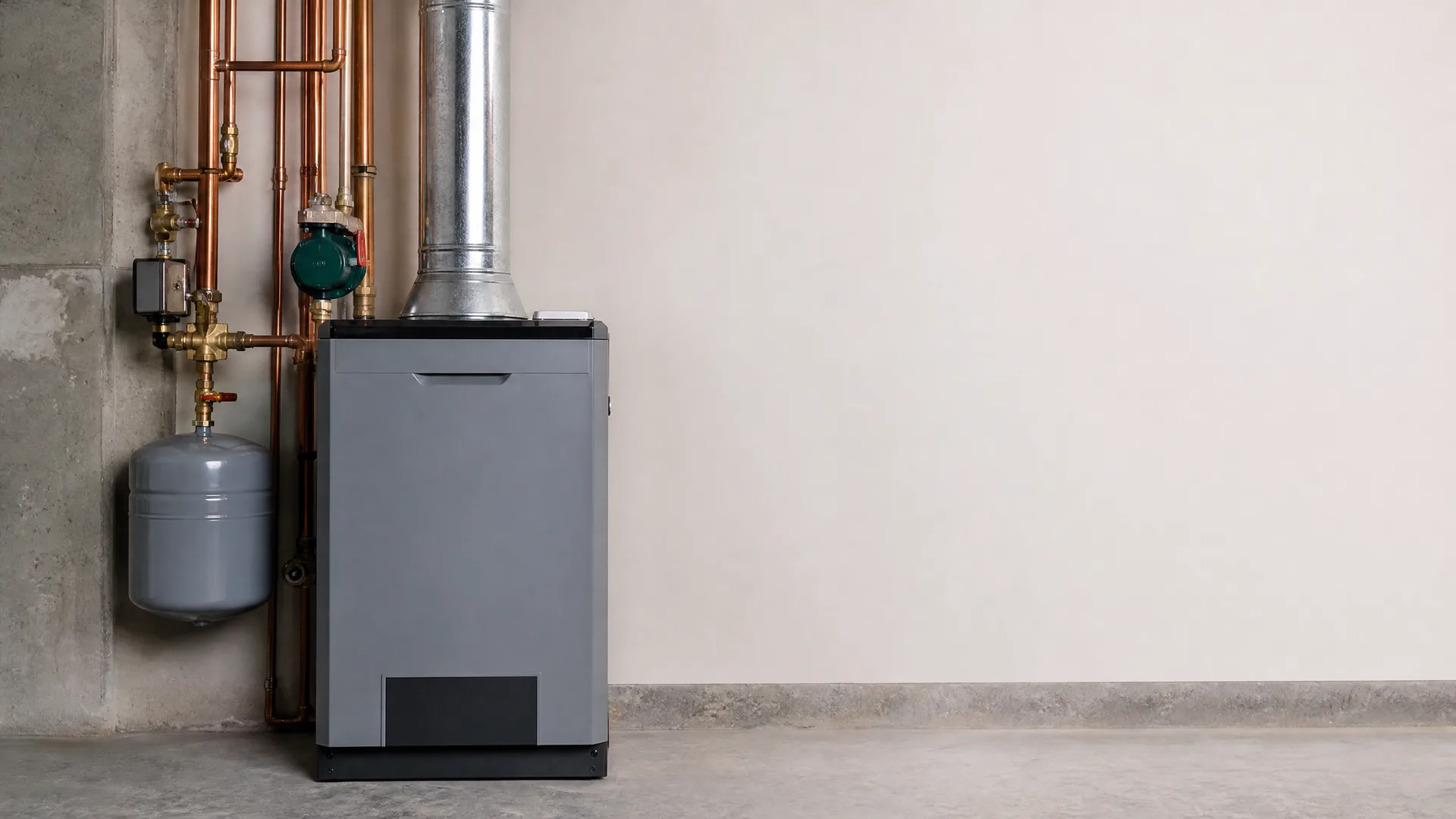
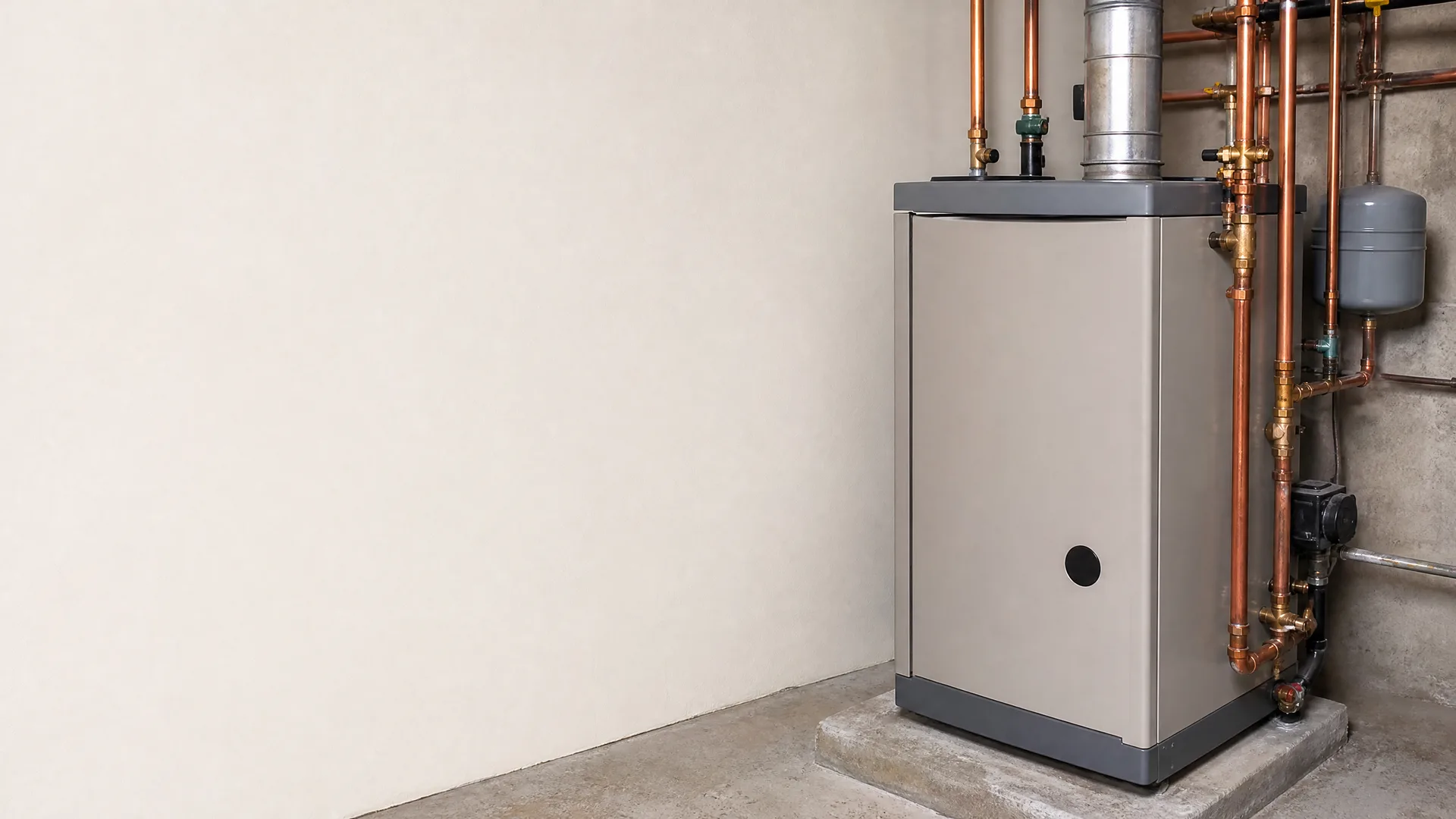
This is what a boiler sounds like running clean. Water moves freely past the heat exchanger, so heat passes into it instead of getting trapped against the metal.
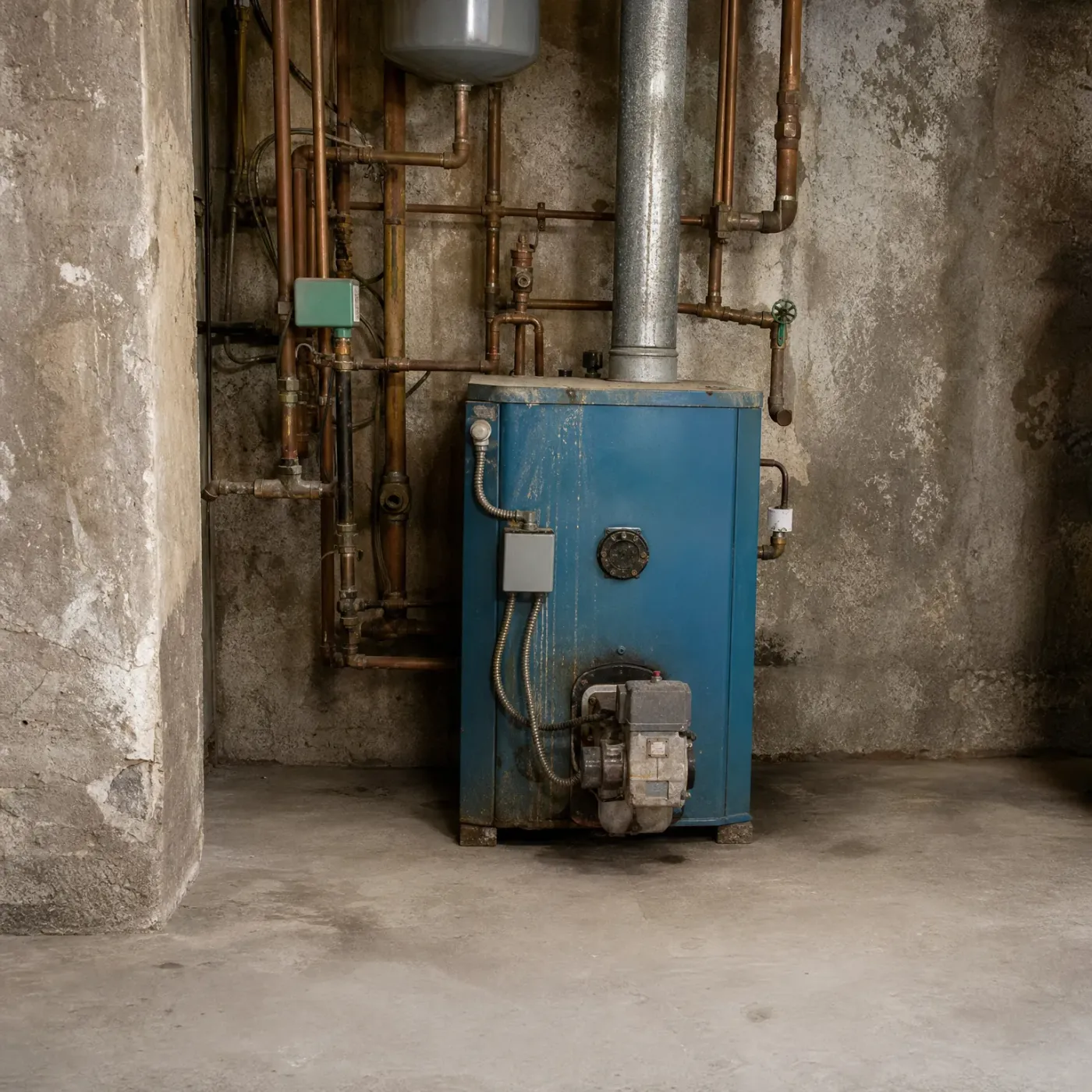
This is where kettling starts. Scale on the exchanger wall traps water against it, and that thin layer turns to steam before the rest of the water even warms.
Is this what you're hearing from the basement?
You're probably catching it most when the burner first kicks on, a knocking or popping from down where the boiler sits, sometimes loud enough to hear from the kitchen. It may ease off once the system's been running a few minutes, then start again on the next cycle. Some homeowners describe it as banging pipes, others as a sound closer to a kettle left on too long, which is exactly what it is. Left alone, the scale behind that noise keeps the heat exchanger working harder to do the same job, and in an oil-heat house in Vermont, a system straining through a full winter is a system more likely to fail on the coldest night rather than a mild one.
Only one pro gets your request, so you hear from one company.
It costs nothing to send, and you don't have to hire anyone.
Why oil-fired boilers scale faster
Most boilers in Vermont run on oil, and oil-fired systems cycle more often through a cold winter than a gas system holding steady at one setting. Every cycle heats and cools the water sitting against the exchanger wall. More cycles means more chances for dissolved minerals to drop out of the water and settle on that metal. A boiler that fires fifteen times a day scales faster than one that fires five.
What scale does to your bill
Scale is a poor conductor next to cast iron or steel, so heat that should pass into your water stays trapped at the exchanger wall longer, and the burner has to run longer to get the same water temperature. With power costs among the highest in the country here, a boiler working harder to push heat through scale is burning more oil to do it. The kettling sound shows up well before the bill does.
Fix the Scale or Let It Run
Ignore it
The scale keeps building on the heat exchanger, so the knocking gets louder and starts earlier in the burn cycle.
The trapped water layer forces the burner to work harder to heat the same space, and oil use climbs through the winter.
Scale insulates the exchanger unevenly, so some spots overheat while others don't, and that stress can crack the metal over time.
With Vermont's oil prices and power costs already high, a boiler working against scale buildup adds cost every month it runs.
A cracked heat exchanger from prolonged kettling usually means replacing the boiler instead of repairing a part.
Get it looked at
A contractor can flush the scale off the heat exchanger before it cracks the metal, which costs far less than a new boiler.
Someone who services boilers in Vermont every winter knows kettling almost always comes down to scale, and checks there first.
Catching it early usually means a cleaning and a water treatment check, not a parts replacement.
A local contractor can look at your specific boiler and water conditions rather than guess at what's causing the noise.
Working with one contractor who knows the equipment means you get a straight answer instead of fielding calls from several companies.
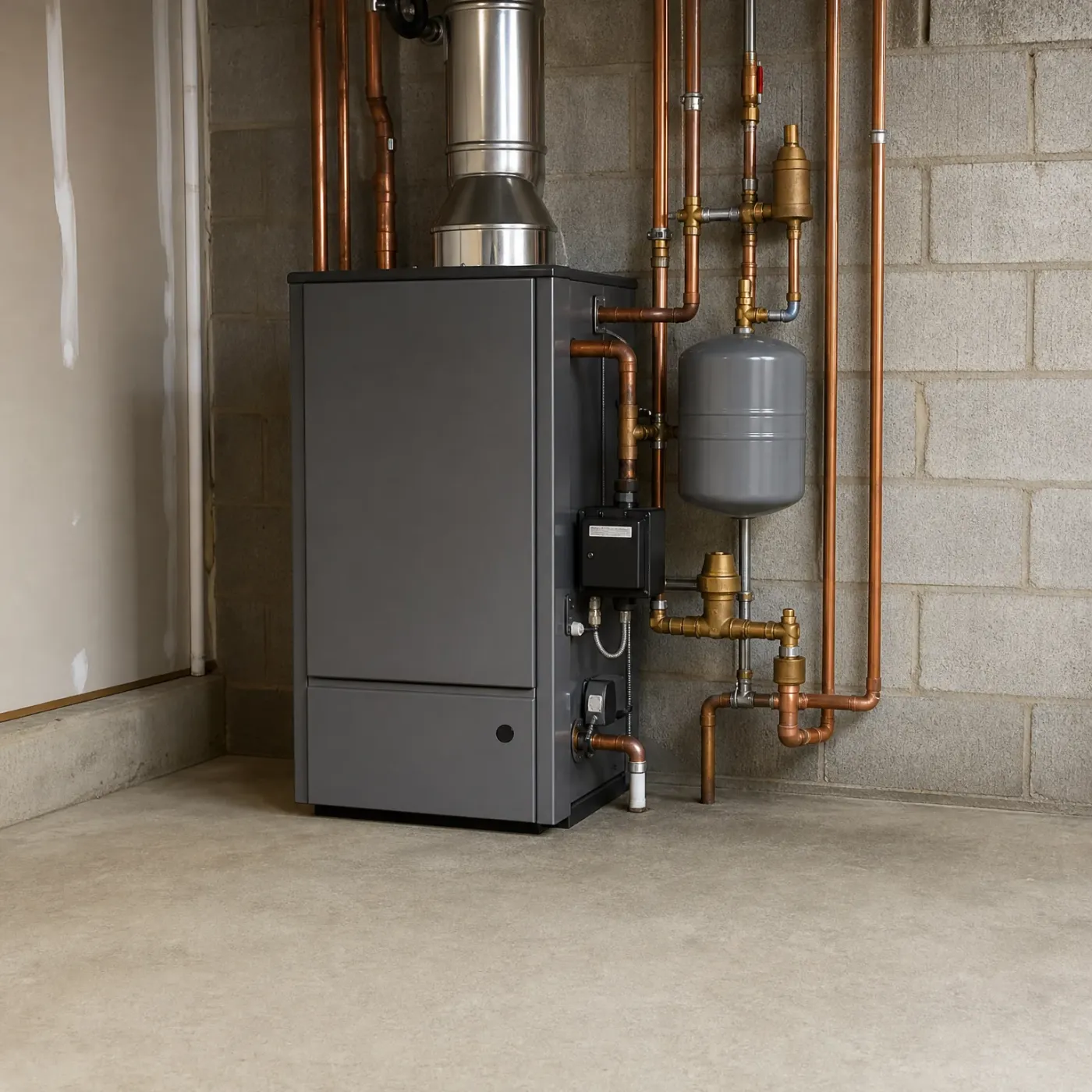
Running clean
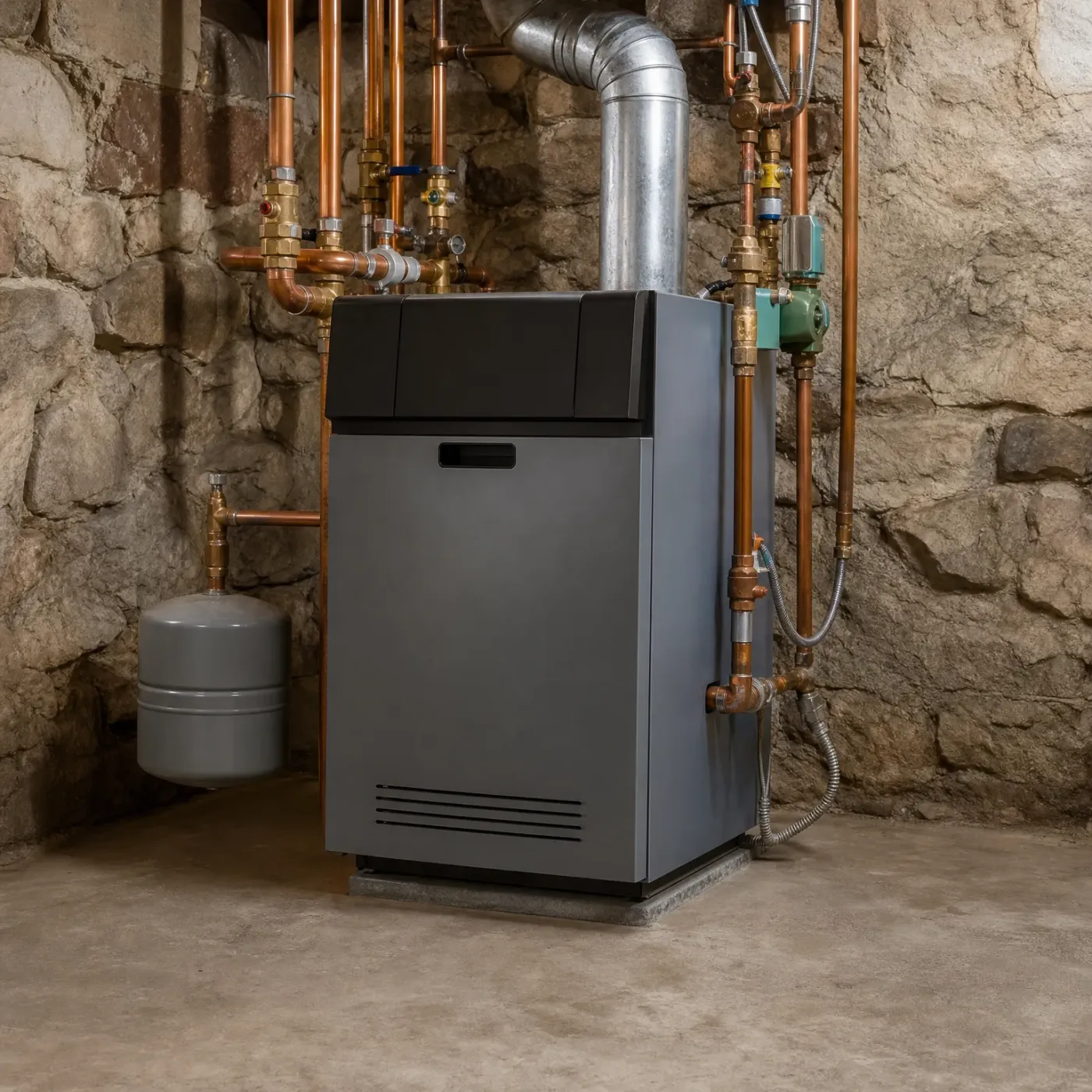
This is a boiler with no scale on the exchanger. The copper lines, the pump, the expansion tank all move water that's heating evenly, with nothing trapped against the metal. The burner fires, heats the water, and shuts off. No knocking, no popping, just the quiet hum you'd expect from a basement unit doing its job.
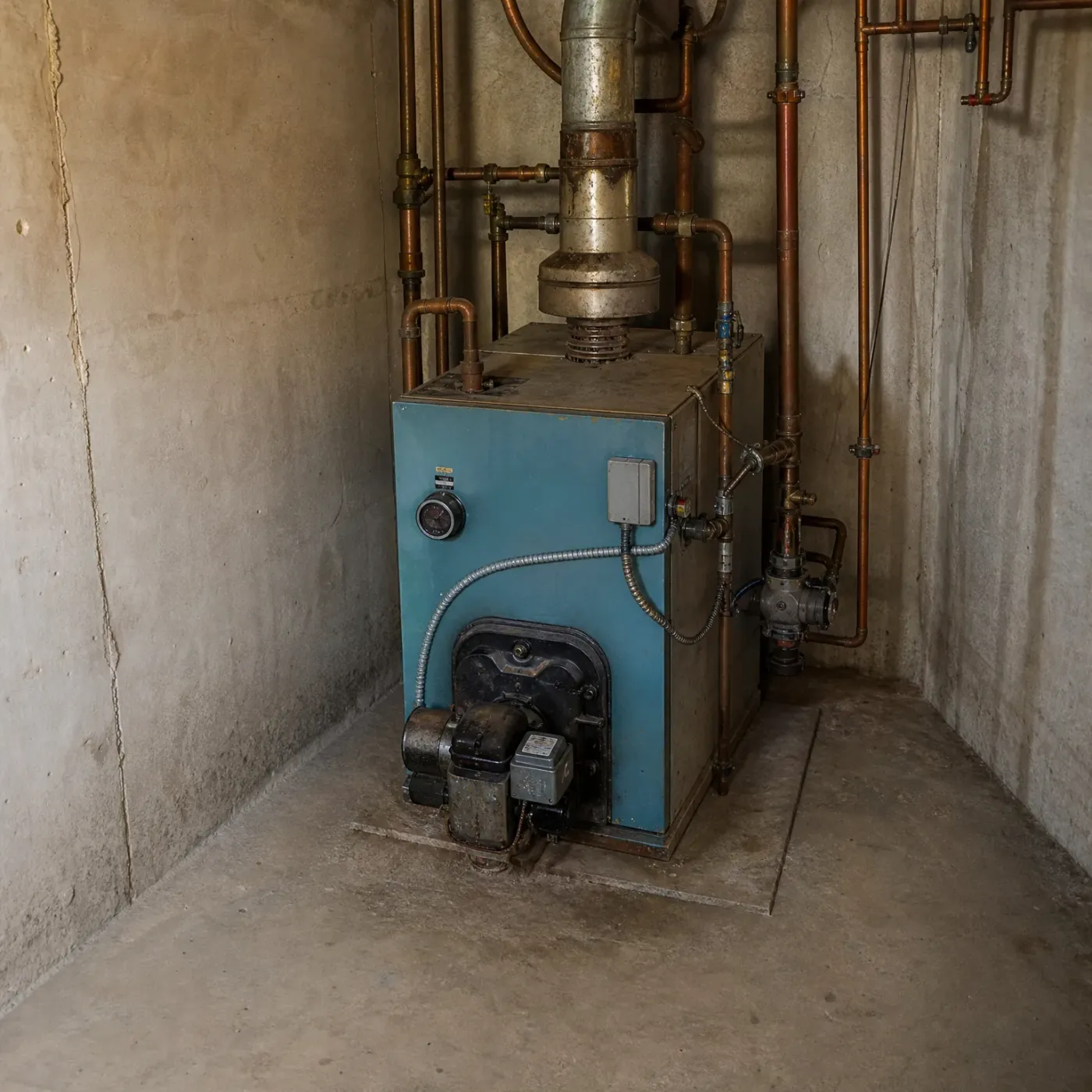
Scaled and kettling
This older unit shows what years of mineral buildup look like inside. The flue and burner are original equipment, and so is whatever scale has formed on the exchanger behind that steel jacket. Once scale traps water against the metal, the popping starts, and it only gets worse the longer it runs uncorrected.
Winter nights average 12°F statewide
At 12 below freezing most winter nights, your boiler is firing all night to hold the house, not just a few hours in the evening. Every one of those extra cycles pushes more water past whatever scale has already built up on the exchanger, so the knocking you hear now tends to start earlier in the night and run later into the morning as the season goes on.
NOAA nClimDiv 1991-2020 county normals weighted by homes
That knocking is scale, and scale doesn't fix itself
The sound tells you what's happening inside the boiler. Water is trapped against the heat exchanger by scale, and it's flashing to steam every time the burner fires. That won't stop on its own, and with oil prices what they are in Vermont, a boiler working that hard every cold night isn't a small thing to leave alone.
A local contractor who services boilers all winter has seen this exact problem in houses near you and knows what descaling that exchanger takes, or when it's gone past that point. Getting matched with one means a single contractor who works on this equipment reaching out to you, not a handful of companies competing for the call. Someone who already knows Vermont winters and Vermont oil boilers is in a better position to tell you what's going on in your basement than a stranger would be.