Dry and tight
Every fitting on a sound boiler stays dry. The gauges read steady pressure, the valves show no mineral crust, and the expansion tank holds its charge. Pipes carry water through the system without a drop escaping anywhere along the way.

You caught water where there shouldn't be any, maybe pooling near the base of the boiler or dripping from a pipe fitting. In Vermont, oil-fired boilers run hard from fall through spring, and a leak you catch now is a small job. Left alone through a cold stretch, the same leak can mean a cracked section or a pump that fails when you need heat most.
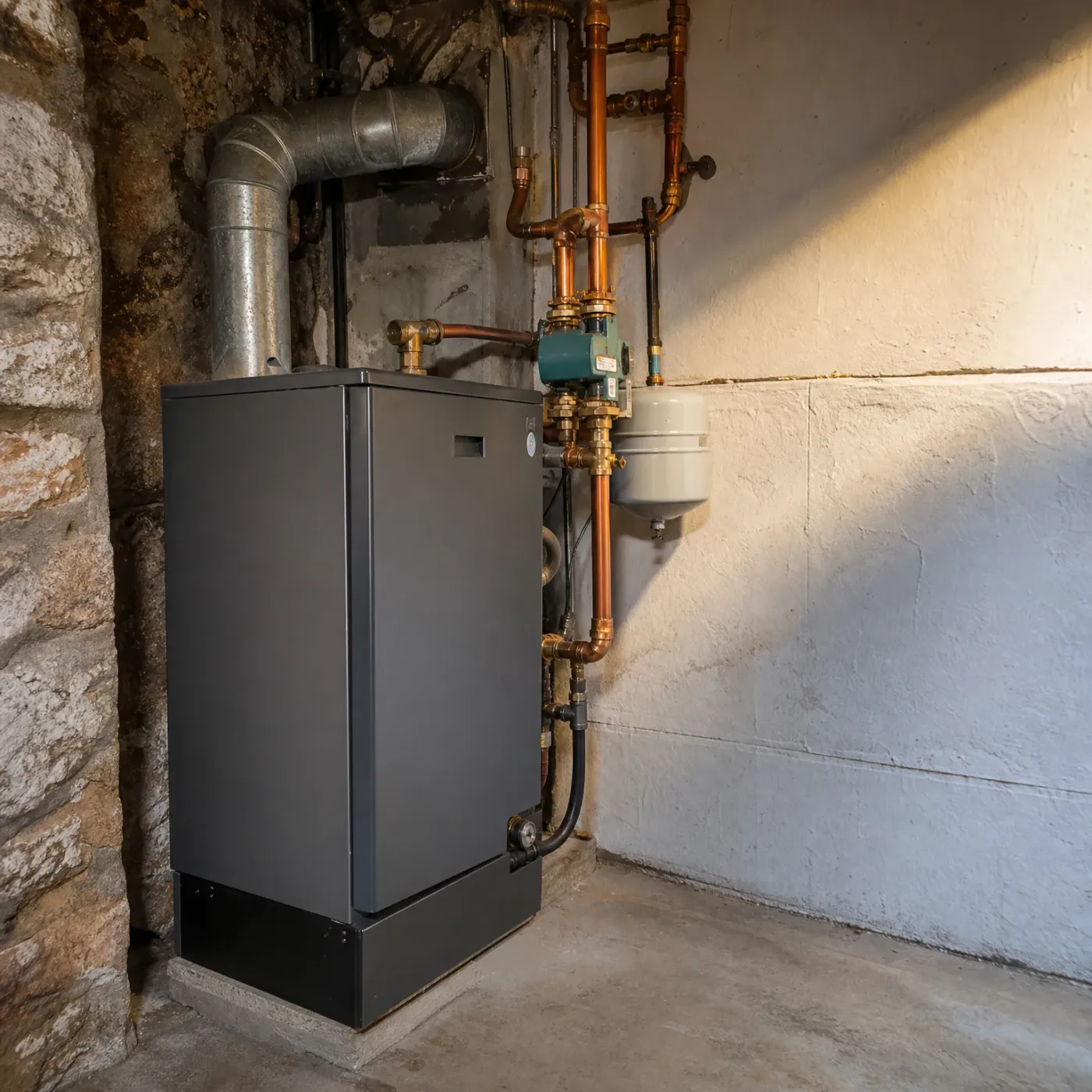
Most boiler leaks come from one of three places: the pressure relief valve letting go because system pressure is too high, a fitting or union that's worked loose over years of heating and cooling, or the circulator pump's seal wearing out. Oil-fired boilers that run most of the heating season here go through a lot of expansion and contraction, and that cycle is what loosens joints and wears seals over time. Where the water is coming from narrows it down. Water at the relief valve points to pressure. Water at a union or near the pump points to a fitting or seal. Either way, a boiler that's leaking is losing pressure it needs to heat your home, and a small leak now tends to get worse once the real cold sets in.
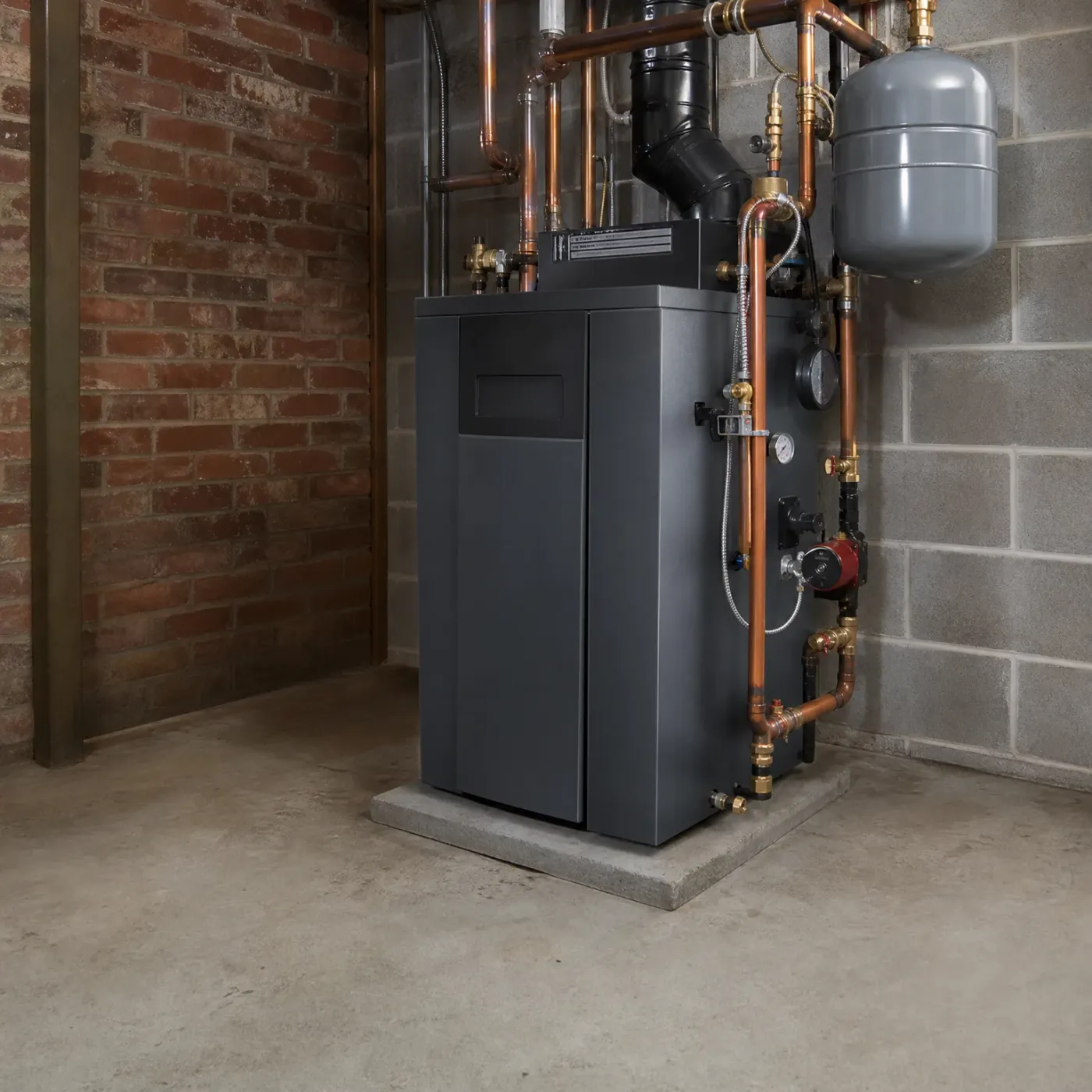
Every fitting on a sound boiler stays dry. The gauges read steady pressure, the valves show no mineral crust, and the expansion tank holds its charge. Pipes carry water through the system without a drop escaping anywhere along the way.
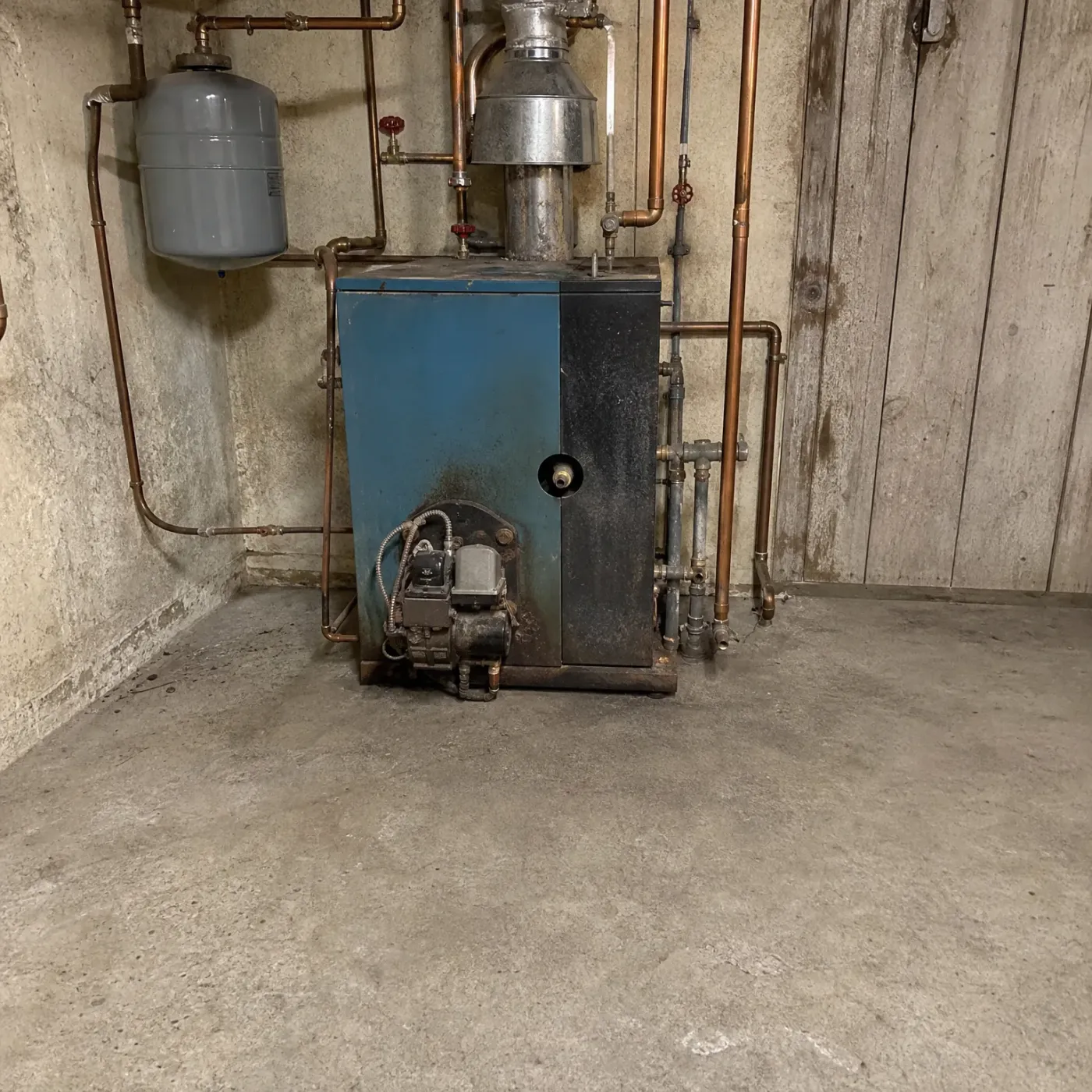
Water finds its way out at a seam or a fitting and tracks down the side of the boiler or across the floor. Left alone through another Vermont winter, a small drip can turn into a bigger problem for the pipes around it.
Check the floor around the base and under the pipe fittings. A damp patch, a rust-colored ring, or a small puddle that comes back after you wipe it means the leak is active, not old. Look at the pressure relief valve too. If water drips from the little pipe that runs down from it, that valve is doing its job and releasing pressure it shouldn't have to hold. You might also notice the boiler running longer than it used to, or hear a faint hiss near a fitting. Left alone, a slow leak corrodes the steel it touches, and with oil heat running hard through a Vermont winter, that corrosion can reach parts that are far more expensive to replace than a gasket or a valve.
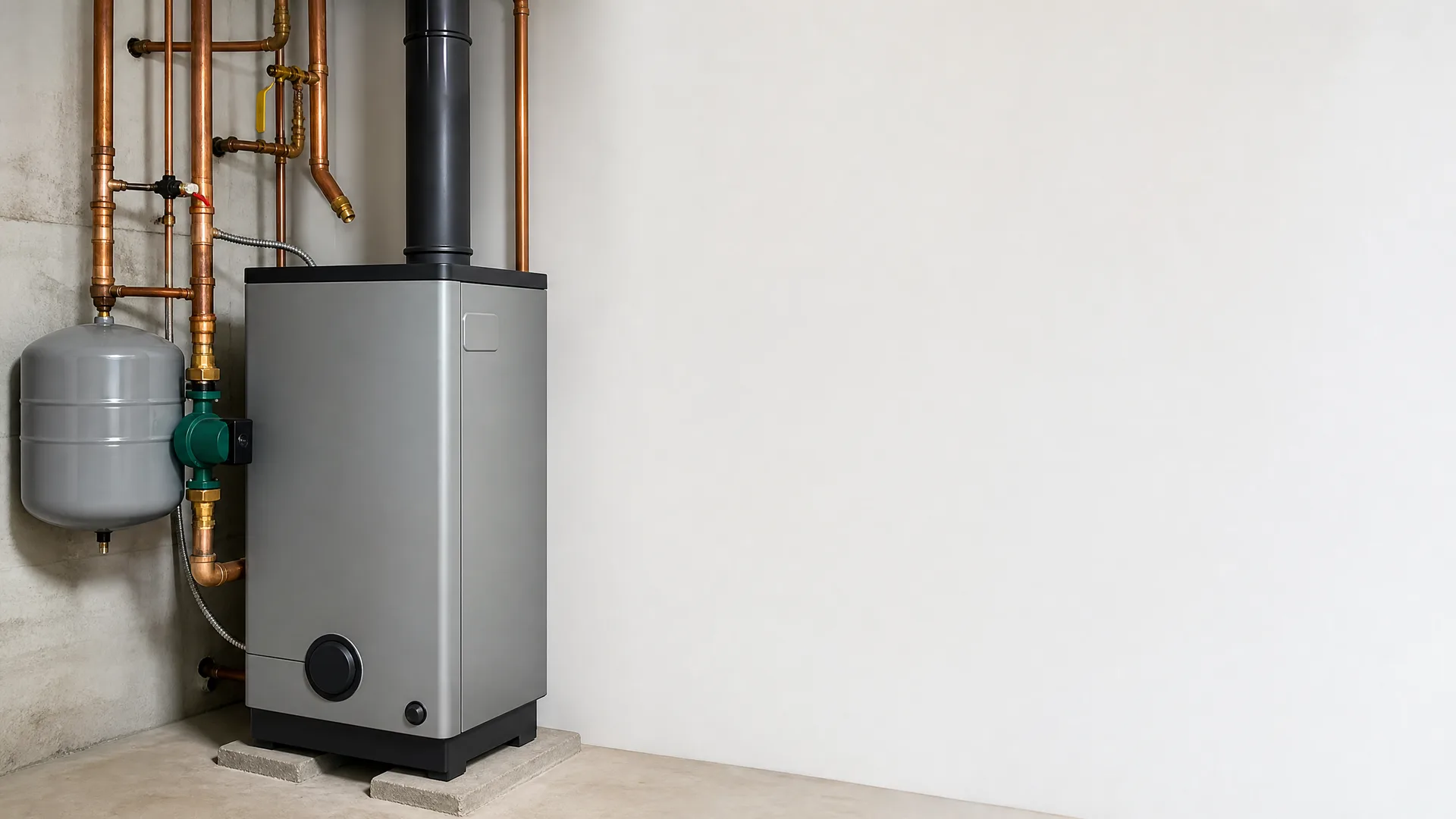
That valve on top of your boiler opens when pressure gets too high and closes again once it drops. If it's dripping, it did its job once and didn't reseat clean, or pressure is building past 30 psi more often than it should. A valve that weeps steadily usually needs replacing. One that only let go once during a cold snap might just need the pressure checked.
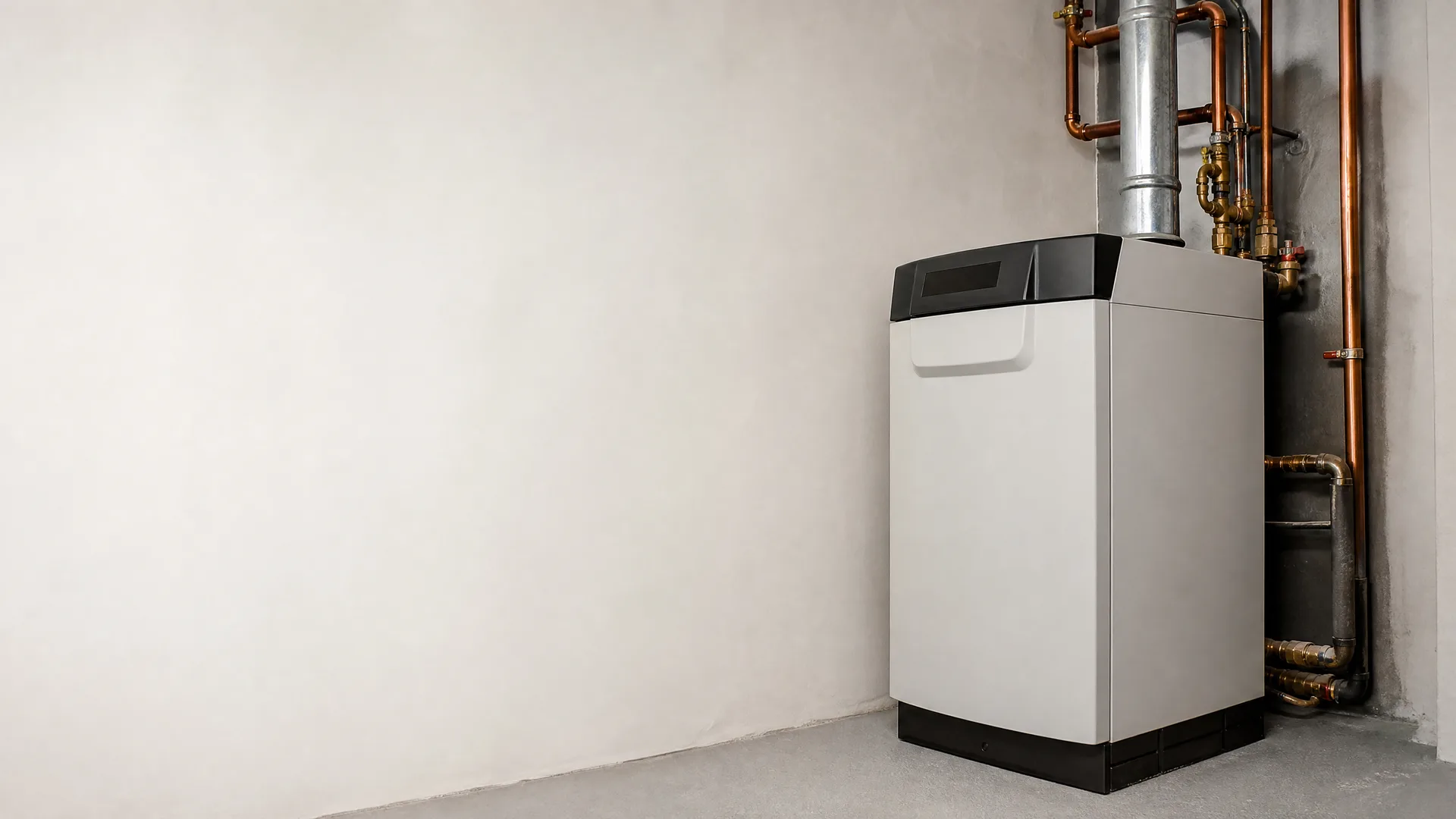
A lot of boilers in Vermont are cast iron, which holds up well against rust but can crack if it's stressed by uneven heating. Steel sections corrode faster where water sits, usually at the bottom of the tank or in a low pipe run. Where the leak shows up on the boiler tells you something about which metal is failing and how far along it is.

A boiler is a closed loop. The same water circulates through the pipes and radiators all winter, heated and pushed around by the circulator pump, never used up. That's why any water you find outside the system is a sign something failed, not a normal byproduct of running the boiler. Oil-fired systems add another spot to watch: the near-boiler piping around the burner, where fittings can weep slowly for weeks before anyone notices the stain on the floor.
The leak itself usually starts small, a loose union, a gasket losing its seal, a crack working through cast iron. None of that announces itself the way a bang or a smell does. It just shows up as a wet patch that gets a little bigger each week. A contractor who knows oil-fired boilers can trace it to the fitting or the section that's actually failing, match you with the right kind of help for a Vermont winter, and reach out once you've sent the details rather than leaving you to track one down yourself.

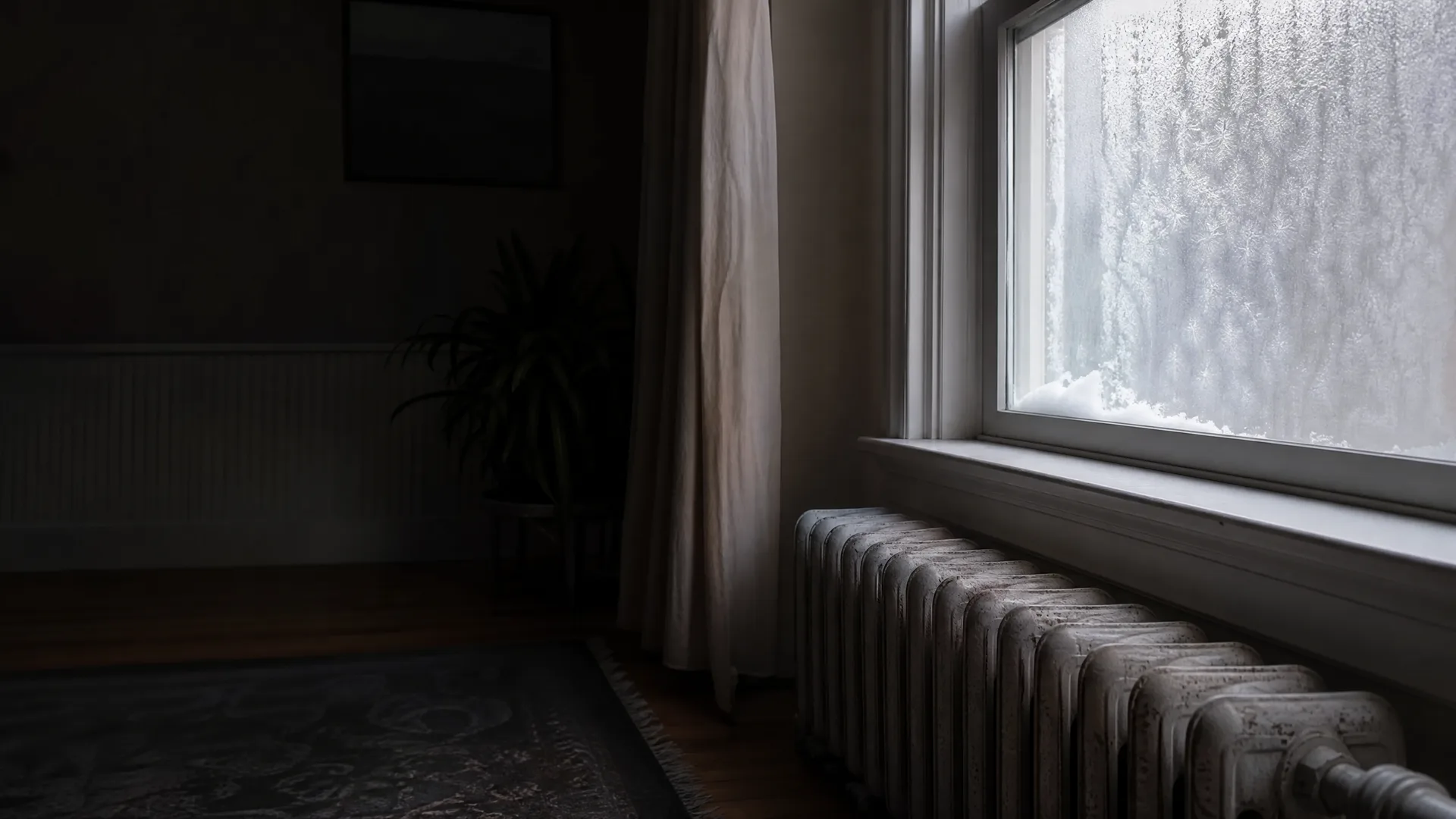
Six in the morning, and the living room is still dark except for the streetlight through the window. Frost has crept up the inside of the glass, feathered at the edges, and the radiator under it ticks as it fills. You crouch down to check it, like you have most mornings this week, and your sock lands in a cold puddle on the wood floor. It's spread further than yesterday, a thin dark ring reaching past the radiator's foot. You press a finger to the shutoff valve. Wet. Outside, it's eleven degrees, and the oil burner in the basement is about to kick on again. You picture the next form you'll fill out, the one that ends with someone else looking at this instead of you.
A leaking boiler in January isn't something to sit with while you watch it and decide later. Vermont winters don't give you that stretch, and most homes here run on oil, which means a boiler that's losing pressure or shutting down on low water is a boiler that stops keeping the house warm at the worst possible time. Power costs more here than almost anywhere else in the country, so an electric backup heater running to cover the gap isn't a cheap stopgap either. Every day a leak keeps dripping is a day the steel around it corrodes a little more, and a small fitting repair now is a different job than the one that waits for a cracked section. You've already found the water. The part left isn't diagnosing it yourself, it's getting someone who works on these boilers every week to look at the actual fitting or valve before the weather makes the decision for you.
You caught it early and the fix is small. A tightened fitting, a new gasket, a valve that reseats. The boiler runs the rest of the winter on oil like nothing happened.
You wait through a cold snap and the small leak gets a chance to become a cracked section or a ruined circulator pump. Now it's a repair that costs more than the first one would have, in a state where oil and power both run expensive.




A loose fitting or a worn gasket gets replaced on the spot. The boiler goes back to running on oil like nothing happened, and you're not watching the floor by the base every morning. Most calls that start this way end with a part swapped and pressure holding steady where it should. You don't lose heat for long, and you don't spend the rest of winter wondering if today is the day it quits on you.
The drip keeps dripping. Minerals build up around the fitting, the metal underneath keeps wearing, and what was a small leak works toward a bigger one. Eventually the boiler loses enough pressure to shut itself down on low water, usually on a night when you'd rather not be without heat. By then it's not a gasket anymore. It's a cracked section or a failed valve, and the oil bill for the season doesn't come down either.


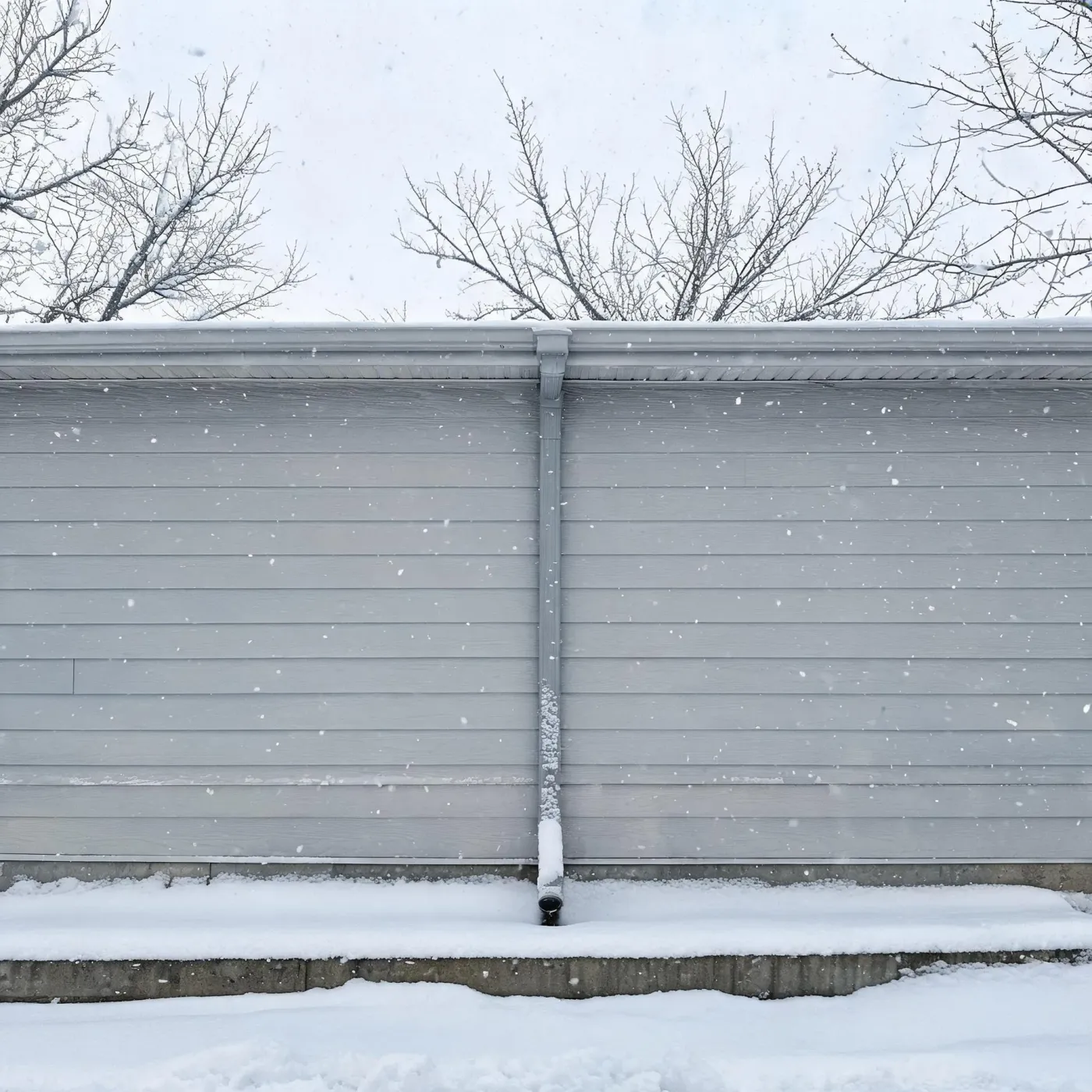
Winter nights average 12°F statewide, according to NOAA climate data. At that temperature your boiler isn't cycling on and off the way it might in a milder month, it's running long stretches to keep ahead of the cold, and every joint and fitting stays under pressure for hours at a time instead of relaxing between cycles. That steady load is what turns a fitting that was merely loose into one that's actually weeping. If you've noticed the leak getting worse on the coldest nights rather than staying the same, this is why. A system working this hard has less room to hide a small problem.
NOAA nClimDiv 1991-2020 county normals weighted by homes
Pressure builds past 30 psi as water heats and expands
The relief valve opens to release that excess pressure
Water discharges through a pipe near the floor
A worn valve seat lets it drip after closing
At 12 below freezing most nights, your boiler is running long and often, not short little bursts. That steady strain keeps every fitting and gasket under load for hours at a stretch, and a leak that's already started won't get a break to reseat itself.
NOAA nClimDiv 1991-2020 county normals weighted by homes
A boiler that's dry stays dry. One that's leaking will keep leaking until someone finds the actual spot and fixes it, whether that's a gasket, a valve seat, or a seam that's finally given out. You've checked what you can see, you know roughly where the water's coming from, and that's as far as most homeowners can take it on their own. The next step is getting someone in who can open it up and deal with the actual part. Send the form and that search becomes someone else's job, not yours. You won't be the one calling around, explaining the drip and the rust ring and the pressure gauge over and over to find someone who's free. The contractor who reaches out already knows what you're dealing with. For tonight, that's enough: the boiler's still running on oil, the leak is small, and the part of this that was yours to figure out is done.
Send it once and finding someone is no longer on you.
You're not committing to anything by asking.