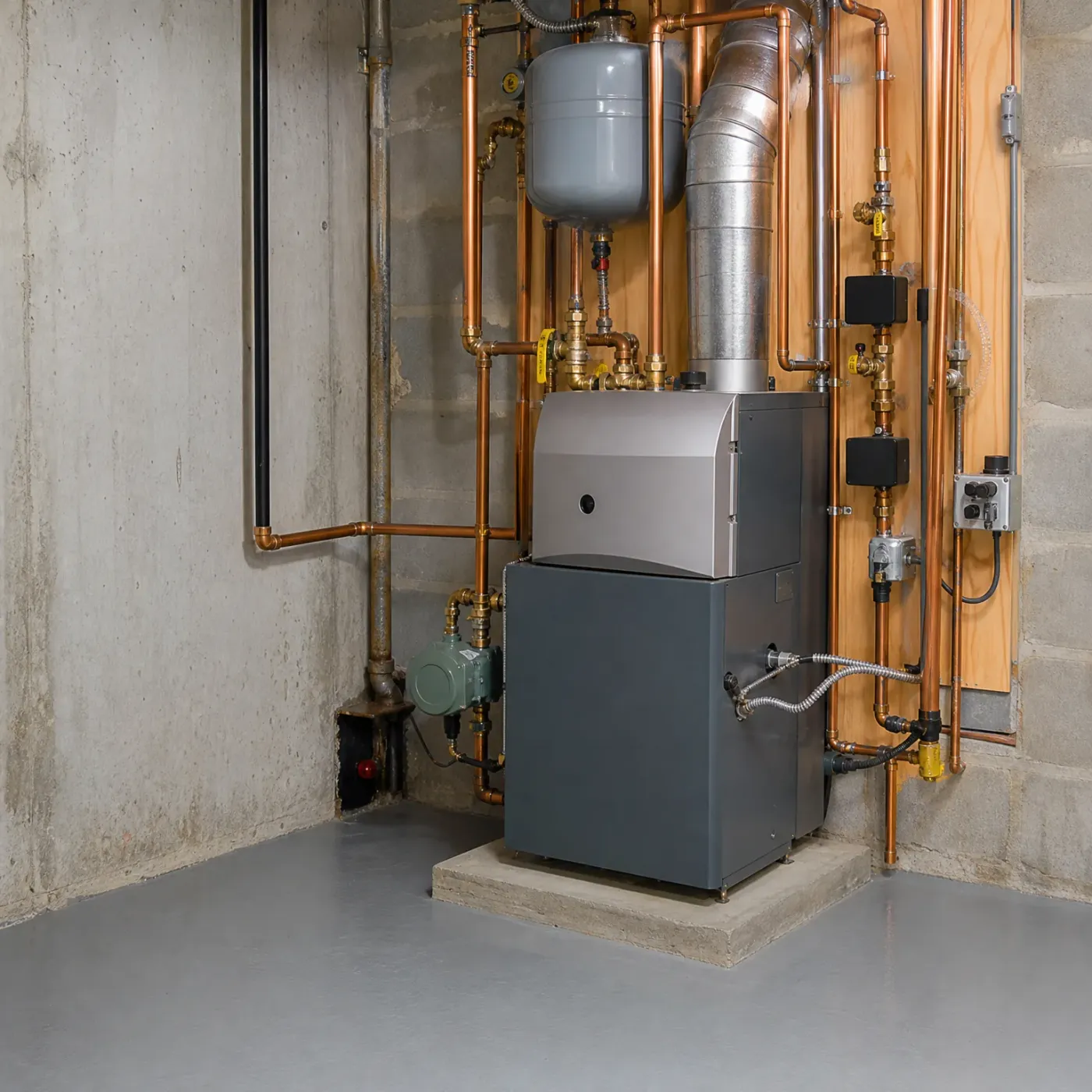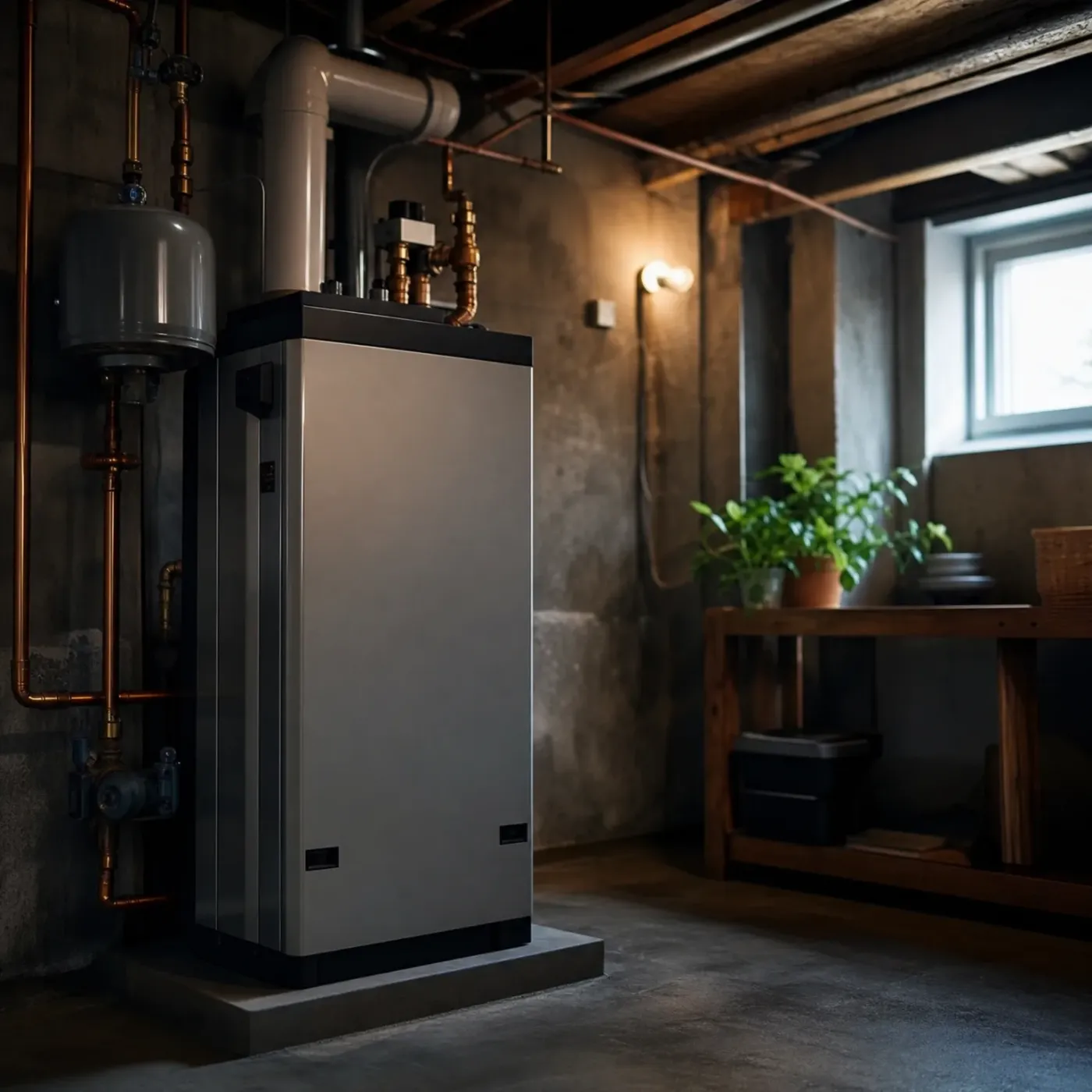







A floor-standing gray boiler unit on a concrete plinth in a basement, with copper pipes, an expansion tank, and a flue pipe above, a wall light, a small potted plant on a wooden shelf, and a window in the background.

One form, no calling around

Why your boiler is losing pressure in Vermont

A boiler losing pressure usually means air got in, or water is escaping somewhere it shouldn't, whether that's a valve, a joint, or the expansion tank. This page gets into what causes it and what it takes to fix. Skip the search for a Vermont boiler tech, the round of calls, and repeating the problem to each one. You'll be matched with one licensed local contractor who works on boilers all winter and already knows where to look.

Skip calling around

A boiler loses pressure for one of two reasons. Either water is leaking out somewhere, or the expansion tank isn't doing its job and the system is venting pressure through the relief valve instead of absorbing it. A pinhole leak at a pipe joint or a worn valve can lose water slowly enough that you won't see a puddle, just a gauge that keeps creeping down. With oil heat running hard through a Vermont winter, that boiler cycles on and off constantly from October through April, and every cycle stresses the same joints and seals. If the pressure keeps dropping after you bleed the system and top it off, something is letting water out faster than it should, and it won't fix itself. Left alone, low pressure means the boiler can shut itself off on safety limits right when you need the heat most.

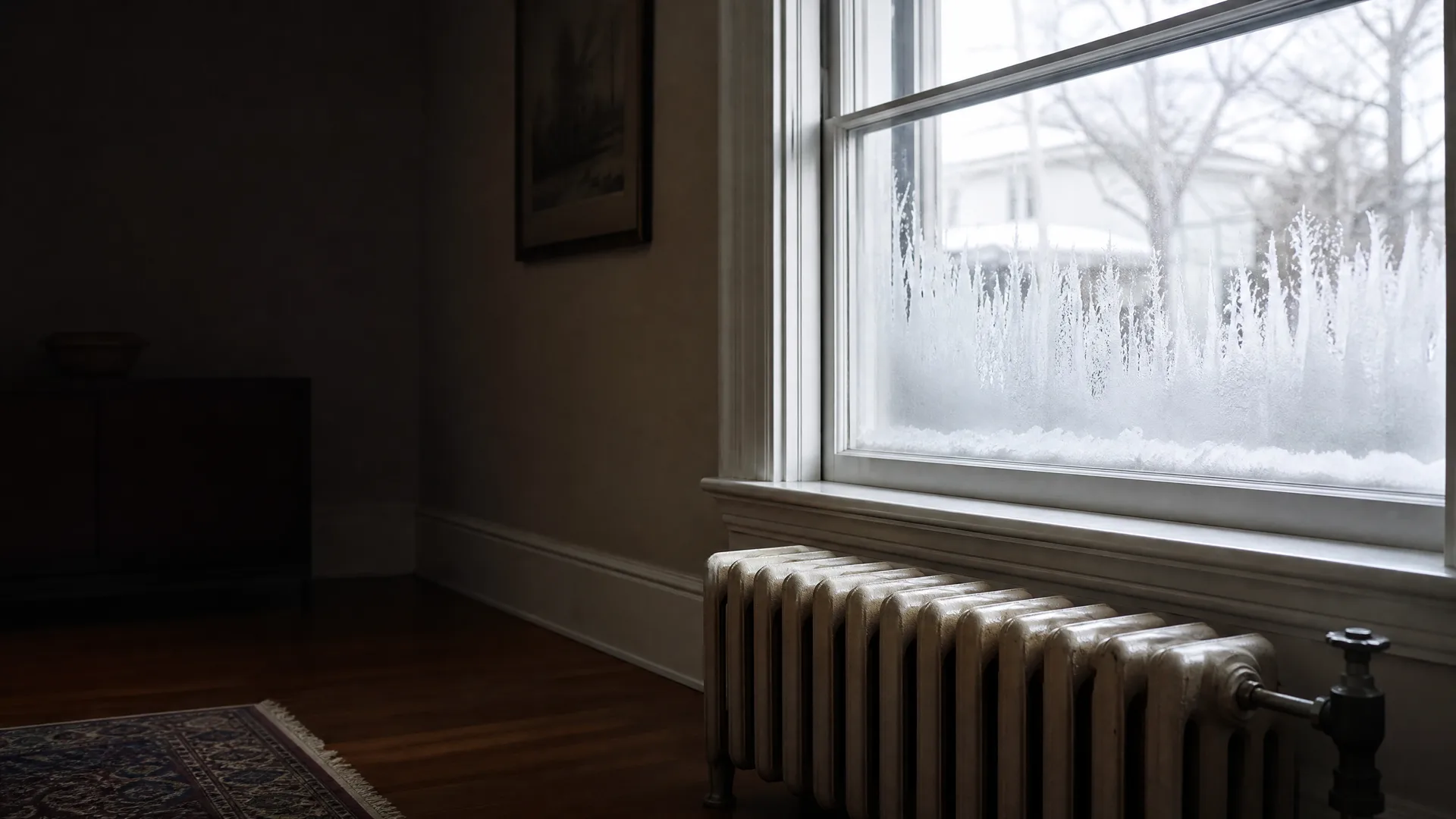
A cast-iron radiator with a valve sits beneath a frost-covered window in a dim room with dark wood floor, a patterned rug, a framed picture, and a low cabinet.

You come downstairs before the thermostat's caught up and the living room still has that morning chill. The radiator under the window is cold at the top, warm only near the valve. Outside, the glass has gone white with ice on the inside, the kind that only forms when a January night gets hard and stays that way. You check the pressure gauge on the boiler out of habit now. It's below 10, maybe sitting near 5. You add water, like you did two weeks ago, and go start the coffee, already knowing you'll be doing this again before the month's out.

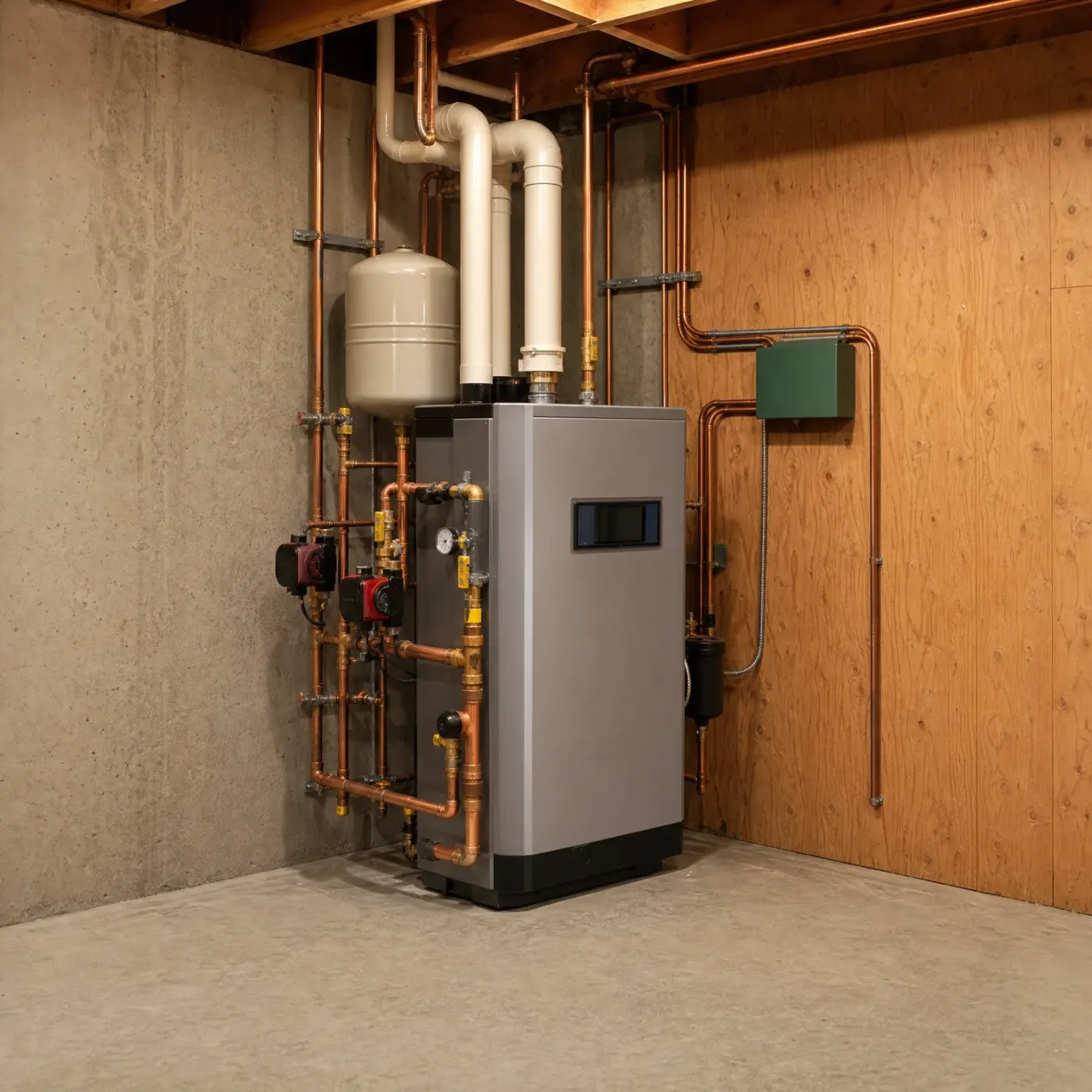
A gray floor-standing boiler in a basement corner with copper piping, two red circulator pumps, a beige expansion tank, white PVC vent pipes, concrete and plywood walls.
Pressure sits steady, the gauge holds between 12 and 15 psi, and every radiator heats full across.
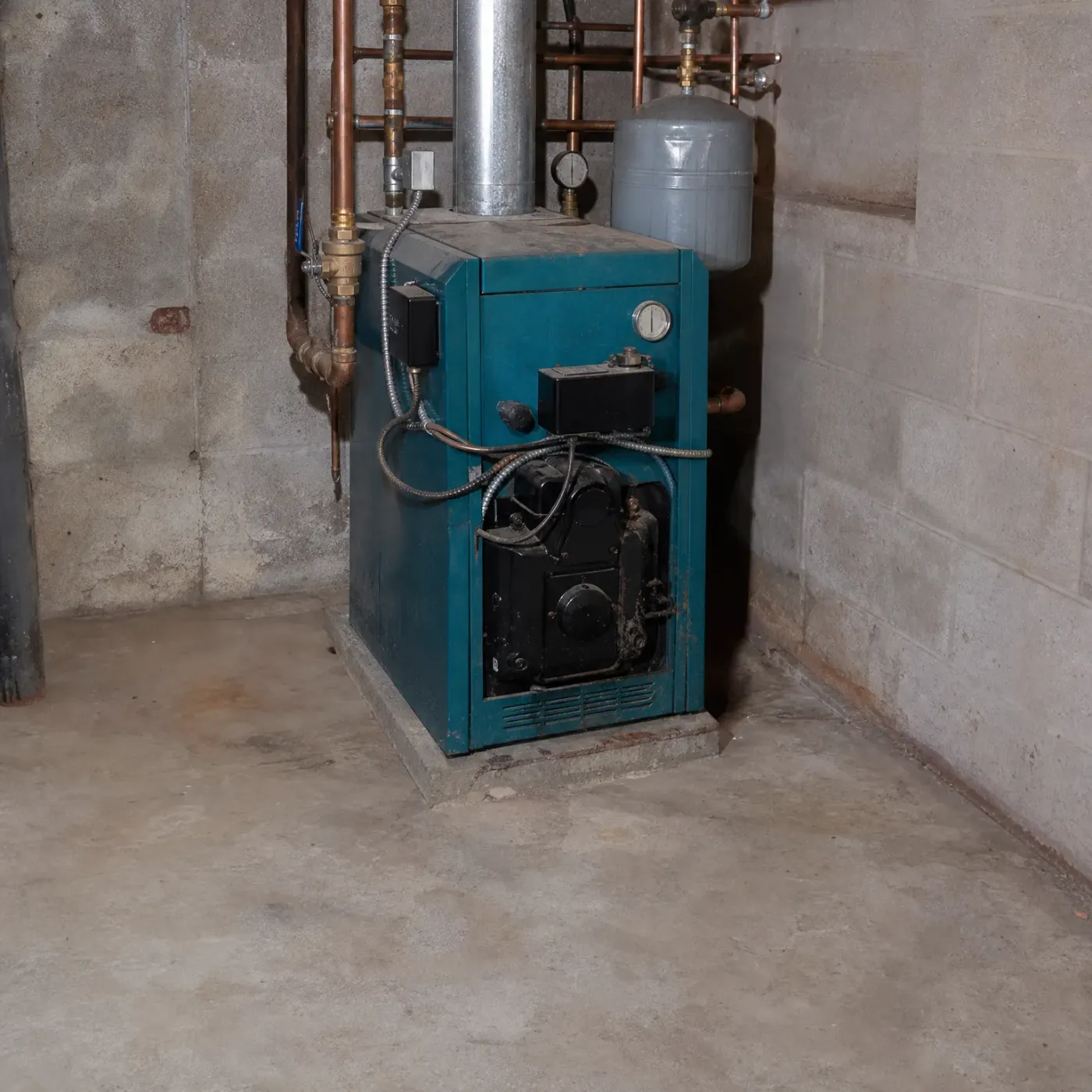
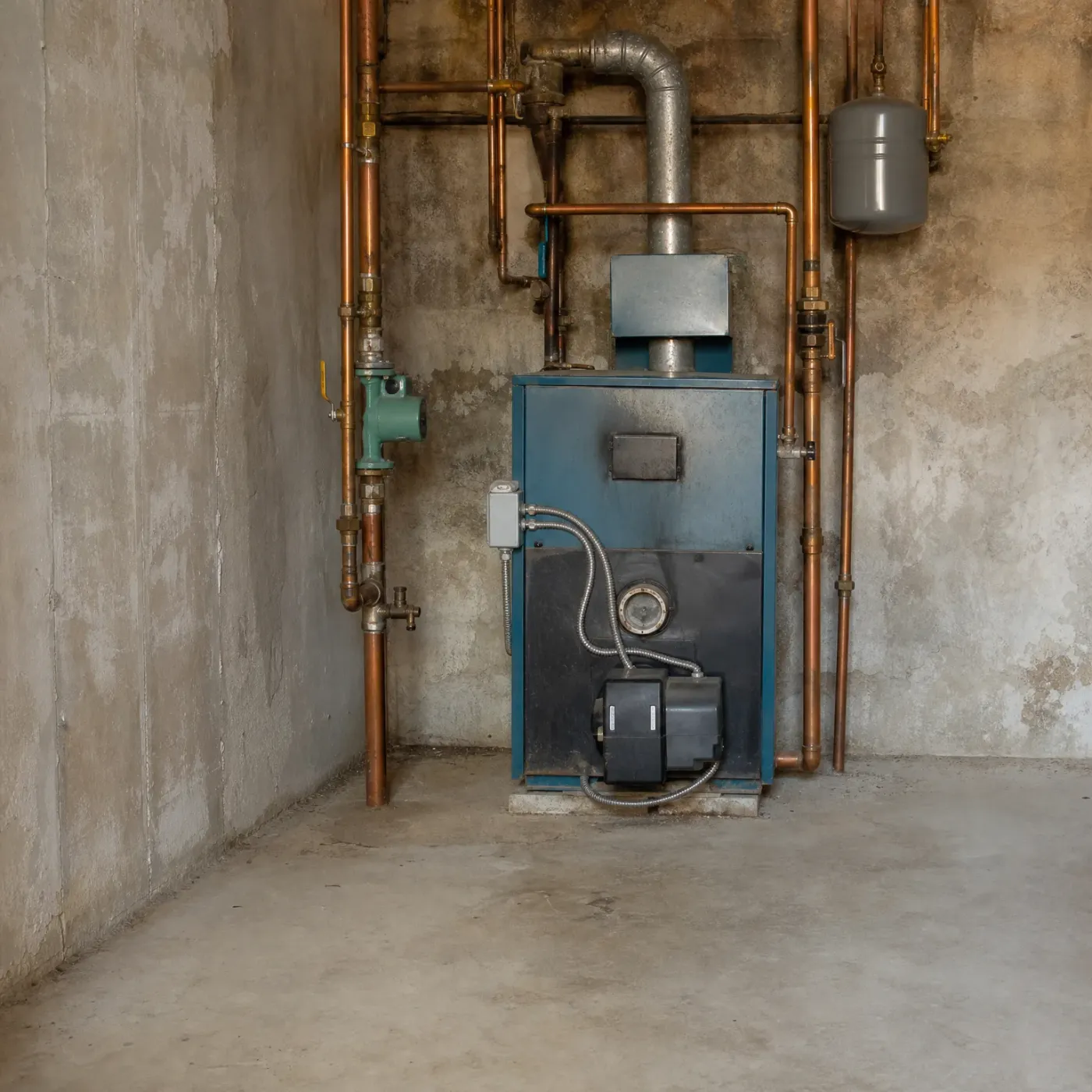
A blue residential boiler with a metal flue, pressure gauge and burner unit stands against a stained concrete basement wall, surrounded by copper pipes, a green circulator pump and a gray expansion tank.
Pressure keeps dropping and the relief valve has started weeping, a sign the expansion tank or a fitting needs a licensed eye on it.

Slow Leak or Failed Expansion Tank

Slow leak

  • Pressure drops a little over a week or two, and you keep topping it off at the feed valve to get by.
  • A pinhole at a pipe joint or a worn valve seal lets water out slowly, often with no puddle to find.
  • You might see a faint stain or mineral crust where a fitting sits, but nothing wet to the touch.
  • Oil consumption can creep up some as the boiler fires more to make up for the water loss.
  • Left alone, the leak doesn't fix itself, and a licensed tech has to track it to the fitting or seal that's failing.
  • This is the kind of fault that's easy to miss in a house already running oil heat hard through a Vermont winter.

Failed expansion tank

  • Pressure drops fast, sometimes within a day, and the relief valve keeps weeping or discharging.
  • No puddle at a joint or valve, because the water isn't leaking out there, it's being vented through the relief valve.
  • The expansion tank itself may feel waterlogged, heavy, or make a sloshing sound instead of a hollow one when tapped.
  • Topping off the pressure doesn't hold, because the tank isn't absorbing the expansion the way it should.
  • A licensed tech needs to check the tank's air charge or replace it outright, not just add water.
  • Ignoring it tends to mean the relief valve keeps discharging, which wastes water and strains the valve itself.
A man with grey hair and stubble in a dark sweater sits on a grey sofa indoors, looking off to the side, with a potted plant and a sunlit window behind him.
A man with gray hair, a beard and glasses, wearing a dark green sweater, sits on a gray sofa in a sunlit living room with a potted plant, table lamp and wooden sideboard behind him.
A middle-aged man with graying hair and a short beard sits on a blue sofa in a living room, looking toward a window, with a bookshelf, lamp and framed picture in the background.
A man with graying curly hair and a dark green sweater sits on a gray sofa in a sunlit living room, looking off to the side, with a framed picture, shelving, an armchair and a window with sheer curtains behind him.

Winter nights average 12°F statewide

At 12 below zero some nights, your boiler is running long stretches to keep up, and it's cycling through pressure faster than it would on a milder night. A system already low on pressure has less room to handle that, so a small leak that was easy to ignore in October starts tripping the relief valve in January.

NOAA nClimDiv 1991-2020 county normals weighted by homes

A boiler built for 12 to 15 psi doesn't have much room to lose. Drop a few pounds and the relief valve can start opening on its own, which lowers pressure further.

That's why a leak that starts small rarely stays small. Once the valve is weeping, it keeps venting pressure every time the boiler fires, and the drop speeds up from there.

A woman with shoulder-length brown hair wearing a beige knit cardigan sits in a gray upholstered armchair near a window, looking off to the side with a slight smile, with bookshelves blurred in the background.
A woman and a child wrapped together in a knitted gray blanket on a couch, with the child's head resting on her shoulder and a lit table lamp and houseplant in the background.

Skip the search

The pro who reaches out is licensed in Vermont.

No charge to send it. You decide if you hire them.

Handling it yourself for now

Topping off pressure at the feed valve buys you a little time if the gauge has dropped a pound or two and the house is still heating fine. It's a reasonable stopgap for a night or two, especially in a cold snap when you don't want the system shutting down on you. But it doesn't tell you why the pressure dropped, and if you're doing it every week, something is wrong that refilling won't fix. Oil isn't cheap to run here, and a boiler fighting low pressure through a Vermont winter is working harder than it needs to.
Having a tech look at it

Someone who works on boilers all season knows the difference between a bad gauge, a tired expansion tank, and an actual leak, usually within a few minutes of looking. That matters more than it sounds like, because chasing the wrong cause means you're still topping off the gauge come January. A local, licensed tech also knows what tends to fail in systems around here after a few winters of hard use. Instead of calling around and explaining the same problem three times, you describe it once and one contractor who knows this equipment takes it from there.

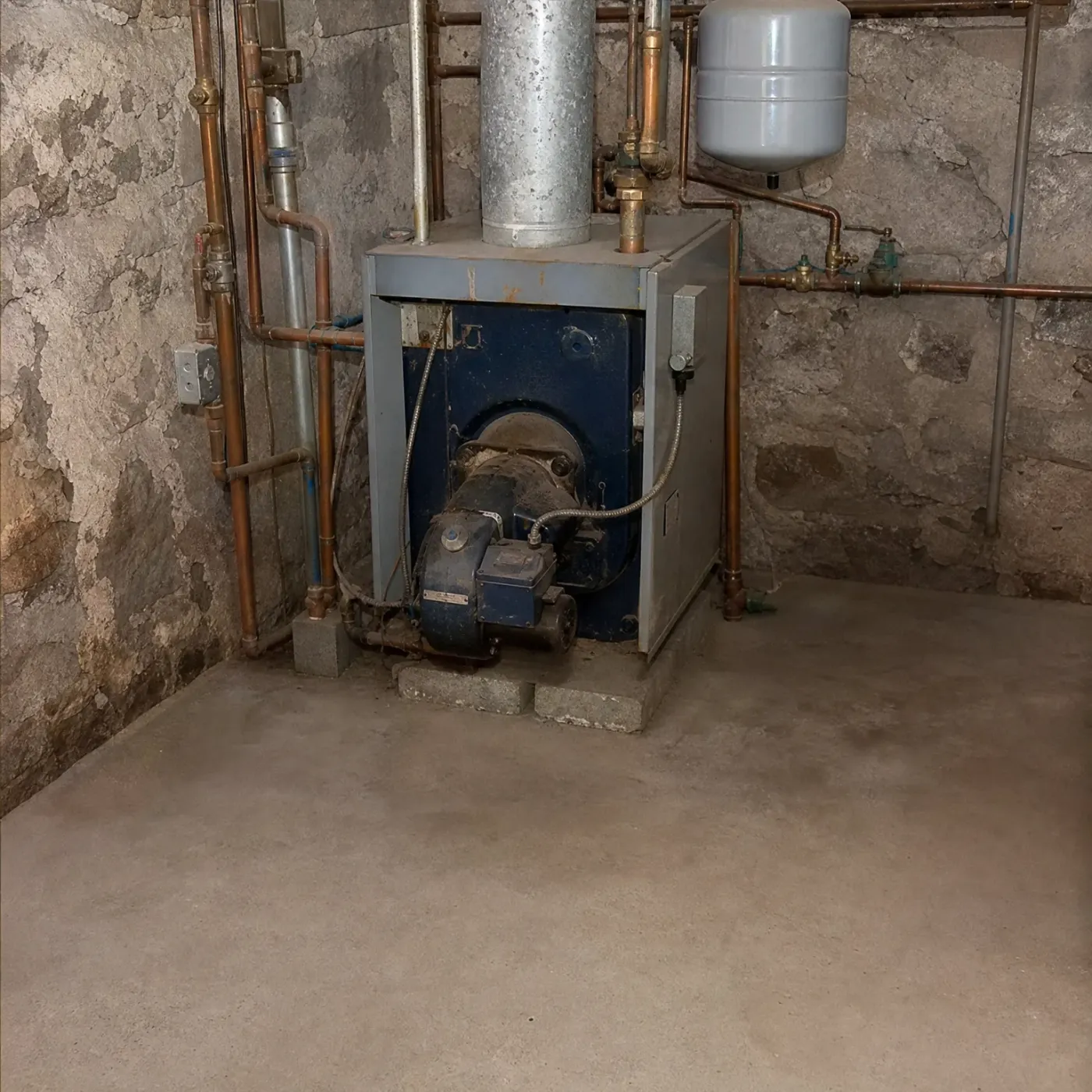
An oil-fired boiler with a blue and gray cabinet and burner sits on concrete blocks in a basement corner with stone walls, connected to copper pipes, a metal flue, and a wall-mounted expansion tank.
Before you get your boiler repair
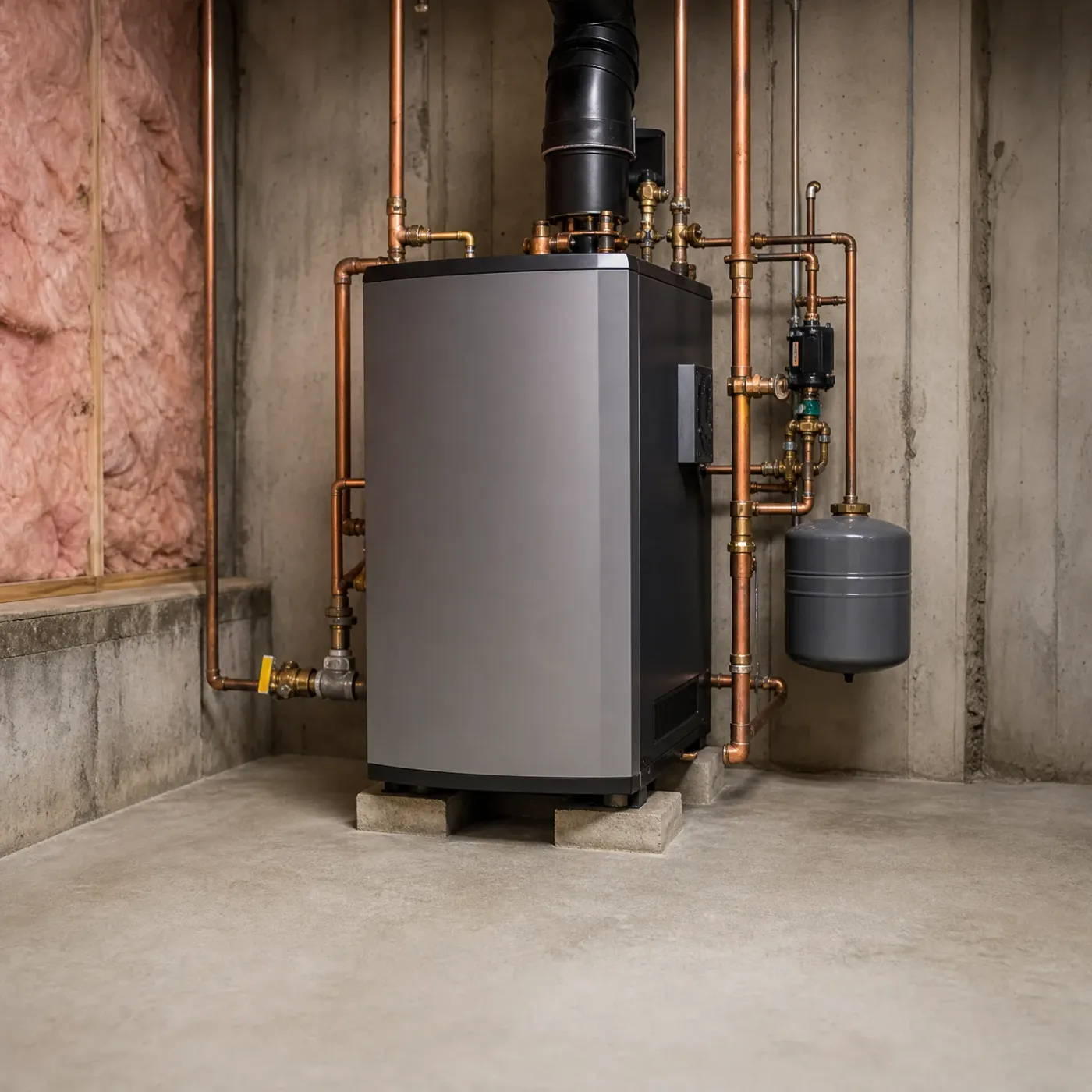
A gray and black boiler unit sits on concrete blocks in a basement corner, connected to copper piping, valves, a black flue duct, and a gray expansion tank, with bare concrete walls and exposed pink insulation at left.
After you get your boiler repair
A gray residential boiler on a concrete pad in a basement corner, connected to copper piping, an expansion tank, circulator pumps and insulated flue ducting against concrete and plywood walls.

Running right

Pressure holds steady, the piping stays dry at every joint and valve, and the expansion tank is quietly doing its job of absorbing the water as it heats. No weeping at the relief valve, no mineral crust on the copper. The circulator runs, the radiators heat end to end, and the gauge doesn't move week to week.

A teal boiler with a pressure gauge and black burner unit sits on a concrete pad in a basement corner, with copper pipes, a flue vent, and a gray expansion tank above against concrete block walls.

Losing pressure

The gauge keeps creeping down and someone's refilling it at the feed valve every few days. Look closer at the piping and the expansion tank and you'll often find the reason: a damp fitting, a stain on the copper, or the relief valve letting go on its own. A Vermont boiler tech who works on these all winter can trace it to the actual joint or valve instead of guessing.

A closed dark laptop and a ceramic mug of coffee on a wooden dining table, with wooden chairs, a dark kitchen cabinet with cutting boards and a potted plant, and a leafy plant by a window in the background.

A boiler holding pressure isn't a mystery, it's a diagnosis

Either water is getting out somewhere, or the expansion tank has stopped absorbing pressure the way it should. Finding which one, and where, takes someone who can trace a pipe run, pull a tank off the wall, and check a relief valve that's already weeping. That's not a weekend project in a Vermont January.

A licensed local tech who works on boilers all winter has seen this exact gauge reading before and knows where to look first. That's the part you're handing off: no sorting through listings, no calling three companies and repeating the same description of a cold radiator three times, no stack of quotes to compare while your living room stays chilly. One contractor, already familiar with what fails in a system like yours, takes it from here.

Interior corner with a beige sofa holding a dark green and a light cushion and a textured throw, a potted small-leaved tree beside a white-framed window, and a dark shallow bowl on a wooden coffee table in the foreground.
A single-story stucco house at dusk with a lit paver walkway lined by low path lights, desert plants and boulders in front, and distant mountains under an orange and blue sky.

Boiler Repair

Explain it one time

Step 1 of 3: Equipment
  • A beige upholstered armchair with an olive cushion sits in a sunlit corner beside a wooden side table holding a ceramic vase with leafy branches, under a framed abstract artwork, on a woven rug over a wood floor.
    • Tell a local repair pro what your boiler is doing.
    • Say what's going on with your boiler, and a pro who works on them reaches out.
  • A gray outdoor condenser unit on a concrete pad surrounded by dark gravel, beside a dark wood-sided wall with an electrical disconnect box and a stone veneer wall with a small evergreen shrub.
    • Once you send the form, finding a pro is off your list.
    • After you send the request, you're done searching.
  • A beige upholstered oversized armchair with a matching cushion and a knit throw draped over one arm, beside a round wooden side table holding a vase of greenery near a curtained window, with a framed landscape print on the wall and a woven rug on a wood floor.
    • Describe your boiler job once, to one pro.
    • Fill out one short form instead of calling around.
  • Sunlit living room corner with a beige upholstered sofa, cushion and knitted throw, a round wooden side table holding a white ceramic vase of leafy branches and a small wooden bowl, a framed landscape painting on the wall, and a window at right.
    • Your request stays with one local pro.
    • Your request goes to one pro, not a list of companies.