Tell us about the job
Takes about a minute. No obligation.
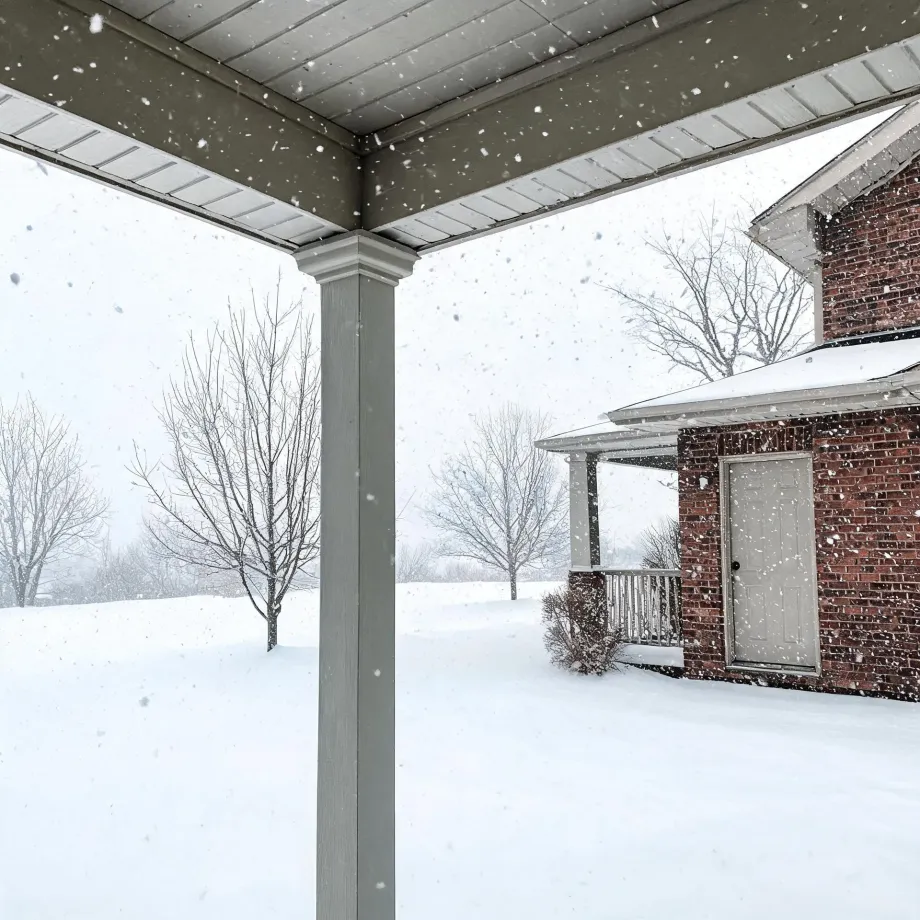
Sizing a boiler correctly in Essex County matters more than it does in places where a system spends most of the year off. Homes in Essex County, VT run heat about ten months a year, from September through June. The burner and ignition system cycle through that load every year, and a unit that was undersized at installation runs longer per call and accumulates wear on those components faster than a correctly matched boiler would. A contractor quoting a replacement here has to work through a proper load calculation before settling on equipment, because the install decision compounds over years of nearly continuous use.
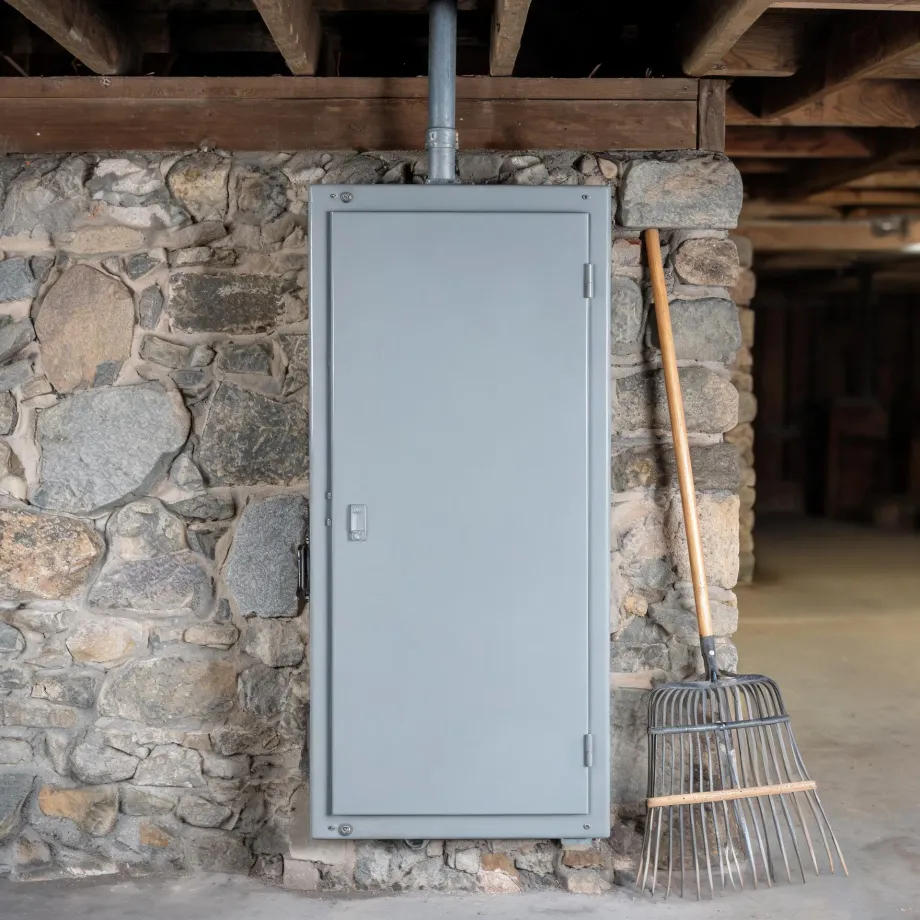
Ductwork in a house built for an older generation of heating rarely carries what a new boiler asks of it. Half the homes in Essex County, Vermont were built in 1973 or earlier (2020-2024 ACS 5-year). A contractor sizing a replacement here has to open the distribution system and measure what it will actually move, because undersized runs produce uneven heat regardless of how well the boiler itself performs. The electrical side is secondary to that; with a boiler, it is the pipe and duct layout that determines whether the installation is straightforward or whether the house needs rework before the new unit goes in.
What a Boiler Installation Puts in Your Home
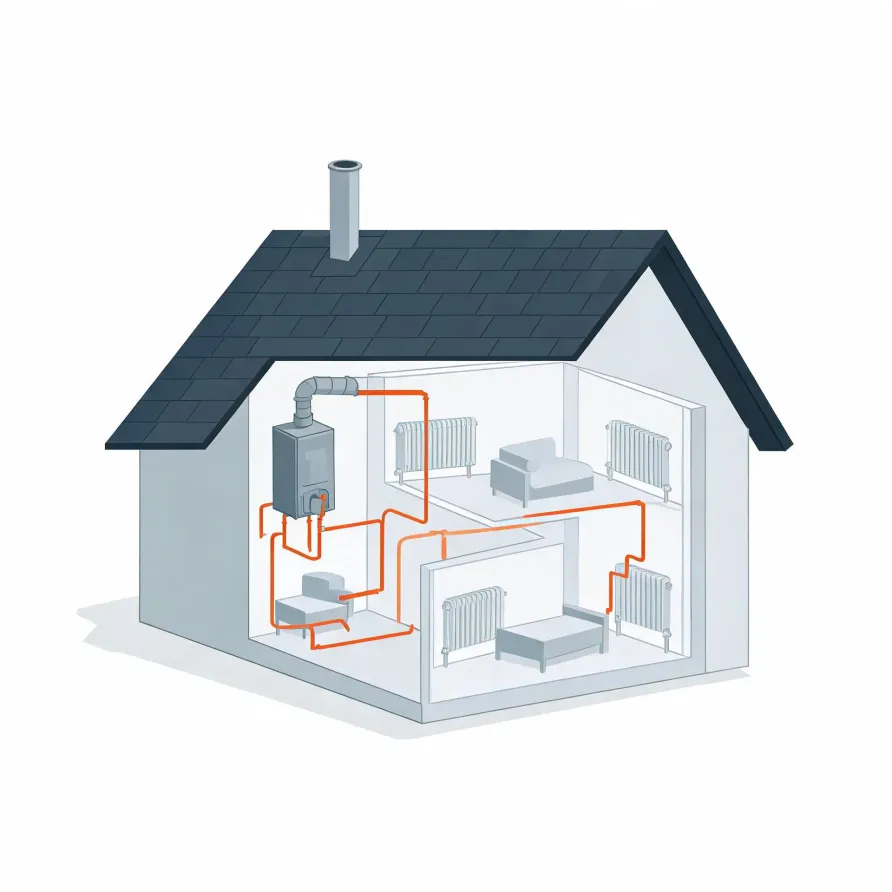
The boiler itself sits in the basement or mechanical room and is the heart of the system. A contractor mounts it against an interior wall, connects it to the fuel supply, and ties it into the home's existing piping. The expansion tank is installed close by, keeping pressure in the system stable as water heats and cools.
Radiators or baseboard units go in each room that needs heat, sitting along exterior walls where cold air tends to settle. The circulator pump, mounted at the boiler, moves heated water through the supply pipes and pulls cooled water back through the return lines. A thermostat is placed in a central location to control the whole loop.
The drawing shows a typical layout, and a licensed contractor determines what the configuration looks like in your specific home.
Find a contractor in Essex CountyEssex County, Vermont, by the numbers
76 severe weather events were recorded in Essex County, Vermont between 2015 and 2024.
NOAA National Centers for Environmental Information, Storm Events Database, bulk CSV export, events 2015-01-01 through 2024-12-31.Half the homes in Essex County, Vermont were built in 1973 or earlier (2020-2024 ACS 5-year).
U.S. Census Bureau, 2020-2024 American Community Survey 5-Year EstimatesEssex County, Vermont holds 4,952 housing units (2020-2024 ACS 5-year).
U.S. Census Bureau, 2020-2024 American Community Survey 5-Year EstimatesOwners occupy 82.4% of the occupied homes in Essex County, Vermont (2020-2024 ACS 5-year).
U.S. Census Bureau, 2020-2024 American Community Survey 5-Year EstimatesBoiler Installation Rules for Essex County, Vermont2 sourced standards and codes
What Essex County, Vermont Requires for Boiler Installation
Vermont splits the trade across two specialty licences and a contractor may hold one without the other: field A1 covers automatic gas or oil heating including geo-thermal and ground source heat pumps, and field C3 covers refrigeration or air conditioning including air-to-air heat pumps.
Vermont reaches HVAC work through its electricians’ licence rather than an HVAC licence, and the requirement stops at the front door of a house: anyone performing electrical work in Vermont must be licensed as an electrician unless the work is in a residential building containing two or fewer dwelling units.
Severe Weather Events in Essex County, Vermont
Weather in Vermont puts real demands on heating equipment. How hard a boiler works over its life is partly a function of what the local climate throws at it, and that makes installation choices here a different calculation than they are somewhere else.
76 severe weather events, 2015–2024. Source: NOAA National Centers for Environmental Information, Storm Events Database.