Tell us about the job
Takes about a minute. No obligation.
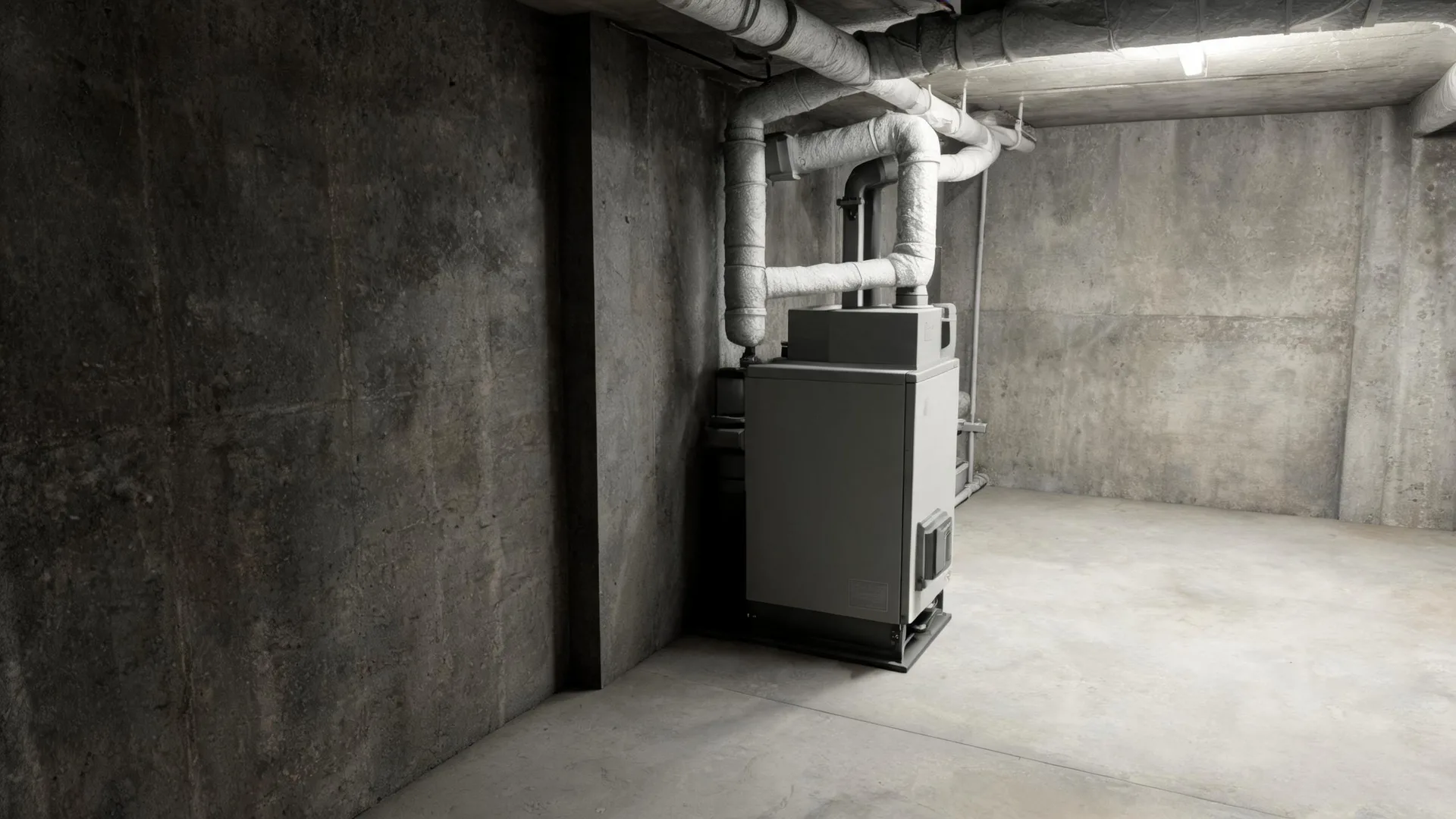
Sizing a boiler for this county starts with understanding exactly how hard the burner and heat exchanger are asked to work. Homes in Bennington County, VT run heat about nine months a year, from September through May. A burner cycling through that many months of cold puts real cumulative stress on the ignition system and the exchanger itself, and a unit that is even modestly undersized has nowhere to hide that stress across a season this long. Contractors quoting a replacement here treat load calculation as the first step, because the installation that fits a milder climate will fall short before it should.
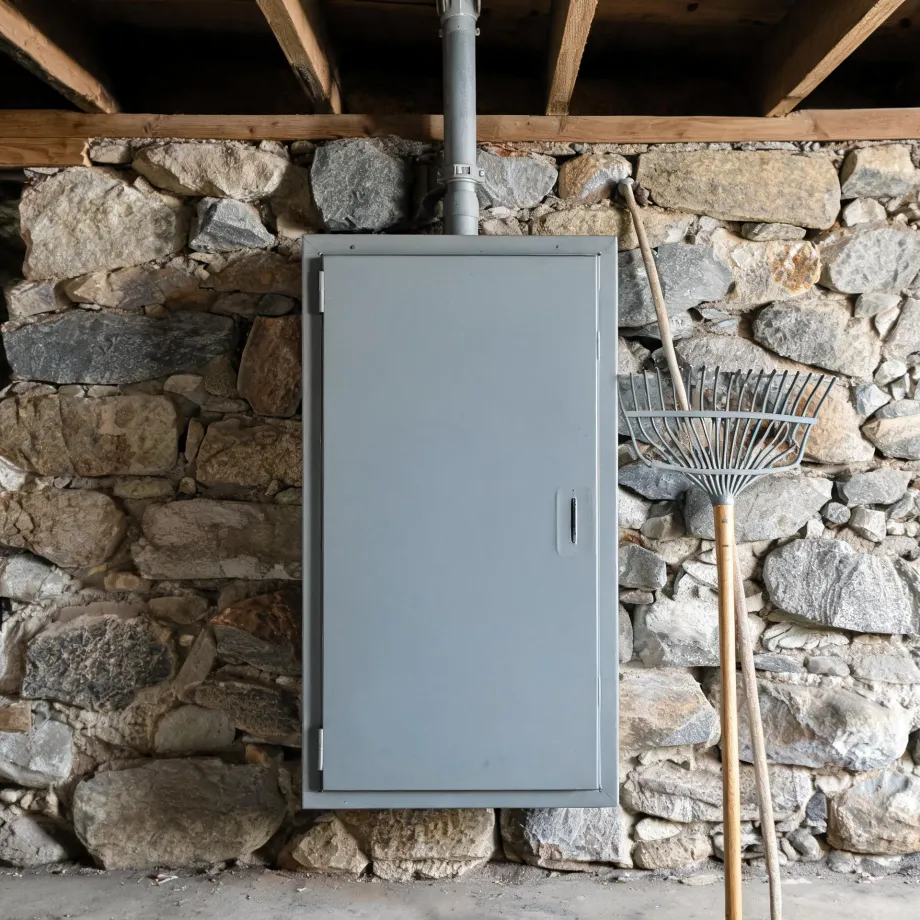
Ductwork sized and routed for a system that is no longer in these houses shapes what a boiler installation can do and what it costs. Half the homes in Bennington County, Vermont were built in 1972 or earlier (2020-2024 ACS 5-year). That history means a contractor opening walls here is working out whether existing runs carry the new distribution load, and in many cases they do not without modification. The electrical is a separate question. What a homeowner is deciding, then, is not only which boiler fits the house but how much of the house has to move to fit the boiler.
What a Boiler Installation Puts in Your Home
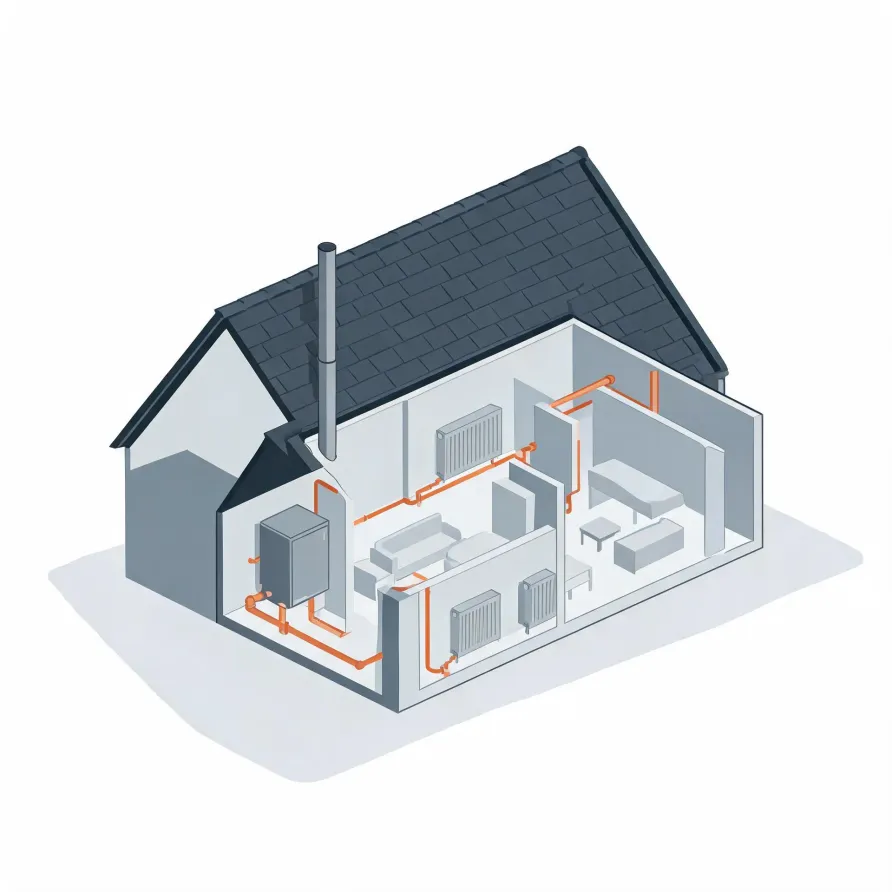
The boiler itself sits in the basement or mechanical room and is the heart of the system. It heats water that then moves through the house to deliver warmth. A contractor also sets the expansion tank nearby, which absorbs pressure changes in the water as it heats and cools.
Radiators or baseboard units mount along the walls of each room and release heat where people live. Connecting them is a network of pipes that a contractor runs through the walls, floors, or ceilings. A circulator pump, usually mounted directly on the boiler, keeps the water moving through that loop.
The drawing beside this text shows a typical layout, and a licensed contractor determines what the setup looks like in your specific home.
Find a contractor in Bennington CountyBennington County by the Numbers
165 severe weather events were recorded in Bennington County, Vermont between 2015 and 2024.
NOAA National Centers for Environmental Information, Storm Events Database, bulk CSV export, events 2015-01-01 through 2024-12-31.Half the homes in Bennington County, Vermont were built in 1972 or earlier (2020-2024 ACS 5-year).
U.S. Census Bureau, 2020-2024 American Community Survey 5-Year EstimatesBennington County, Vermont holds 20,903 housing units (2020-2024 ACS 5-year).
U.S. Census Bureau, 2020-2024 American Community Survey 5-Year EstimatesOwners occupy 73.7% of the occupied homes in Bennington County, Vermont (2020-2024 ACS 5-year).
U.S. Census Bureau, 2020-2024 American Community Survey 5-Year EstimatesBoiler Installation Rules for Bennington County, Vermont2 codes and standards
Licensing and Legal Requirements in Bennington County, Vermont
Vermont splits the trade across two specialty licences and a contractor may hold one without the other: field A1 covers automatic gas or oil heating including geo-thermal and ground source heat pumps, and field C3 covers refrigeration or air conditioning including air-to-air heat pumps.
Vermont reaches HVAC work through its electricians’ licence rather than an HVAC licence, and the requirement stops at the front door of a house: anyone performing electrical work in Vermont must be licensed as an electrician unless the work is in a residential building containing two or fewer dwelling units.
Severe Weather Events in Bennington County
Bennington County's climate puts real demands on heating equipment, and those demands vary with how hard the weather runs in any given year. A boiler sized and installed for local conditions holds up better than one spec'd to a generic standard.
165 severe weather events, 2015–2024. Source: NOAA National Centers for Environmental Information, Storm Events Database.