Tell us about the job
Takes about a minute. No obligation.
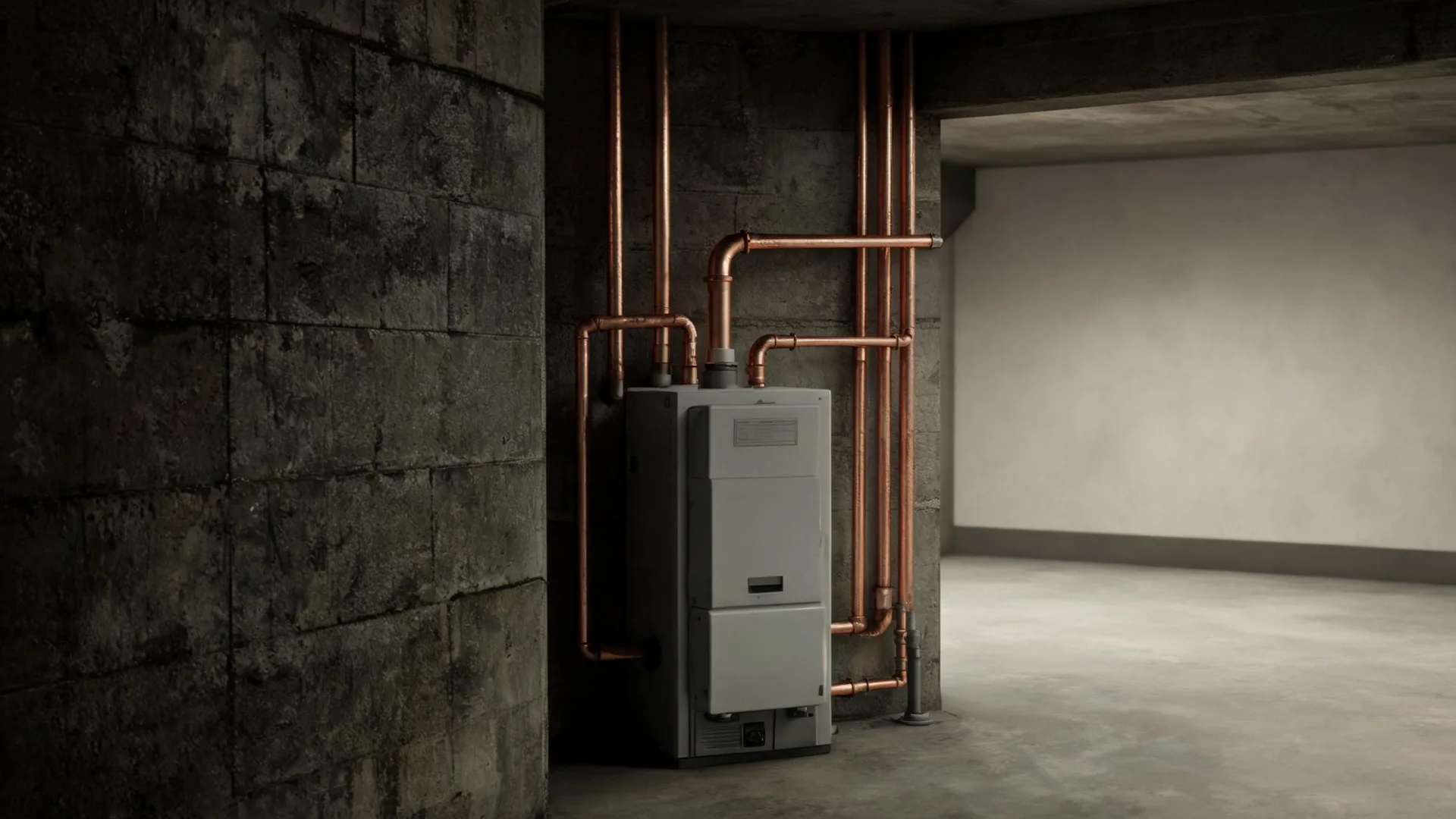
A contractor diagnosing a boiler repair in Washington County starts by looking at the parts that cycle most: the burner, the heat exchanger, and the ignition system. Homes in Washington County, VT run heat about nine months a year, from September through May. Burner components and heat exchangers crack or corrode gradually under repeated thermal cycling, and a season this long leaves little idle time for faults to stay quiet. A problem that might announce itself early in a shorter season can run undetected here until something stops working on a cold January morning.
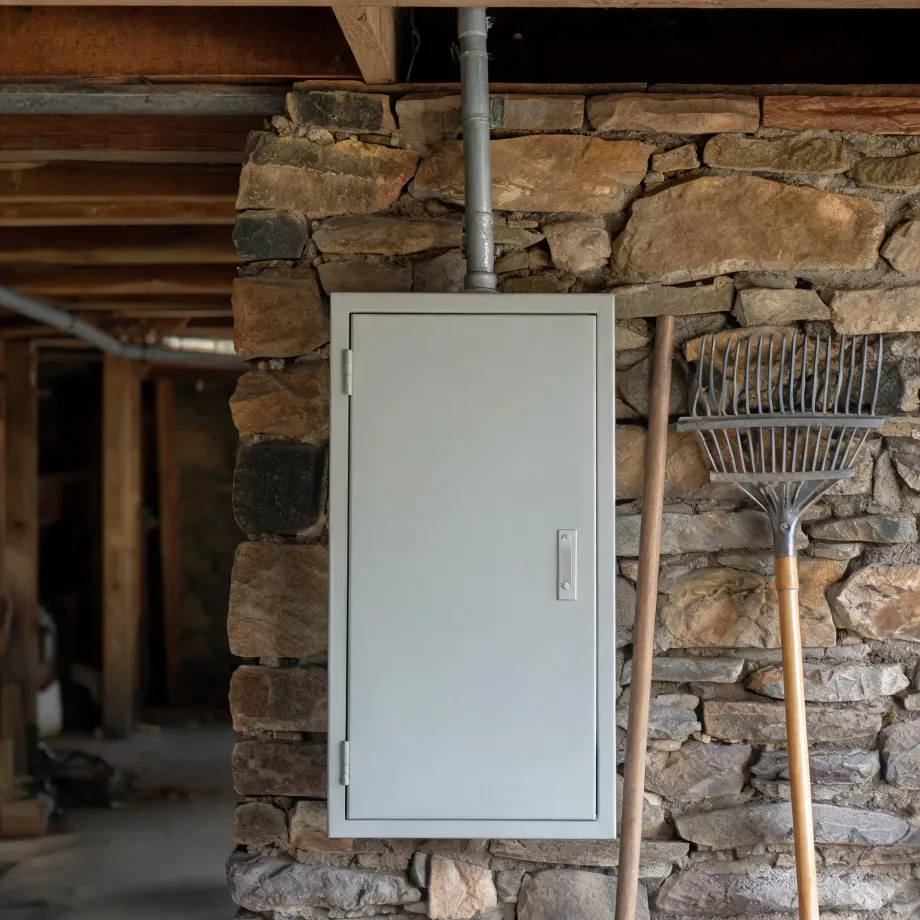
Piping, zone valves, and expansion tanks fitted to an earlier boiler are still in the walls and mechanical rooms of a large share of homes here. Half the homes in Washington County, Vermont were built in 1973 or earlier (2020-2024 ACS 5-year). When a contractor opens a boiler for a repair, what slows the job is often not the boiler at all but the distribution side: a circulator running past its rated life, a zone valve that no longer seats, supply lines sized for a system that was replaced before the current one. Parts for the boiler are usually available; the older peripheral components are the ones that require sourcing.
The Parts of a Boiler a Contractor Checks First
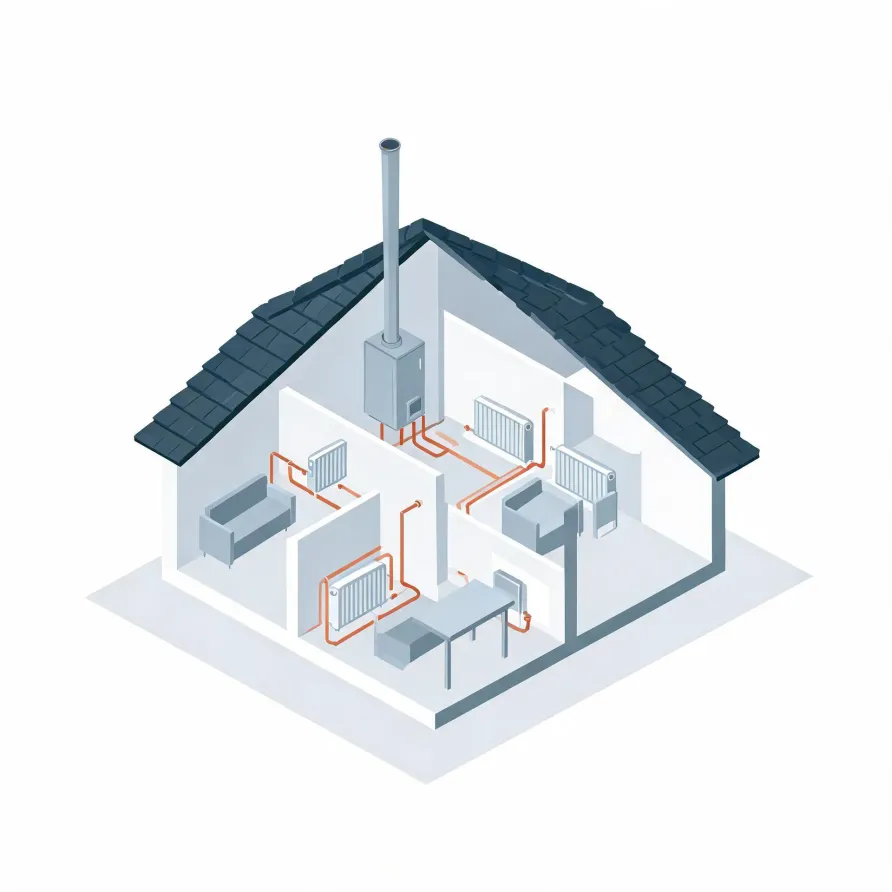
The boiler itself sits in the basement or mechanical room and is the piece a contractor goes to first. It heats water and pushes it through the system. When a boiler fails, the problem is often inside the unit: a faulty heat exchanger, a failed burner assembly, or a pressure or temperature control that has stopped reading correctly.
From the boiler, pipes carry hot water to radiators or baseboard units in the living spaces, and a circulator pump keeps that water moving. The expansion tank, usually mounted near the boiler, absorbs pressure changes in the system. When heat stops reaching a room, or pressure climbs and drops without explanation, the contractor checks the pump, the pipes, and the tank.
The drawing shows a typical boiler layout, and a licensed contractor determines which components apply to your specific setup.
Find a contractor in Washington CountyWashington County, Vermont, by the numbers
113 severe weather events were recorded in Washington County, Vermont between 2015 and 2024.
NOAA National Centers for Environmental Information, Storm Events Database, bulk CSV export, events 2015-01-01 through 2024-12-31.Half the homes in Washington County, Vermont were built in 1973 or earlier (2020-2024 ACS 5-year).
U.S. Census Bureau, 2020-2024 American Community Survey 5-Year EstimatesWashington County, Vermont holds 31,004 housing units (2020-2024 ACS 5-year).
U.S. Census Bureau, 2020-2024 American Community Survey 5-Year EstimatesOwners occupy 73.7% of the occupied homes in Washington County, Vermont (2020-2024 ACS 5-year).
U.S. Census Bureau, 2020-2024 American Community Survey 5-Year EstimatesBoiler Repair Rules & Standards for Washington County, Vermont2 sourced regulations and codes
Rules That Apply to Boiler Repair Work in Washington County, Vermont
Vermont splits the trade across two specialty licences and a contractor may hold one without the other: field A1 covers automatic gas or oil heating including geo-thermal and ground source heat pumps, and field C3 covers refrigeration or air conditioning including air-to-air heat pumps.
Vermont reaches HVAC work through its electricians’ licence rather than an HVAC licence, and the requirement stops at the front door of a house: anyone performing electrical work in Vermont must be licensed as an electrician unless the work is in a residential building containing two or fewer dwelling units.
Severe Weather Events in Washington County
Boilers work hardest when outside conditions are worst, and the stress of extreme weather shortens the life of components that might otherwise run for years without issue. Washington County's weather record is part of what drives repair demand here, which is why local contractors see the patterns they do.
113 severe weather events, 2015–2024. Source: NOAA National Centers for Environmental Information, Storm Events Database.