Tell us about the job
Takes about a minute. No obligation.
A boiler repair in Orange County starts with the parts that do the most work. Homes in Orange County, VT run heat about nine months a year, from September through May. Through that stretch, the burner fires and the ignition system cycles every time the thermostat calls for heat, and those components wear in proportion to how often they are asked to perform. A contractor checking a failed or struggling boiler here opens the combustion side first, because that is where accumulated wear shows up: a cracked heat exchanger, a fouled burner, an igniter that has simply reached the end of what it had left.
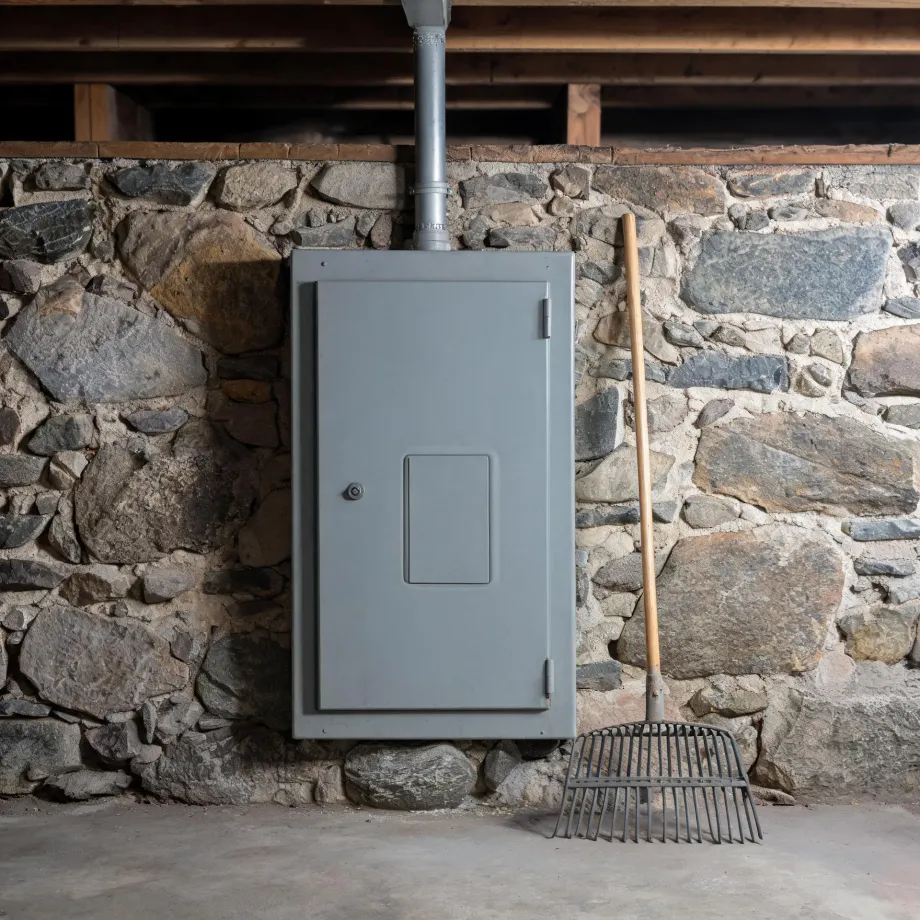
Half the homes in Orange County, Vermont were built in 1978 or earlier (2020-2024 ACS 5-year). A boiler installed into a house of that generation has usually lived through several heating systems before the current one. What a contractor finds once the unit is open depends on that history in ways the exterior gives no sign of: scale buildup on the heat exchanger, a pressure relief valve that has cycled past its rated life, or a circulator pump running on bearings that have never been replaced. Those are the parts that decide the repair scope and the bill, and they are not visible until the system is open.
The Parts of a Boiler a Contractor Checks During Repair
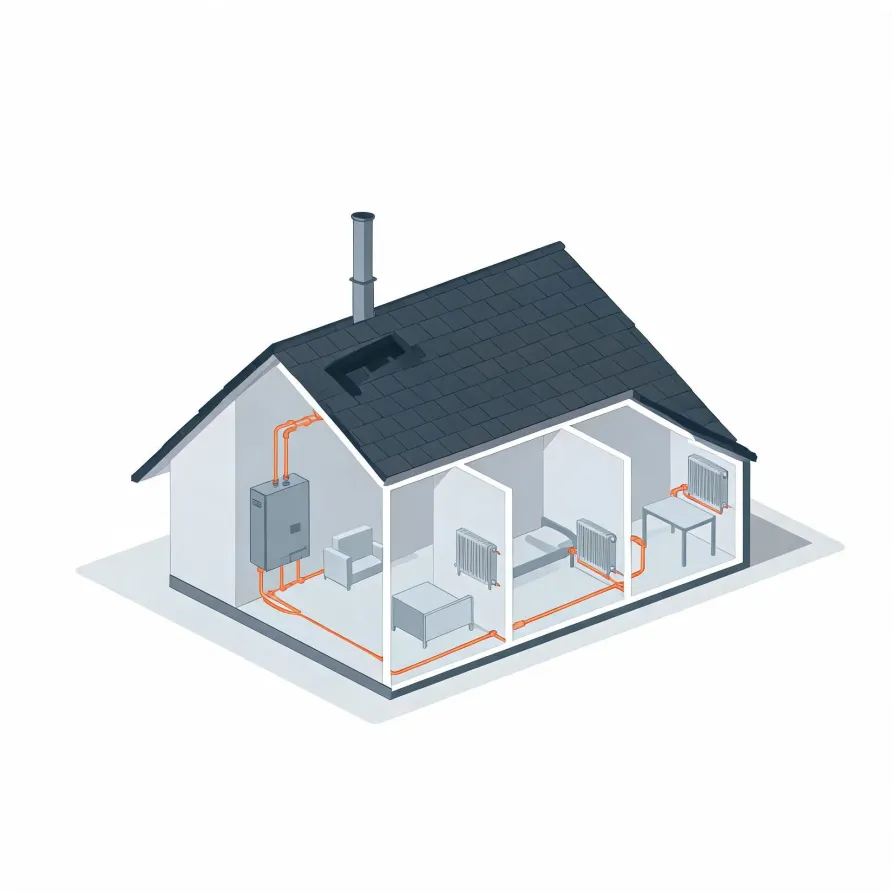
The boiler itself sits in the basement or mechanical room and is the piece a contractor reaches first. It houses the burner, the heat exchanger, and the controls that tell the system when to fire. When heat stops arriving at the radiators or the system short-cycles, one of these components is usually where the fault lives.
Radiators or baseboard units sit throughout the living spaces and carry the heat into each room through circulating hot water. The circulator pump moves that water through the pipes, and the expansion tank and pressure relief valve sit near the boiler to keep system pressure stable. A contractor checks the pump and the pressure side early, because faults there can mimic a burner problem.
The drawing shows a typical boiler system layout, and a licensed contractor determines which components apply and what condition they are in for your specific house.
Find a contractor in Orange CountyOrange County, Vermont, by the numbers
93 severe weather events were recorded in Orange County, Vermont between 2015 and 2024.
NOAA National Centers for Environmental Information, Storm Events Database, bulk CSV export, events 2015-01-01 through 2024-12-31.Half the homes in Orange County, Vermont were built in 1978 or earlier (2020-2024 ACS 5-year).
U.S. Census Bureau, 2020-2024 American Community Survey 5-Year EstimatesOrange County, Vermont holds 15,078 housing units (2020-2024 ACS 5-year).
U.S. Census Bureau, 2020-2024 American Community Survey 5-Year EstimatesOwners occupy 83.2% of the occupied homes in Orange County, Vermont (2020-2024 ACS 5-year).
U.S. Census Bureau, 2020-2024 American Community Survey 5-Year EstimatesCodes & Standards Covering Boiler Repair in Orange County, Vermont2 sourced rules and standards
Licensing Rules for HVAC Repair in Orange County, Vermont
Vermont splits the trade across two specialty licences and a contractor may hold one without the other: field A1 covers automatic gas or oil heating including geo-thermal and ground source heat pumps, and field C3 covers refrigeration or air conditioning including air-to-air heat pumps.
Vermont reaches HVAC work through its electricians’ licence rather than an HVAC licence, and the requirement stops at the front door of a house: anyone performing electrical work in Vermont must be licensed as an electrician unless the work is in a residential building containing two or fewer dwelling units.
Severe Weather Events in Orange County
Boilers in Orange County work against whatever the weather puts on them, and that workload compounds over time. How hard a heating system is pushed year to year shapes how quickly parts wear and when repairs become necessary.
93 severe weather events, 2015–2024. Source: NOAA National Centers for Environmental Information, Storm Events Database.