Tell us about the job
Takes about a minute. No obligation.
A boiler repair in Windham County starts with the parts that cycle hardest: the burner, the ignition system, and the heat exchanger. Homes in Windham County, VT run heat about nine months a year, from September through May. Across that stretch, the ignition system fires and cuts out repeatedly, and the heat exchanger expands and contracts with every call for heat. A contractor pricing a repair here checks those components first, because that is where accumulated wear shows up. Cracks in a heat exchanger or a failing igniter are not surprises on equipment that has been asked to work this hard for this long.
A boiler sitting in housing built this long ago has likely run through at least one major component swap, and what a contractor finds once the unit is open can reach back to parts that left production before most homeowners were shopping. Half the homes in Windham County, Vermont were built in 1974 or earlier (2020-2024 ACS 5-year). That gap between the building and whatever is burning fuel in it now is where repair jobs either stay straightforward or become sourcing problems. Cast-iron sections crack in ways that depend on the original manufacture run, and control boards from that era carry model numbers a distributor may not recognize.
The Parts of a Boiler a Contractor Checks During Repair
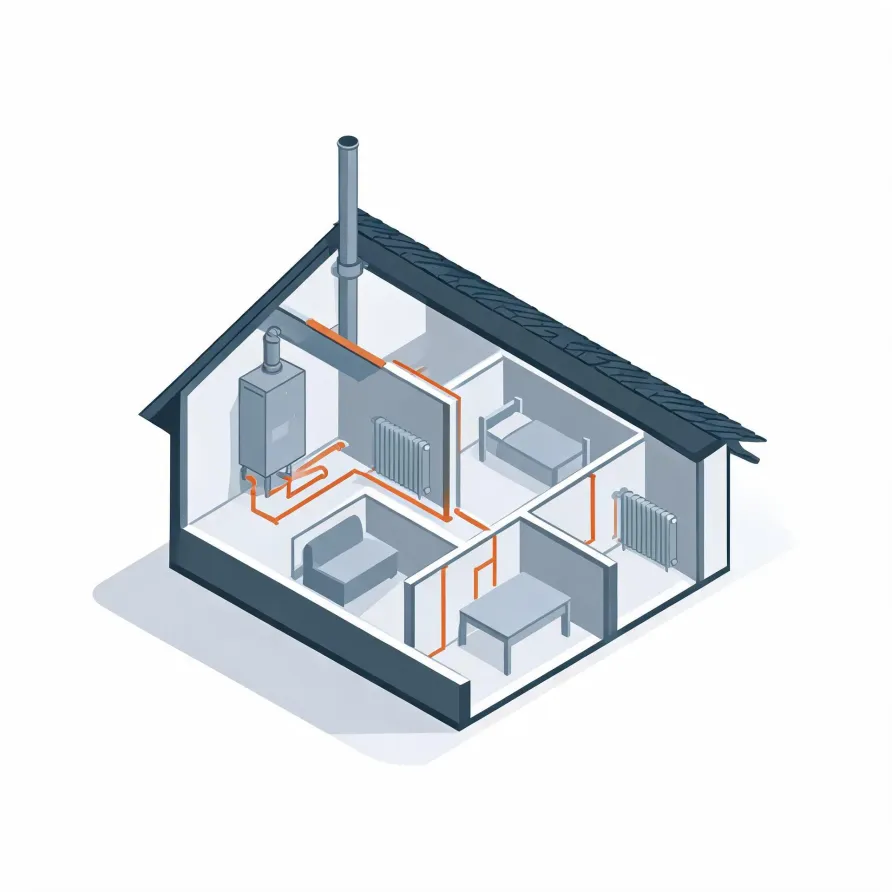
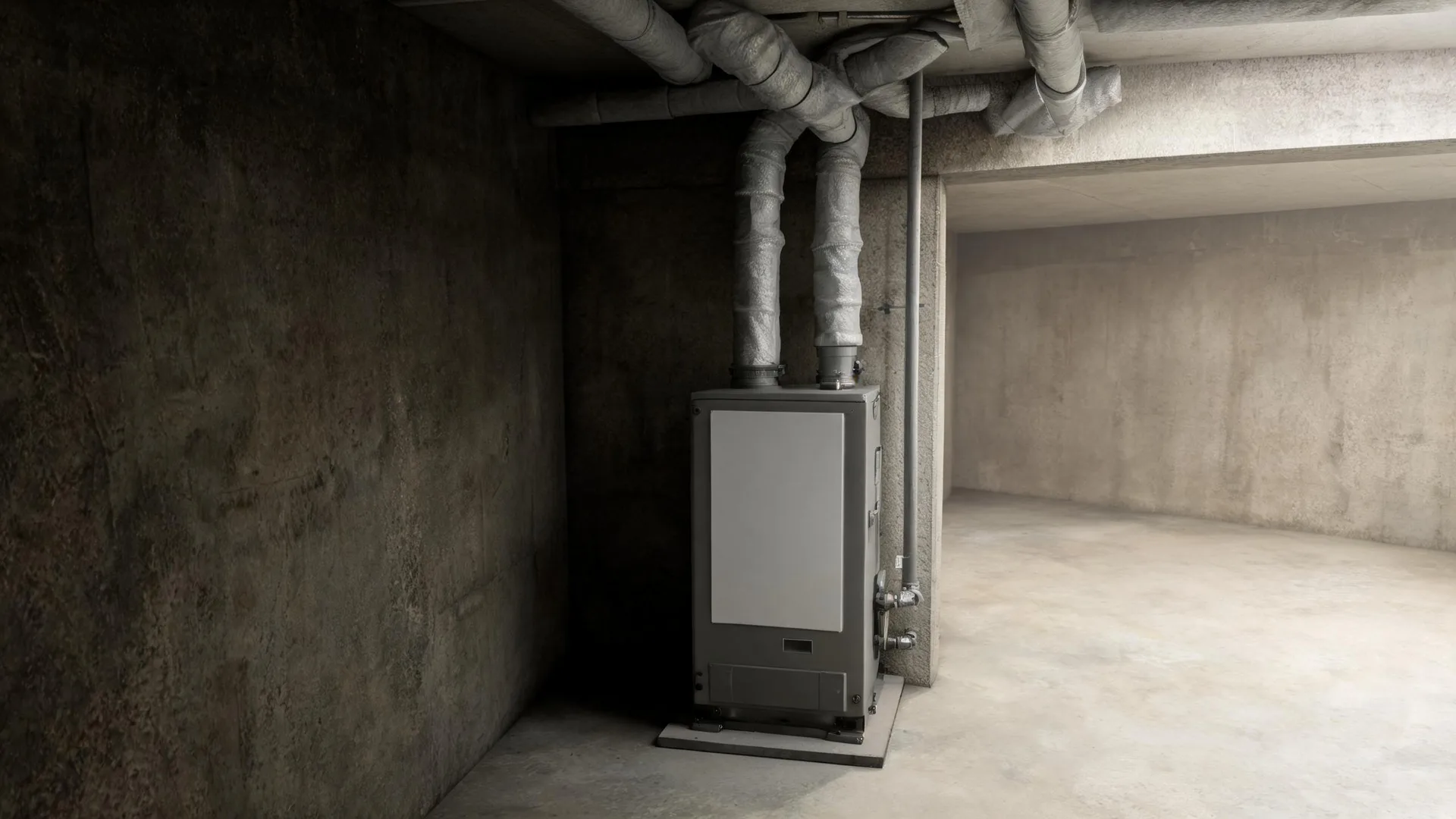
The boiler itself sits in the basement or mechanical room and is the piece a contractor goes to first. Inside it, the heat exchanger and burner assembly are where most faults show up. A failed igniter, a cracked exchanger, or a burner that will not fire cleanly each produce distinct symptoms a contractor reads before touching anything.
Branching out from the boiler, the circulator pump moves heated water through the supply pipes to the radiators or baseboard units in each room, and a faulty pump is a common reason heat stops reaching certain zones. The expansion tank, pressure relief valve, and aquastat round out the system, and any one of them can be the source of pressure problems, short cycling, or temperature swings.
The drawing shows a general layout of a boiler system, and a licensed contractor will determine which components apply to your specific home.
Find a contractor in Windham CountyWindham County, by the numbers
220 severe weather events were recorded in Windham County, Vermont between 2015 and 2024.
NOAA National Centers for Environmental Information, Storm Events Database, bulk CSV export, events 2015-01-01 through 2024-12-31.Half the homes in Windham County, Vermont were built in 1974 or earlier (2020-2024 ACS 5-year).
U.S. Census Bureau, 2020-2024 American Community Survey 5-Year EstimatesWindham County, Vermont holds 30,183 housing units (2020-2024 ACS 5-year).
U.S. Census Bureau, 2020-2024 American Community Survey 5-Year EstimatesOwners occupy 73.9% of the occupied homes in Windham County, Vermont (2020-2024 ACS 5-year).
U.S. Census Bureau, 2020-2024 American Community Survey 5-Year EstimatesBoiler Repair Rules & Standards for Windham County, Vermont2 sourced regulations and codes
What Vermont Law Requires for HVAC Repair in Windham County
Vermont splits the trade across two specialty licences and a contractor may hold one without the other: field A1 covers automatic gas or oil heating including geo-thermal and ground source heat pumps, and field C3 covers refrigeration or air conditioning including air-to-air heat pumps.
Vermont reaches HVAC work through its electricians’ licence rather than an HVAC licence, and the requirement stops at the front door of a house: anyone performing electrical work in Vermont must be licensed as an electrician unless the work is in a residential building containing two or fewer dwelling units.
Weather Stress on Heating Systems in Windham County
Boilers in Windham County work against whatever the local climate sends, and that workload adds up over time. Recorded weather events are part of what determines how hard the equipment runs and what repair needs follow.
220 severe weather events, 2015–2024. Source: NOAA National Centers for Environmental Information, Storm Events Database.